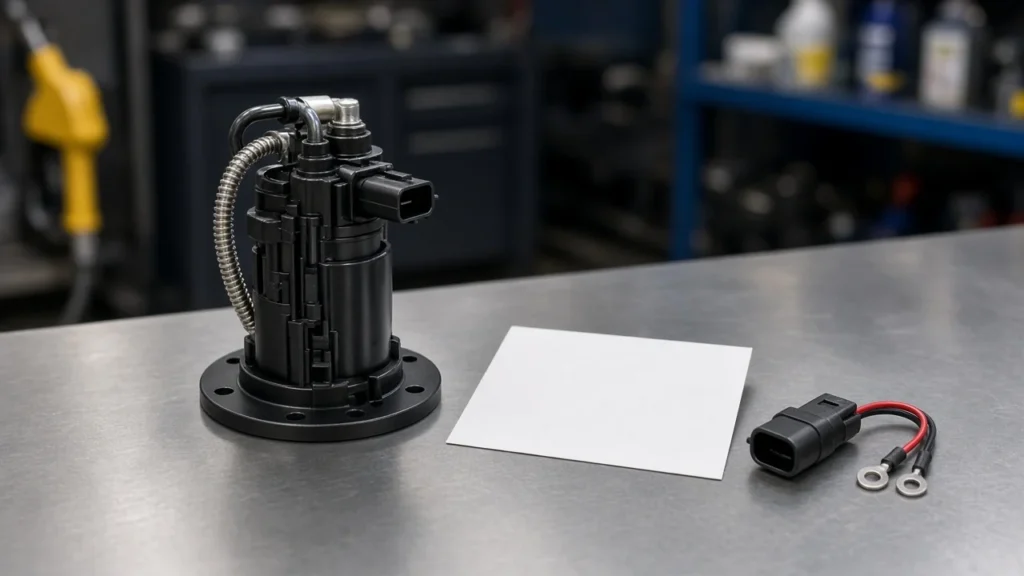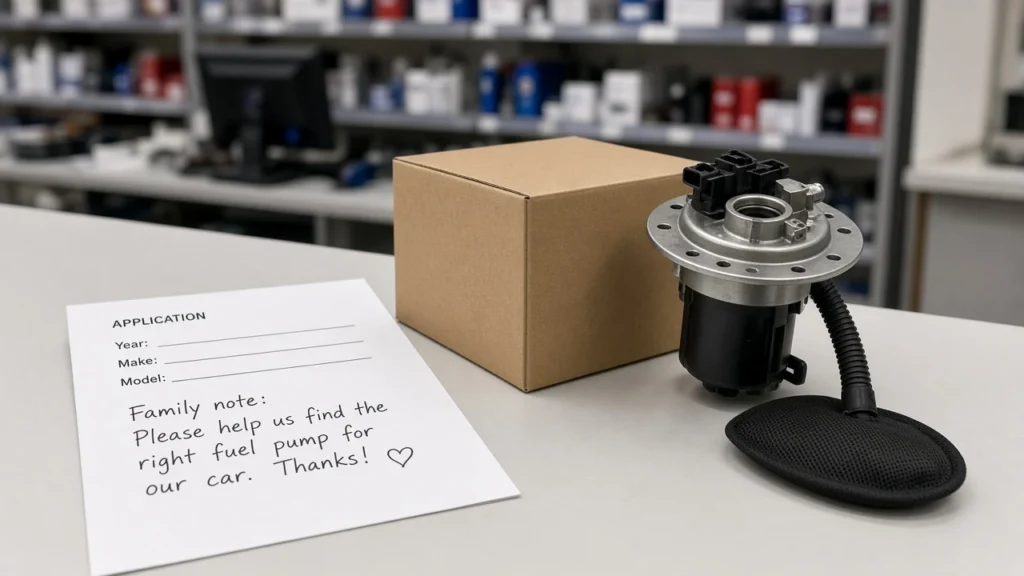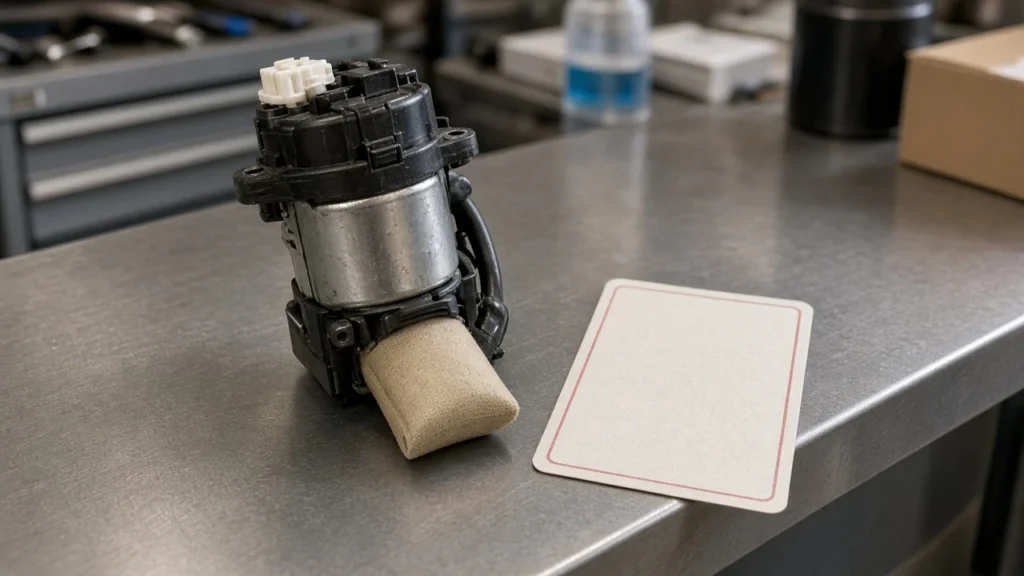
A fuel supply pump moves fuel out of the tank, while the injection pump is the separate unit that pressurizes or meters that fuel for the injectors, so fuel pump vs injection pump is a job split.
The rest of this page follows that split. It shows where each pump sits, why diesel counters and gasoline direct injection share the same words, what a weak supply side does to the expensive pump, and which printed listing belongs to which job.
A supply pump and an injection pump do different jobs
The supply pump’s job ends when fuel reaches the injection pump. The injection pump’s job is to raise pressure, or to meter a shot, so the injectors can spray.
On the Cummins thread from late 2004, a new owner asked for the difference between a fuel pump, an injector pump, and a lift pump. The reply collapsed the three names into two jobs.
The lift pump transfers fuel from the tank, through the filter, and on to the injection pump. The injection pump pressurizes that fuel and sends it to the injectors.
That is the useful version of the naming fight. A lift pump is a supply pump. An electric fuel pump in the tank is a supply pump.
An inline injection pump, a rotary pump, and a common-rail high-pressure pump are injection pumps. They are not three grades of the same part.
| Job | What it moves | Where buyers usually find it | What a quote should say |
|---|---|---|---|
| Supply, lift, or in-tank pump | Fuel from the tank toward the engine | In the tank, on the filter housing, or along the frame | Electric fuel pump, lift pump, or supply kit |
| Injection pump | Fuel onward to the injectors at injection pressure | On the engine, cam-driven or gear-driven | Injection pump or high-pressure fuel pump |
Shops still type “fuel pump” for both rows. The table is the correction.
If the failed part only has to keep the line full, you are in the first row. If the failed part has to feed the injectors at injection pressure, you are in the second.
The handoff is tank-side flow, then engine-side pressure
Fuel leaves the tank at supply pressure. The engine-mounted pump is the stage that builds injection pressure.
On newer diesel systems, injection pressure is typically 15,000 psi or more. That figure belongs to the injection side. Kangsong sheets do not print it as a bench result.
In the common-rail description published by Bosch, the high-pressure pump compresses fuel to up to 2700 bar. The pump fills the common rail, and the injectors decide when that fuel enters the cylinder.
A common rail is a shared volume. It is not another name for the in-tank pump.
Older diesel layouts put metering inside the injection pump itself. An inline injection pump uses one pumping element per cylinder. A rotary pump uses one element and a distributor head.
Both still sit on the engine, and both still need a supply stage in front of them. Layout names for those pumps are covered in the diesel fuel pump types note. How a diesel high-pressure unit moves fuel once it is already on the engine is covered in how a high-pressure diesel fuel pump works.
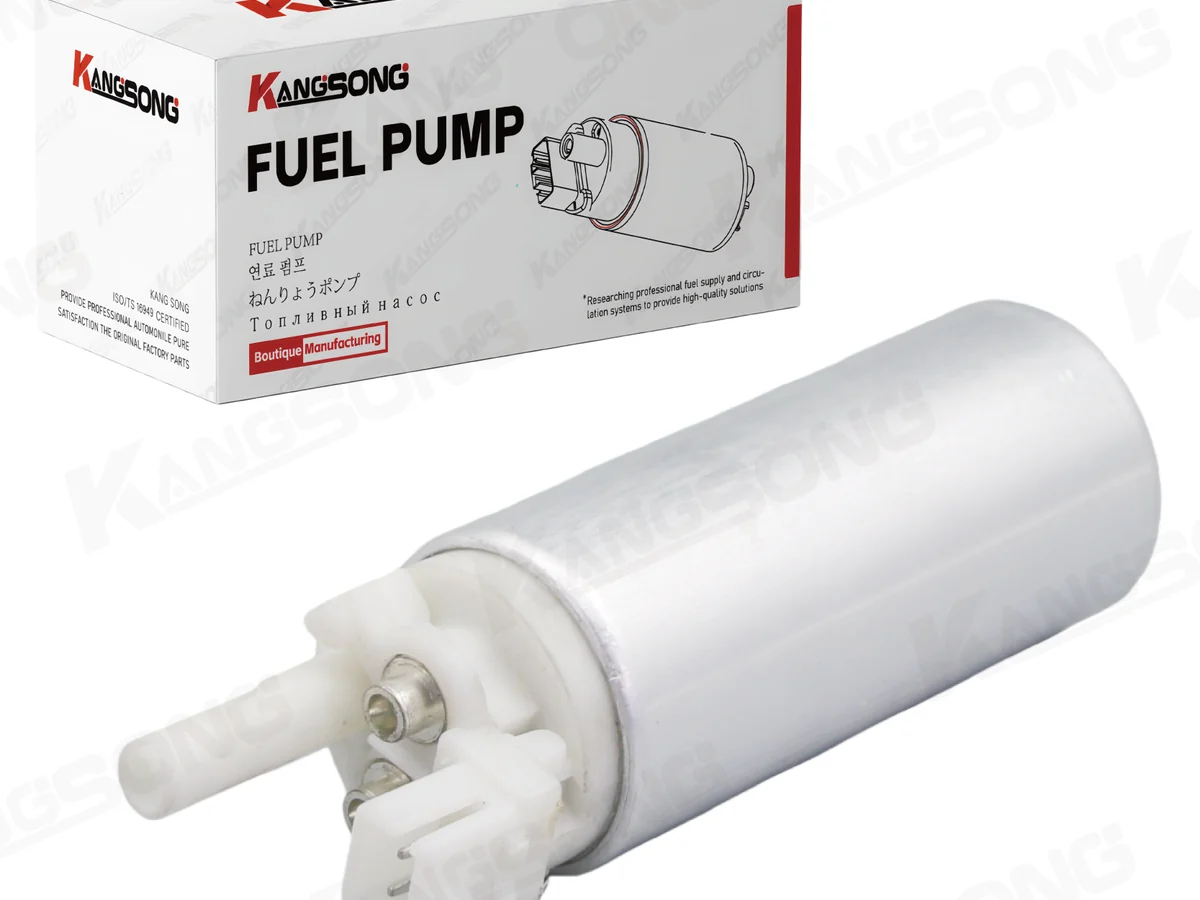
The carton in that photo says fuel pump because that part is the supply job. The metal body is a small electric unit with a connector and inlet tube. Nothing in that picture is a cam-driven injection pump.
Diesel slang and gasoline direct injection use the same collision
Diesel parts counters often call the high-pressure unit “the fuel pump” and the tank-side unit “the lift pump.” Gasoline direct injection creates a second collision, because those engines also keep a supply pump and a high-pressure fuel pump.
A Cummins forum thread shows the counter problem in plain speech. One reply says the lift pump is the fuel pump. Another says the fuel pump the owner means is the injection pump, also called the high-pressure pump.
Both speakers are talking about real parts. They are not talking about the same part.
Gasoline direct injection keeps a high-pressure injection path that is separate from low-pressure supply. Toyota’s D-4S layout even uses two injectors per cylinder, one low-pressure and one high-pressure.
The pump story matches that split. An in-tank electric pump feeds the engine. A cam-driven high-pressure pump on the head feeds the direct injectors.
One Powerstroke discussion is the exception worth remembering. Owners there said that engine has no injection pump, and that the fuel pump sits in the valley under the turbo.
On that oil-fired layout, replacing “the fuel pump” still means the supply pump. It does not mean a common-rail high-pressure pump from a later truck.
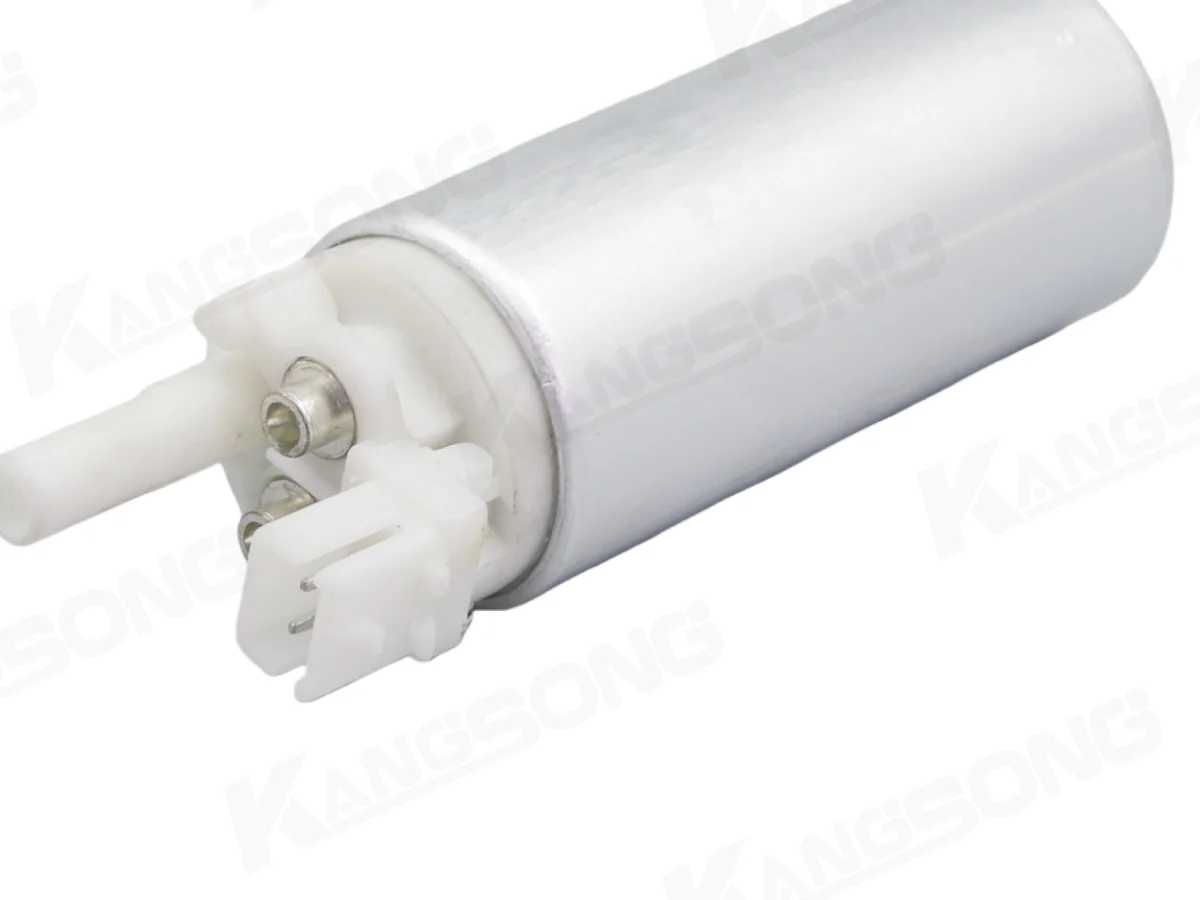
If a listing photo looks like that cylinder and connector, treat it as supply hardware. An injection pump for a direct-injection engine shows a mounting flange, a spring cap or cam follower, and high-pressure outlets.
A weak supply side can ruin the expensive pump
On the VP44 trucks described by ProSource, a dead lift pump can overheat the injection pump because incoming fuel cools and lubricates it.
From the field: A new Dodge diesel owner asked what separated a fuel pump, an injector pump, and a lift pump, and the reply named only two jobs: the lift pump moves fuel from the tank to the injection pump, and the injection pump pressurizes it for the injectors — https://www.dieseltruckresource.com/forums/3rd-generation-ram-non-drivetrain-all-years-101/2004-5-fuel-pump-died-129113/
The same pattern shows up on other pumps that depend on fuel flow. Innova’s repair note on the VP44 says lift-pump failure is a common reason that injection pump overheats.
Starving the high-pressure stage is a supply problem first. Swapping the injection pump and leaving a weak lift pump in place repeats the failure.
Symptoms still need a side. Hard starting, a stumble under load, and a no-start can come from either pump. A single-cylinder misfire is a different question, and it is the one people mix up with injectors.
Failure patterns for the high-pressure unit itself are already laid out in what causes high-pressure fuel pump failure. This page only keeps the boundary: test the supply side before you condemn the injection pump.
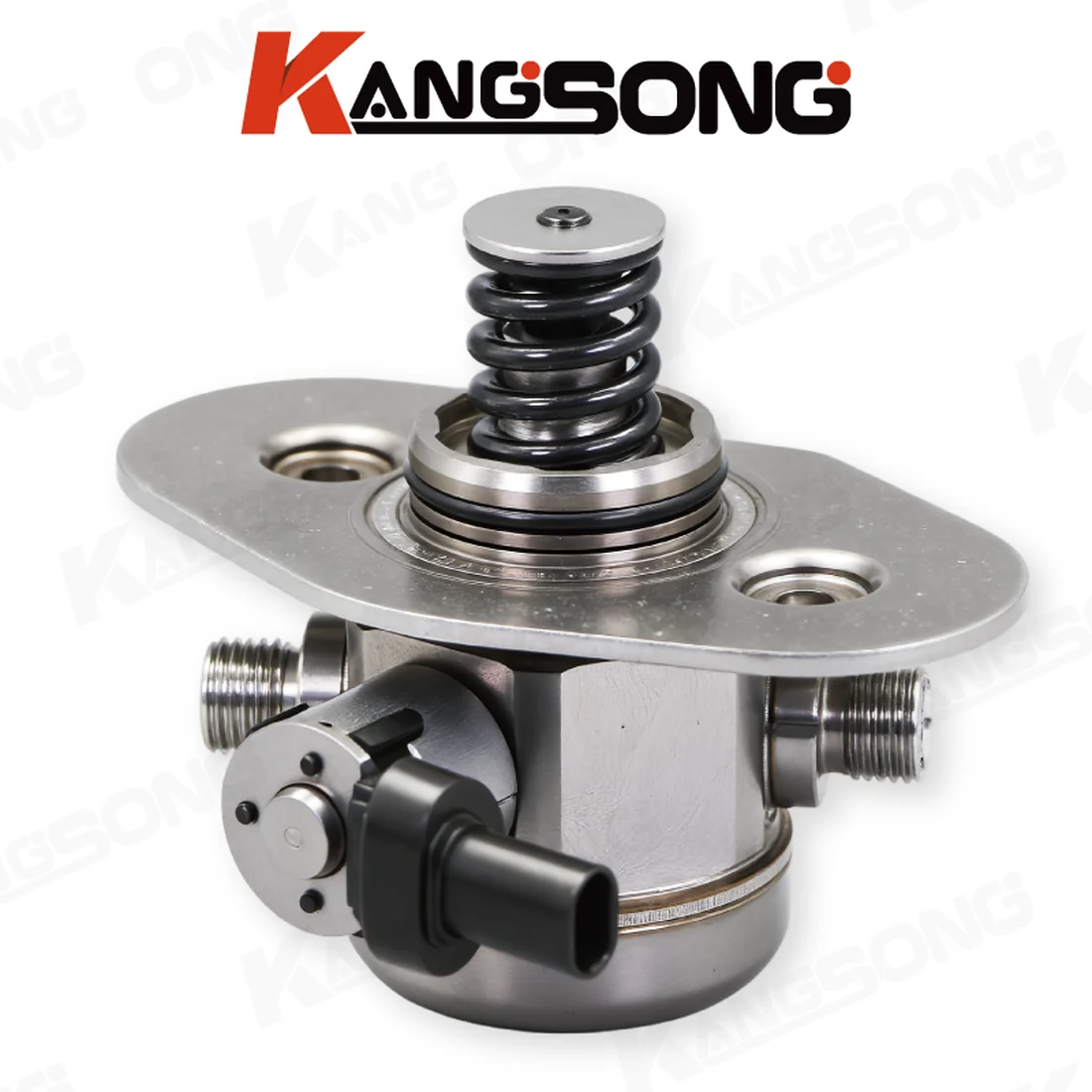
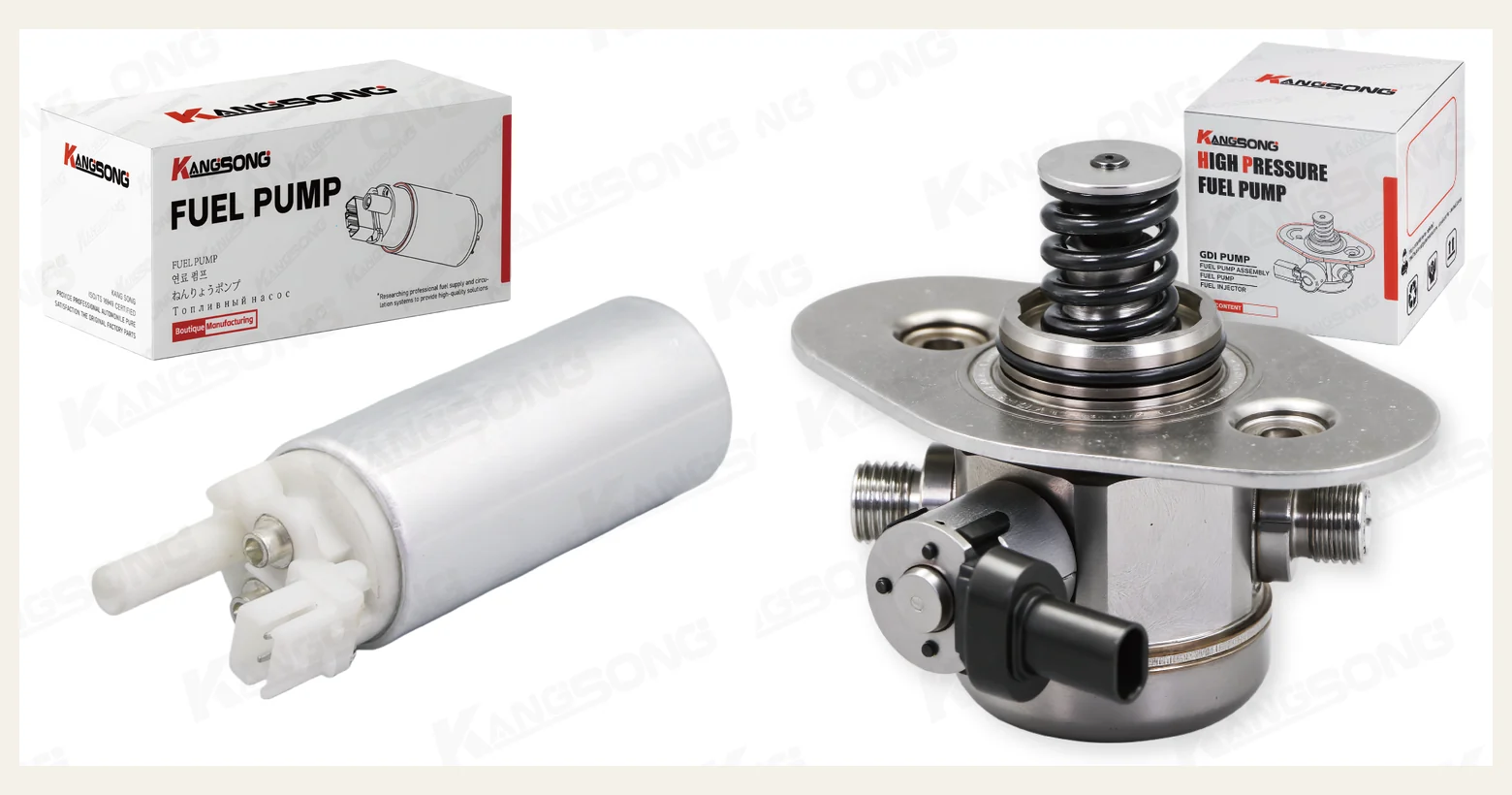
That housing is the injection side. The spring and flange are there because the pump is driven from the engine. A tank pump does not look like this, and a tank-pump kit will not bolt up in its place.
Catalog lines that look alike are still two purchases
Read the printed part type and the vehicle window before you compare two prices. Similar photos and similar words still describe different jobs.
| Sheet line | Supply kit | High-pressure pump |
|---|---|---|
| Part words on the page | Electric fuel pump | High pressure fuel pump |
| Carton mark in the photos | Fuel pump | GDI pump |
| Vehicle window | 1987-1995 C/K 1500, 2500, and 3500 | Listed BMW gasoline applications around OE 13518621084 and 13517642466 |
| What the sheet is allowed to prove | Flow band and a 12 volt electric supply unit for that truck window | OE match for that high-pressure gasoline pump, with no injection pressure printed |
| Wrong use | Quoting it as an injection pump | Quoting it as an in-tank supply kit |
A parts counter can list both a lift pump and a fuel pump as near-twins at different prices. That happened in a Cummins thread, and the owner could not tell which box was the transfer pump on the block. The fix is the left and right columns above.
When the job really is an inline diesel unit, stay with diesel inline fuel pump. An inline unit is still the injection job. It is not the electric supply kit in the next section.
Match the Kangsong product listing to the pump job you actually need
Use the C/K electric kit only for the supply job, and use the BMW high-pressure listing only for the injection job printed on that page.
The C/K electric fuel pump kit is titled as an electric gasoline fuel pump with an installation kit for 1987-1995 C/K 1500, 2500, and 3500 trucks. The sheet calls the part an electric fuel pump, lists accessories as included, and prints OE crosses such as 25168719 and E3902.
The C/K electric-kit page prints a working voltage of DC 12V and a flow band of 43.3-49.5 gallons per hour. That is a supply pump for the printed truck window. It is the wrong part if the engine needs a high-pressure injection pump.
The BMW high-pressure fuel pump prints the product type high pressure fuel pump. Primary OE numbers on the sheet are 13518621084 and 13517642466. The carton in the photos is marked GDI pump, and the vehicle list is BMW gasoline applications.
The page does not print an injection pressure. A number in the URL, 0261520257, is called out on the sheet as a title token, so match the lead OE pair before you treat that extra number as interchangeable.
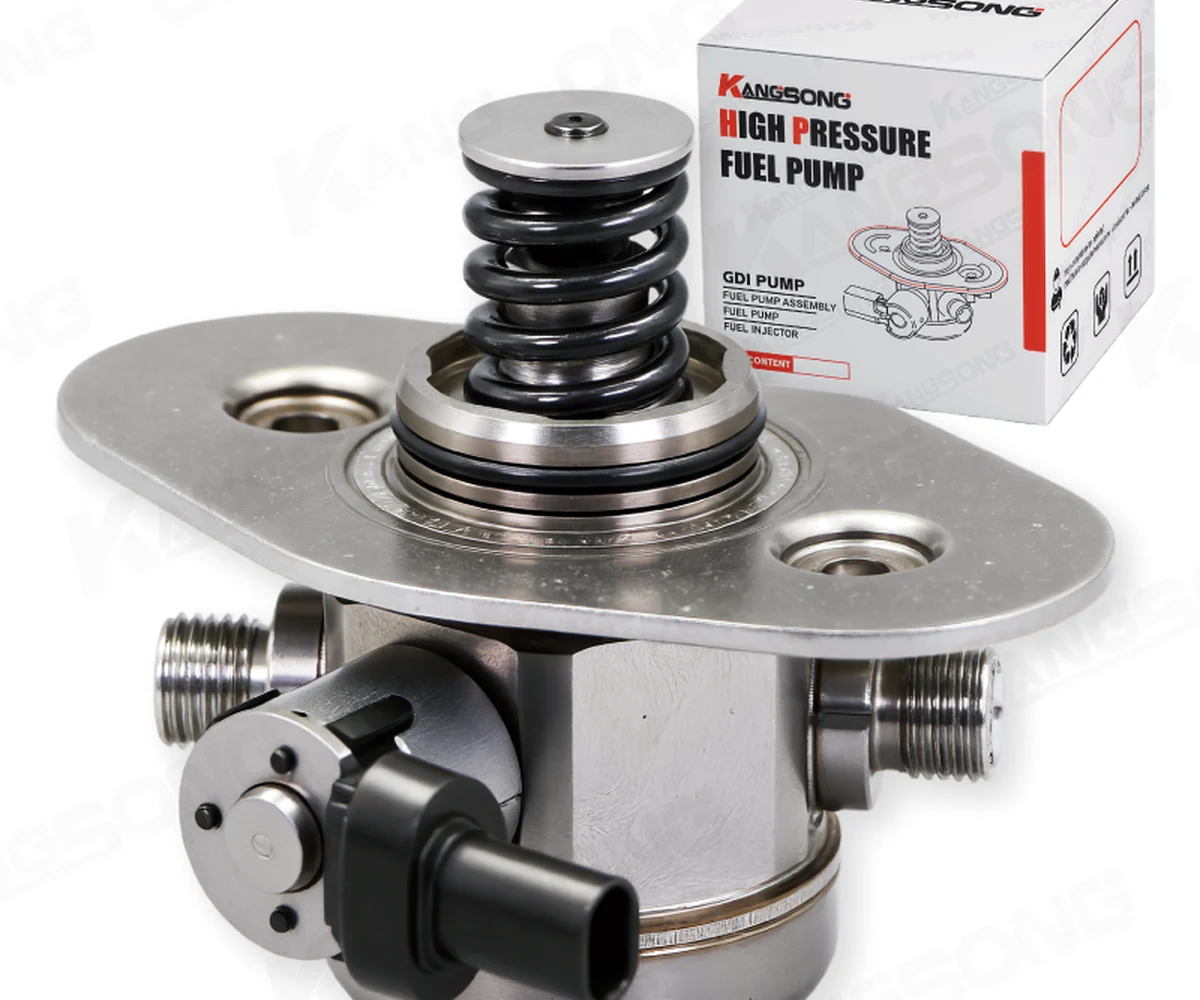
Those two URLs are not substitutes. One carton says fuel pump and shows an electric cylinder. The other says high pressure fuel pump and shows a flanged GDI unit.
Quoting either listing for the other job sends the wrong hardware.
If the engine is a diesel and the failed part is the high-pressure pump, start from the high-pressure diesel fuel pumps hub and open a listing whose sheet says that job. A Freelander diesel page on the same site is titled as a fuel pump assembly. That title is a supply-module conversation, not this injection-pump quote.
FAQ
Is an injection pump the same as a fuel pump?
Not when one name means the supply pump and the other means the unit that feeds the injectors. The words get reused, which is why the sheet has to say electric fuel pump or high-pressure fuel pump.
Is there a difference between a fuel pump and a high-pressure fuel pump?
Yes on common-rail diesel and on gasoline direct injection. The fuel pump in the tank or on the frame supplies fuel. The high-pressure fuel pump on the engine builds injection pressure.
How to tell if it’s the fuel pump or fuel injector?
A scan that names one cylinder, or one injector that clicks differently from the others, points at that injector. A supply-pump fault usually shows up across the engine, as a hard start or a loss of pressure to every cylinder, and it still is not proof that the injection pump failed.
What happens when the injector pump goes bad?
Innova’s diesel pump notes describe a gradual loss of power and economy, hard starting, and a no-start once the pump quits. Rough running can also be a pump that is out of time or a sticking plunger, so the supply pressure ahead of it still has to be checked.
Is replacing a fuel pump a big job?
It depends which pump the words refer to. An in-tank or filter-mounted supply pump is an access job in the tank or on the housing. A cam-driven injection pump is an engine-mounted job, often with timing marks and a bleed step after it is installed.
How much does it cost to replace an injection pump?
No single shop price was established for this page, so none is printed here. Owners describe the in-tank supply pump as the cheaper of the two and the direct-injection pump as the expensive one, which only helps if you already know which of the two failed.
Can the C/K electric kit replace a high-pressure injection pump?
No. The kit is an electric gasoline supply pump for the printed 1987-1995 C/K window. A high-pressure injection pump is a different part, with a different sheet, such as the BMW GDI listing above.
References
- Injection pump — construction, inline and rotary layouts, and newer-system injection pressure.
- Gasoline direct injection — low-pressure and high-pressure paths on direct-injection gasoline engines.
- 2004.5 fuel pump died — owner question that separates the lift pump from the injection pump.