A petrol fuel pump diagram is the gasoline system sheet from the tank to the rail or carburetor bowl, not a dictionary entry for “what a pump is.” US shops read petrol and gasoline as the same fuel family on that drawing. Capture strainer, pump location, filter, liquid return or vapor, and a second high-pressure pump when the sheet shows one, then open a printed kit only if the family matches.
How to Read a Petrol Fuel Pump Diagram Before You RFQ
Treat the drawing as a gasoline path from tank through strainer, pump, and filter to a rail or carburetor bowl.
The fuel pump diagram on a petrol sheet names devices in flow order. Wikipedia’s fuel-pump overview puts the pump between the tank and the mixer, whether that mixer is a carburetor or injectors. WireMystique-style pages list tank, pump, filter, injectors, and a carburetor when the engine still has one.
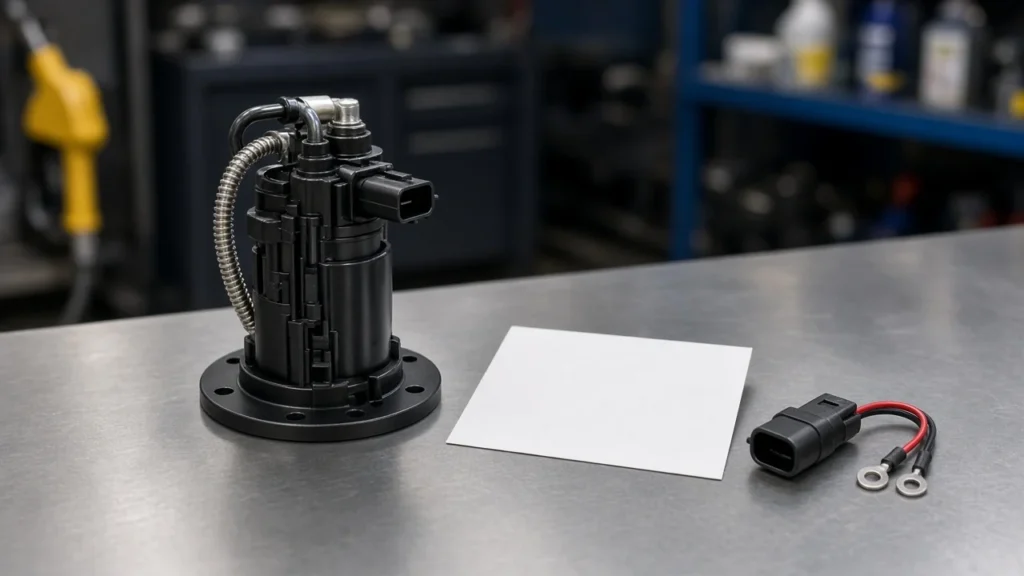
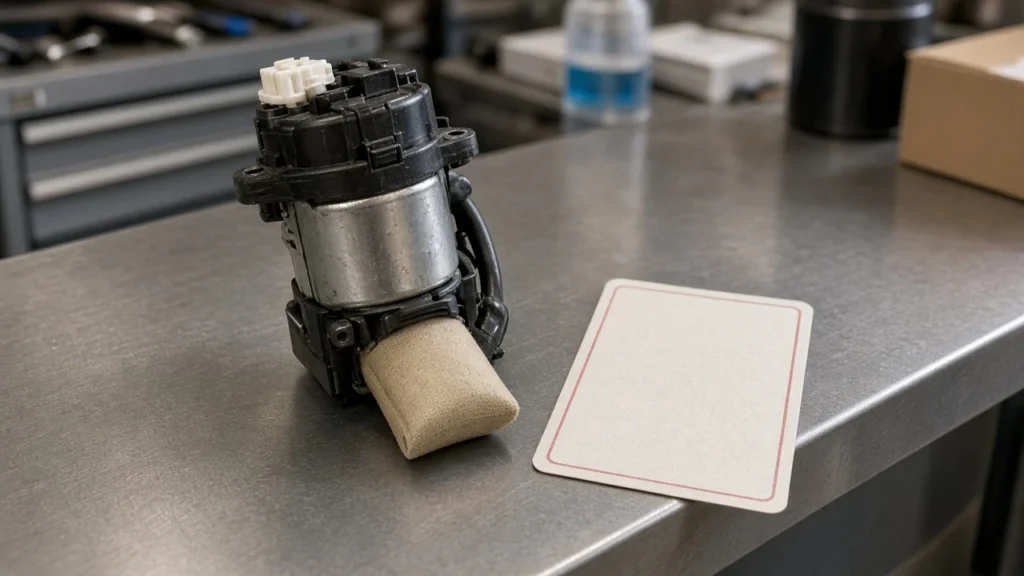
An in-tank electric fuel pump often sits in a module with a fuel strainer and a level sender. The strainer, also called a mesh sock, is the inlet screen in the tank. AA1Car describes fuel drawn through that sock, then pushed out past a check valve toward the engine.
Workshop petrol sheets add more labels than a pump cutaway. VAZ 2110-family drawings show a submersible pump, a paper filter with a painted flow arrow, a fuel rail, and a vapor adsorber. Mercedes CIS-style attachments add a fuel accumulator and a fuel distributor plus a return and a vent.
A filling-station dispenser drawing is not this job. A diesel injection-pump legend with plungers and a common rail belongs on the diesel fuel pump diagram sister.
Supply, Return, and Vapor Lines Are Different Captures
Liquid return leaves a regulator; vapor goes to a canister; vacuum on an FPR is not fuel.
A return line carries unused liquid from a fuel pressure regulator back to the tank. AA1Car’s electric-pump write-up puts that regulator on the rail in older return-type EFI. Honda-Tech builders tracing a K-series rail use the same liquid order: fuel pump to filter to rail to regulator to tank.
The vacuum nipple on an FPR is a pressure-reference port. Honda-Tech replies treat it as manifold vacuum or boost, not a third fuel hose. Cap it only when the control strategy on that car does not use vacuum compensation.
EVAP is a separate circuit. AA1Car’s returnless article sends tank vapor through a vent hose into an EVAP charcoal canister, then purges that vapor into the engine.
VAZ and BMW petrol sheets label adsorber or carbon canister, gravity or roll-over valves, and purge lines beside the liquid feed.
From the field: On Honda-Tech, JRCivic1 wrote the order as fuel pump, fuel filter, fuel rail, fuel pressure regulator, then return to tank, and called the bottom FPR fitting the return. Gasoline Porsche threads make the same three-way split: vent at the top of the tank, return as its own hose, feed from the bottom through a pre-filter.
If the hat shows three pipes, write three functions. Do not price two vapor lines as dual fuel feeds.
In-Tank, Inline, and Carburetor-Bowl Layouts on Petrol Sheets
In-tank, line-mounted, and cam-on-engine pumps are different drawings even when all say petrol.
Wikipedia places most fuel-injected petrol electrics inside the tank for cooling and to keep the motor wet. Linquip repeats the split: carbureted engines often use a mechanical fuel pump on the engine; EFI usually uses an in-tank electric unit.
A mechanical fuel pump on a carbureted sheet is typically a cam-driven diaphragm or plunger at 10–15 psi (0.7–1.0 bar). That is a block-mounted device feeding a carburetor bowl, not a drop-in tank module.
Some older electric diagrams still show a tank-to-carburetor loop with a paper filter and a sediment bowl. NewKidsCar describes a solenoid diaphragm pump and a continuous circulation path back to the tank. Capture “carburetor bowl” on those sheets instead of inventing a fuel rail.
An inline electric fuel pump sits in the hose, not in the tank. Port-by-port IN/OUT reading for those housings lives on the inline fuel pump diagram sister.
An exploded basket, sender, and lock ring is the fuel pump assembly diagram sister. A catalog of types of fuel pump in petrol engine layouts belongs on the types page, not here.
Return, Returnless, and Mixed Petrol Circuits
A missing return union usually means the regulator lives in the tank.
Return-type petrol EFI oversupplies the rail. The fuel pressure regulator spills the extra volume down the return line. Holley’s EFI install sequence is pick-up, coarse pre-filter, electric pump, 10 micron post-filter, rail, then a regulator holding 300 kPa (43.5 psi) with the regulator outlet back to the tank.
A returnless fuel system moves that regulator into the tank. AA1Car dates early Chrysler truck systems to 1993 and notes almost all new vehicles now run returnless.
Renault Clio petrol operating diagrams state the system has no return, the rail has no return union, and pump, sender, filter, and regulator sit in the tank on a single pipe.
The same spark-ignition family can mix both. BMW E38/E39 TIS drawings keep a classic rail return on M52TU.
M52 USA and M73 run rail return for start, then a 3/2-way valve makes the rail return-free after less than 1 minute. M62TU packages filter and regulator together so the rail stays return-free while liquid still leaves that unit back to the tank.
VAZ’s two petrol maps show the same split in numbers. The 1.5i rail carries a drain and 284–325 kPa.
The 1.6i moves the regulator into the module cover at 378–390 kPa. Copy the architecture on the sheet in front of you.
| Petrol sheet family | What the rail usually shows | What to capture |
|---|---|---|
| Mechanical carburetor | Bowl and often a low-pressure engine pump | Cam pump vs electric; bowl vs rail |
| Return EFI | Regulator on or after the rail plus a drain hose | Feed, return, filter, FPR vacuum if drawn |
| Returnless EFI | Rail without a return union | Single feed; in-tank regulator and filter |
| Mixed / timed return | A 3/2-way or similar valve on the return | Start-return versus running return-free |
| GDI | Low-side feed plus a cam high-pressure fuel pump | Lift pump and HPFP as two SKUs |
When a Second High-Pressure Pump Appears on a Gasoline Sheet
GDI sheets feed a cam HPFP from a low-pressure lift pump; capture both.
Linquip notes that some fuel-injected engines carry two pumps: a low-pressure, high-volume unit in the tank and a high-pressure, low-volume unit on or near the engine. Wikipedia says the in-tank electric on direct injection only transports fuel; a separate pump then raises pressure.
Vehicle Service Pros frames GDI as a jump from historical carb 5–8 psi and port injection near 60 psi to rails that routinely exceed 2,000 psi. The high-pressure fuel pump is usually a cam-driven single-piston pump on the valve cover.
It cannot suck from the fuel tank. The in-tank lift pump must feed it.
AA1Car puts that secondary mechanical pump in the 300 to 2900 PSI band. VSP’s low-side check is often 50–80 psi, and some applications near 100 psi, on a PWM returnless lift pump. Write low-side and high-side as two lines on the RFQ.
Do not price a printed electric gasoline fuel pump kit as the cam HPFP. Do not treat a diesel common-rail injection pump as this gasoline second stage.
What to Capture From a Petrol Sheet Before You Source a Pump
Write circuit family, labeled ports, strainer, filter, vapor vs fuel, then printed OE.
- Fuel family: petrol/gasoline spark-ignition, not a diesel injection-pump sheet and not a dispenser.
- Pump location: in-tank electric, inline electric, or mechanical on the engine.
- Mixer: fuel rail with injectors, or carburetor bowl.
- Circuit: return, returnless, or mixed valve logic.
- Inlet protection: sock/strainer and any pre-filter before the pump.
- Fine filter: in-tank, in-line, flow arrow, micron callout if printed.
- Extra lines: liquid return, EVAP/vapor, FPR vacuum.
- Second pump: lift pump plus HPFP on GDI.
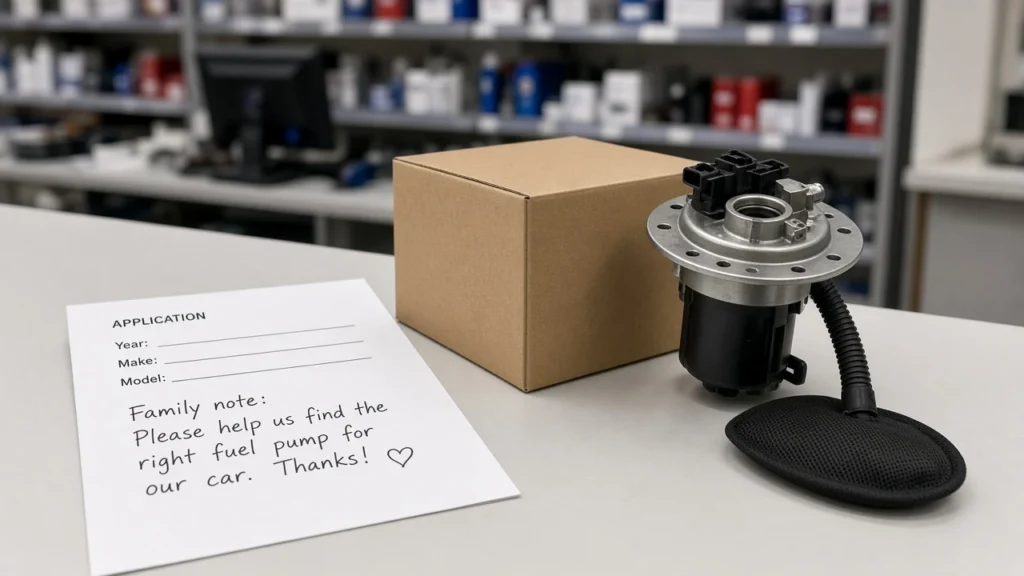
- Printed vehicle, OE, voltage, and connector from the SKU card you will actually buy.
Edelbrock-style return-system instructions keep the tank return 12–18 inches from the pick-up sock so bubbles do not recycle into the inlet. If your customer sheet shows that geometry, copy the offset. If it does not, do not import the number.
BMW’s E38/E39 petrol regulator example is 3.5 bar (S62 5 bar). That is an OEM callout on that TIS, not a Kangsong rating.
| Circuit example | Sourced pressure callout | Use on an RFQ |
|---|---|---|
| Mechanical carburetor pump | 10–15 psi (0.7–1.0 bar) | Only if the sheet is cam-driven carb |
| Older port/TBI in-tank electric | 40–60 psi (3–4 bar) | Capture if the OEM sheet prints it |
| Multiport electric (application band) | 30–85 psi | Do not assign to an unmatched kit |
| Holley-style return EFI regulator | 300 kPa (43.5 psi) | That kit sheet only |
| VAZ 1.5i rail drain | 284–325 kPa | That engine family example |
| VAZ 1.6i in-module regulator | 378–390 kPa | That engine family example |
| GDI low-side feed | 50–80 psi, some near 100 psi | Lift-pump line, not HPFP |
| GDI high side | often >2,000 psi; AA1Car 300–2900 PSI | Cam pump line |
Hand the list to sourcing with the photo of the labeled sheet. Skip certificates, MOQ, and brand rankings this site cannot support.
Choose Electric Gasoline Pump Kits After the Sheet Matches
Open a printed-window electric gasoline kit when the sheet is an electric gasoline supply pump, not a cam HPFP and not a diesel injection unit.
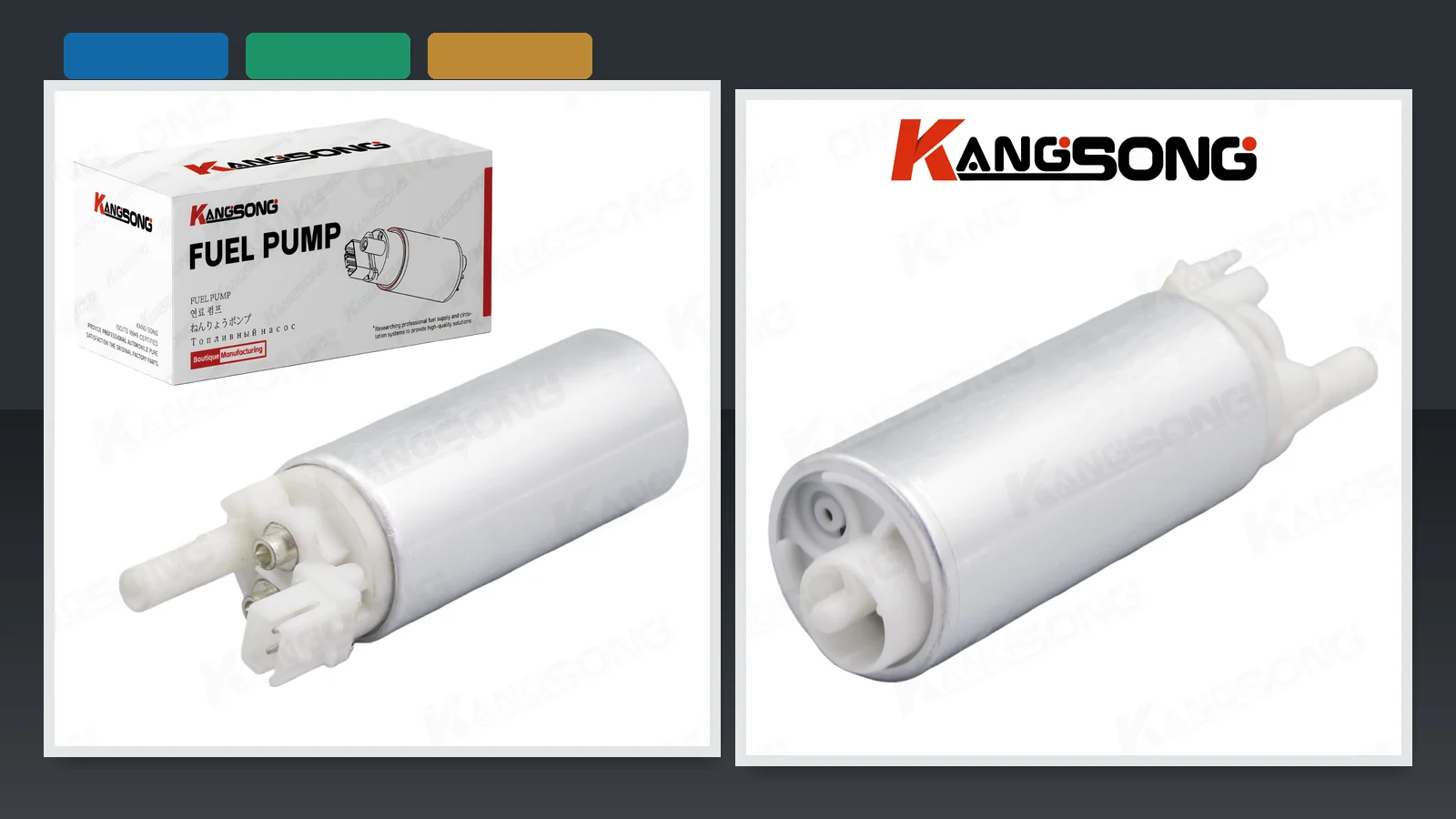
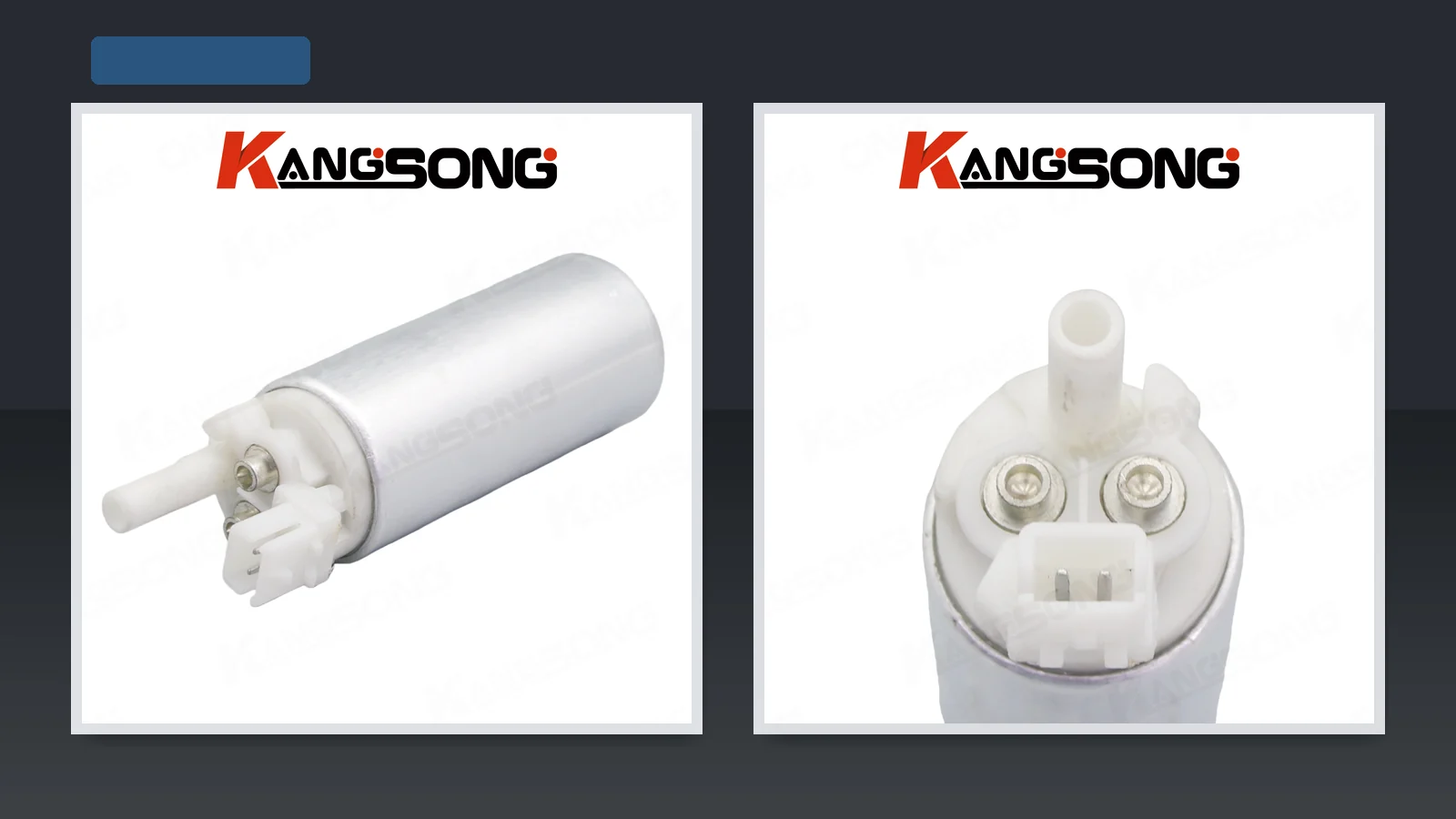
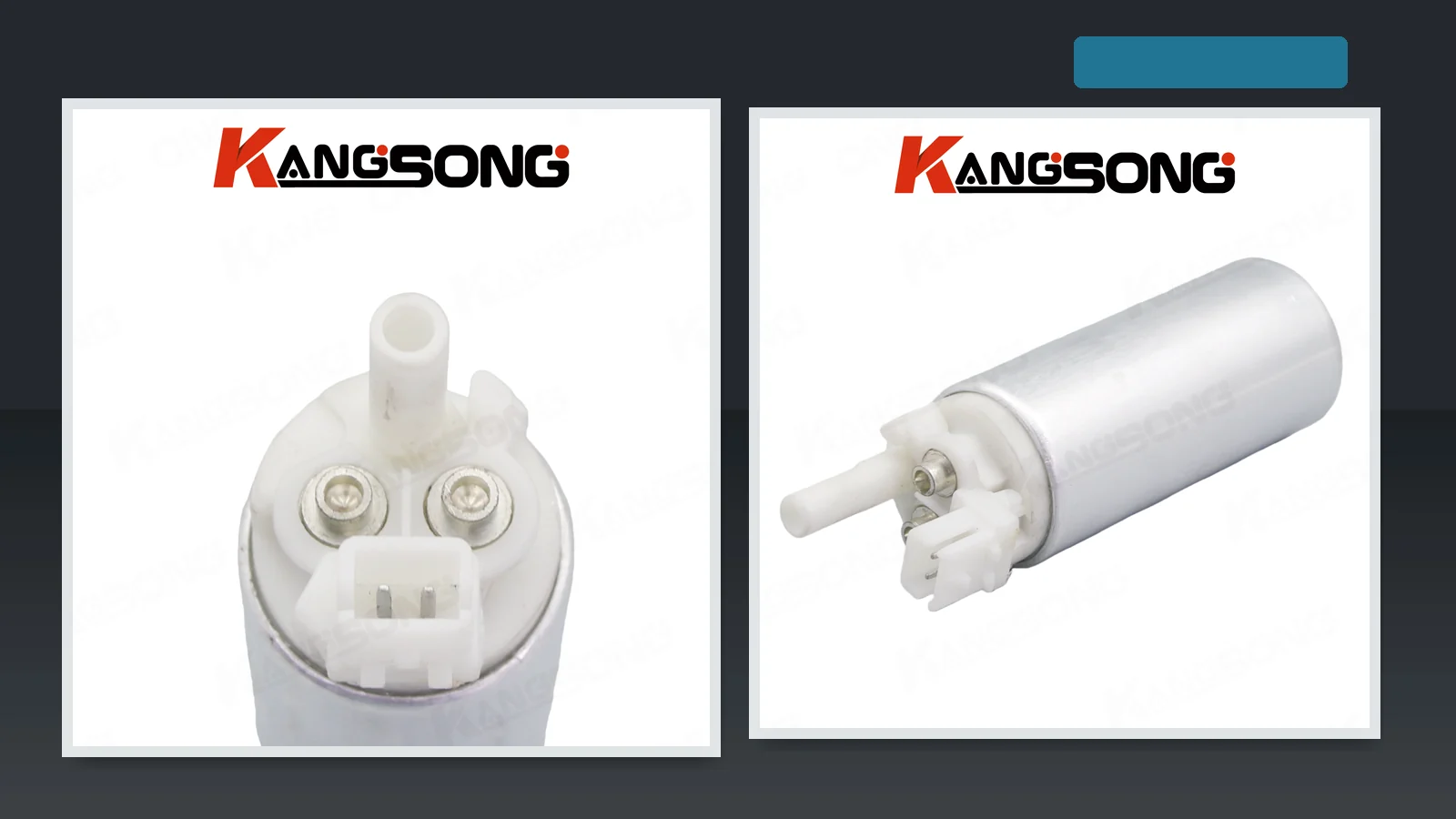
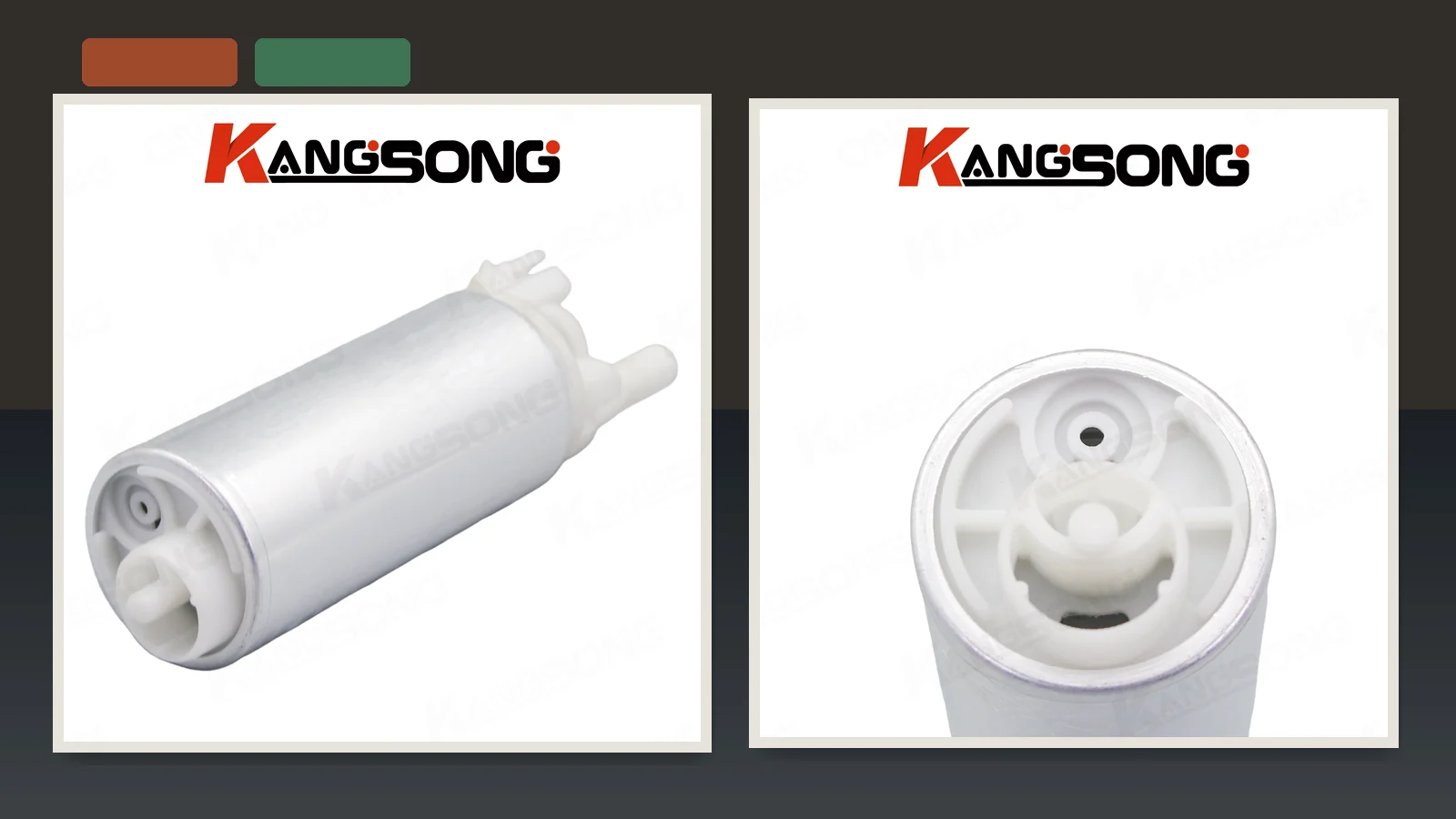
Kangsong’s electric gasoline fuel pump with installation kit is titled for 1987–1995 C/K 1500/2500/3500 with OE 25168719 / E3902, brand KS-360501. The card prints 2Pins, DC 12V, GPH 43.3–49.5, and a Maximum Air Pressure field 12–26.
Ambient text on that page is −40 °C to +85 °C. The printed window is the KS-360501 electric gasoline kit.
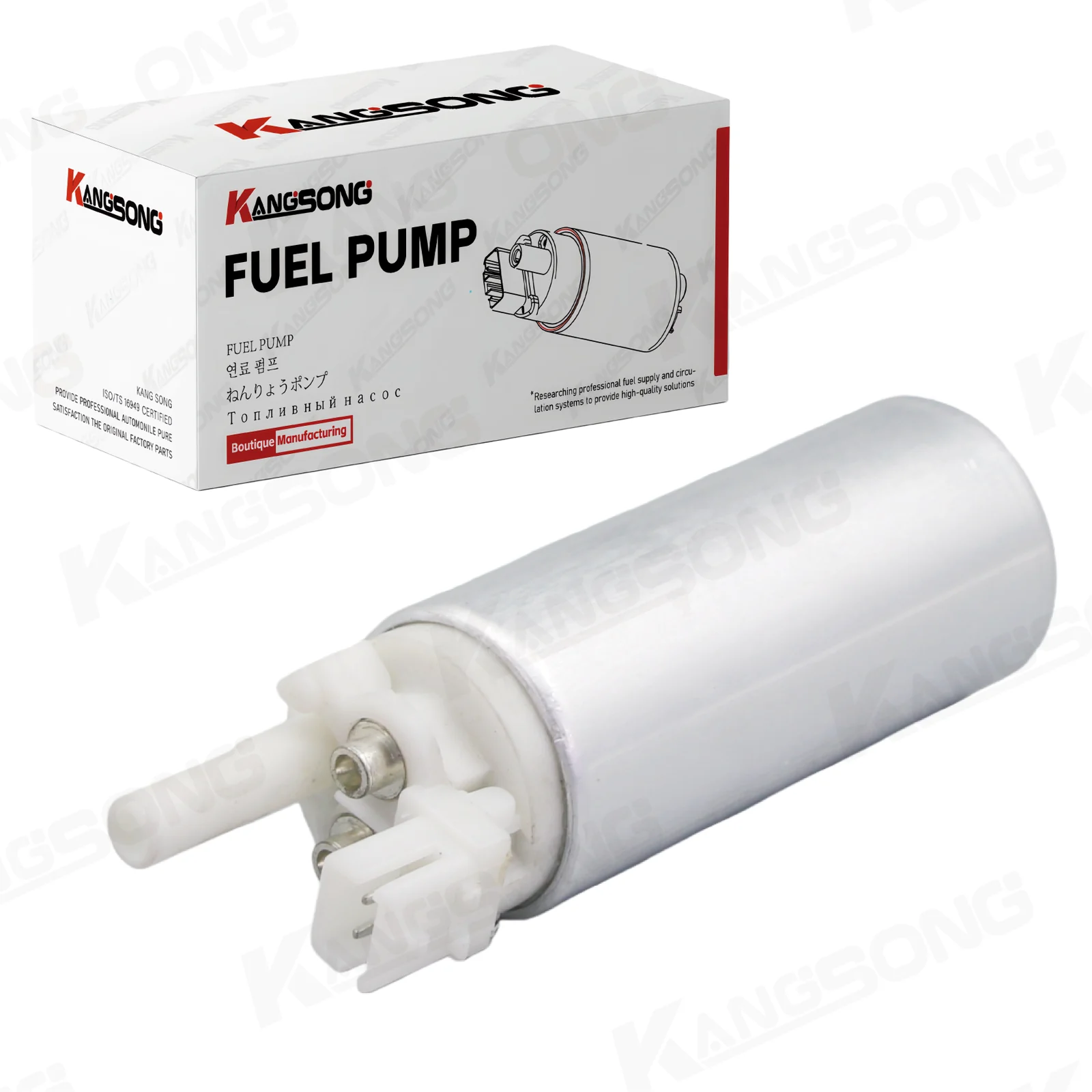
Those numbers stay on that printed window. They are not a universal petrol spec. If the drawing is an in-tank module explode with a sender and a lock ring, use the assembly-diagram sister and a matching module SKU, not this kit by default.
If the drawing is only two hose bosses on a line pump, finish the inline legend first. Catalog navigation stays on Kangsong products. Manufacturing programs go to the OEM landing, not this SKU.
FAQ
What does a petrol fuel pump diagram actually show?
It shows the gasoline delivery path: tank, strainer, pump, filter, then a rail or a carburetor, plus return or vapor when those circuits exist. It is not a biography of one impeller.
Is petrol the same as gasoline on a US shop drawing?
For this query, yes. US counter language says gasoline; the search phrase says petrol. Capture the same spark-ignition sheet either way.
How do I tell the fuel return from a vapor or vent line?
Liquid return leaves a regulator and re-enters the tank as fuel. Vapor travels a vent to a charcoal canister. A small FPR nipple is usually vacuum, not fuel.
What does returnless look like on the sheet?
The rail has no return union. Pump, filter, and regulator often sit in the tank on a single feed pipe, as on Renault Clio petrol operating diagrams.
When does a gasoline diagram show two pumps?
On GDI, an in-tank lift pump feeds a cam-driven high-pressure fuel pump. Capture both. The in-tank unit is not the HPFP.
Should I quote an in-tank module, an inline kit, or a cam HPFP?
Match the drawing family. Module explode, line-mounted ports, and GDI cam pumps are three different quotes. Printed OE on the SKU card still has to match the vehicle.
Where does a carburetor bowl sit on an older petrol sheet?
After a low-pressure mechanical or electric pump, on the engine, where air and petrol mix. There is no injector rail on that family.
Why does one petrol family show a drain on the rail and another hide the regulator in the tank?
Return EFI regulates at the rail and dumps excess down a drain hose. Returnless EFI regulates in the tank so the engine bay has no liquid return.