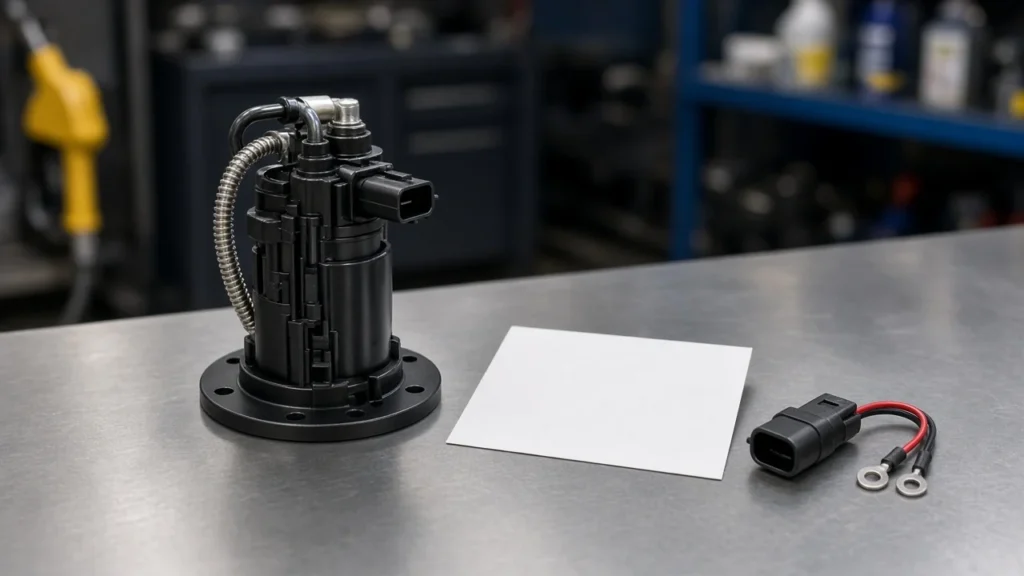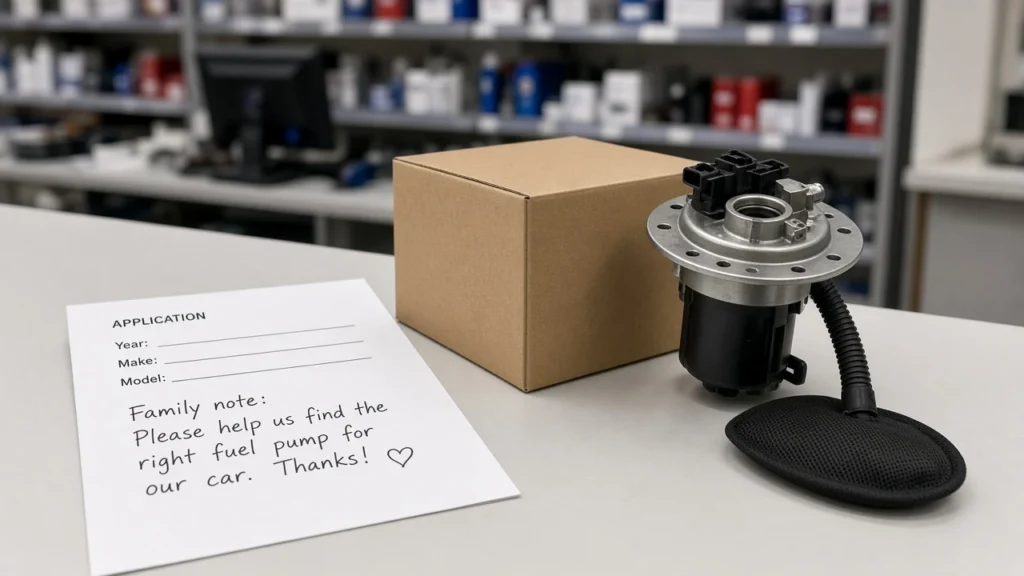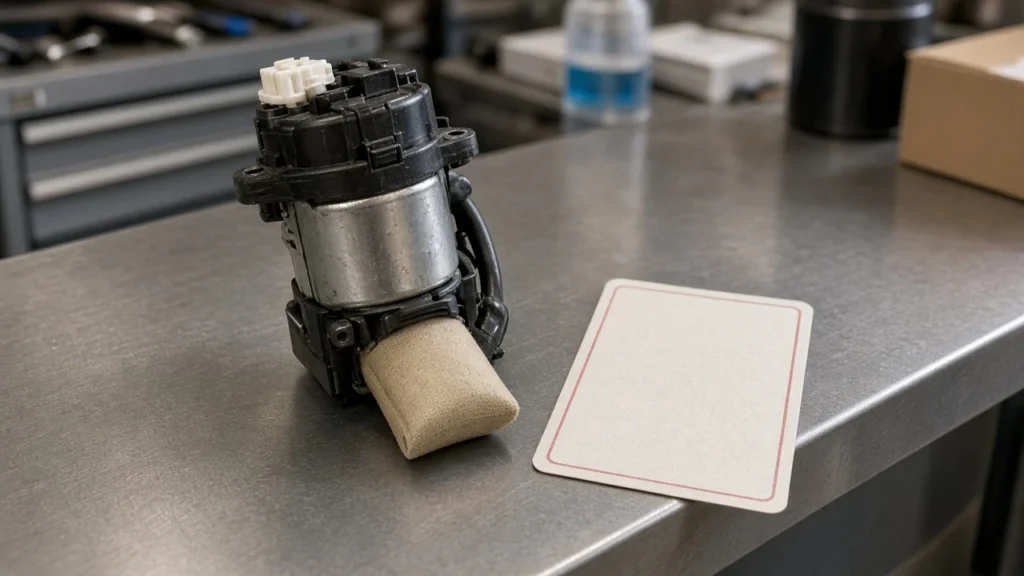
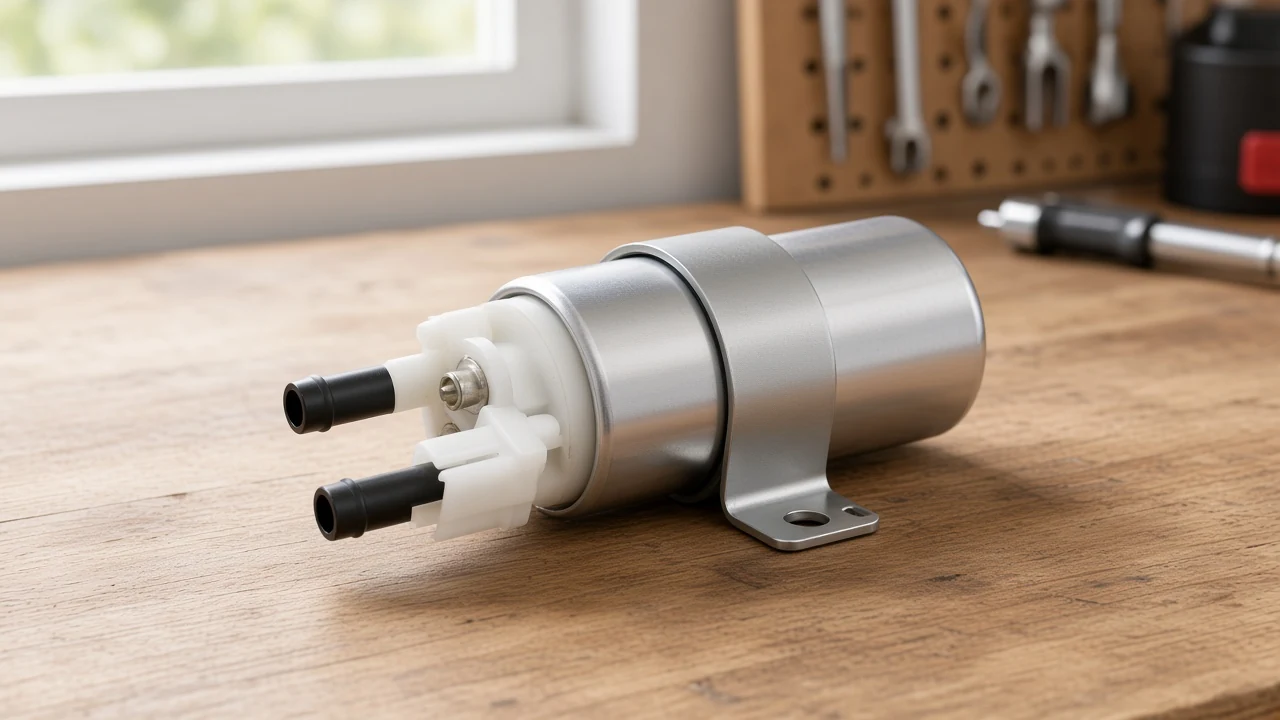
Choose an electric inline fuel pump by matching five things: the pressure class your fuel system expects, the flow that pump still delivers at that pressure, the real voltage at the pump terminals, a mount that sits low and close to the tank, and fitment evidence on the listing—not the words “12V” or “inline” alone.
Most shopping results answer this query with universal kits sorted by LPH. The sections below walk a buyer checklist for an electric external / in line fuel pump electric install, then point to scoped first-party product pages you can actually compare.
If you still need the plain definition of the part, start with what an inline fuel pump is. For a broader gasoline electric pump buyer guide that is not limited to the external form, use the gasoline electric fuel pump page. The pages that follow stay on the inline / external morphology.
What Actually Decides Whether an Electric Inline Fuel Pump Fits
Five published fields settle nearly every purchase: pressure class, flow at that pressure, electrical supply reality, mount location, and the application / interchange list on the product page.
Almost everything else on a listing either repeats those five or sells a feeling. A pump that is right on all five is usually a quiet install. A pump that is wrong on any one of them becomes vapor lock, a flooded carburetor, a lean injected engine, or a second weekend of plumbing.
| Field | The question it answers | Where a buyer finds it |
|---|---|---|
| Pressure class | Can the fuel system accept what this pump pushes | Listing pressure band plus the system type on the vehicle |
| Flow at pressure | Can it keep up when the engine asks for fuel under load | Flow figure published with a pressure and a voltage |
| Electrical supply | Will the motor see enough voltage while running | 12V system match plus circuit quality at the terminals |
| Mount location | Can an external pump push instead of pull | Frame-rail height and distance to the tank outlet |
| Fitment evidence | Is this the part for this vehicle | Application or interchange list on the product page |
Work the list in that order. Pressure class eliminates whole families of pumps in one step.
Mount location decides whether an electric external fuel pump will live or cavitate. Fitment evidence is what turns a universal kit into a part you can defend to a buyer or a warehouse.
What a 12-Volt Rating Really Means for an Electric Inline Fuel Pump
A 12-volt rating names the vehicle electrical system the motor was designed around. It is not a performance figure by itself.
Sellers title these parts the way shoppers type, so a phrase such as 12v electric inline fuel pump identifies the system voltage and the mount style and nothing else. Two pumps wearing the same voltage label can be built for completely different pressure classes.
Even the number is nominal rather than fixed. A typical passenger-vehicle SLI pack uses six lead-acid cells for a nominal 12-volt system, sits near 12.6 volts when fully charged, and sees alternator output held between 13.5 and 14.5 volts while the engine runs.
The practical reading is that flow follows the voltage that actually arrives at the pump terminals under load. A thin wire, a weak ground, or a tired relay can turn a correctly sized pump into a low-flow complaint.
Circuit work belongs on how to wire a 12-volt fuel pump. Keep electric fuel pump relay sizing on the companion checklist when you choose protection for continuous pump current.
Pressure Class Comes Before Flow
Settle the fuel pressure class before you chase GPH or LPH, because a carburetor is a low-pressure application and an injected engine is not.
A carburetor float chamber is filled through a floating inlet valve that has to hold a constant level. Push harder than that valve can hold and fuel goes past it.
Carbureted engines are the low-pressure case: encyclopedia writing puts the engine-mounted mechanical pumps that feed them at roughly 10–15 psi.
Builder editorial pages often describe stock mechanical pumps nearer 6–8 psi and EFI targets around 58–60 psi. Treat those as orientation, not a Kangsong product rating.
Older port and throttle-body injection sits far higher, in a band of roughly 40–60 psi usually delivered by an in-tank fuel pump.
Port and throttle-body injection atomizes fuel through a small nozzle under high pressure. That is why it needs a higher and steadier supply than a float bowl ever asks for.
A low-pressure external pump for carburetor duty usually needs a regulator and a gauge in the plan. A high-pressure EFI external pump pointed at a float bowl without regulation is a flooding problem waiting for the first key cycle.
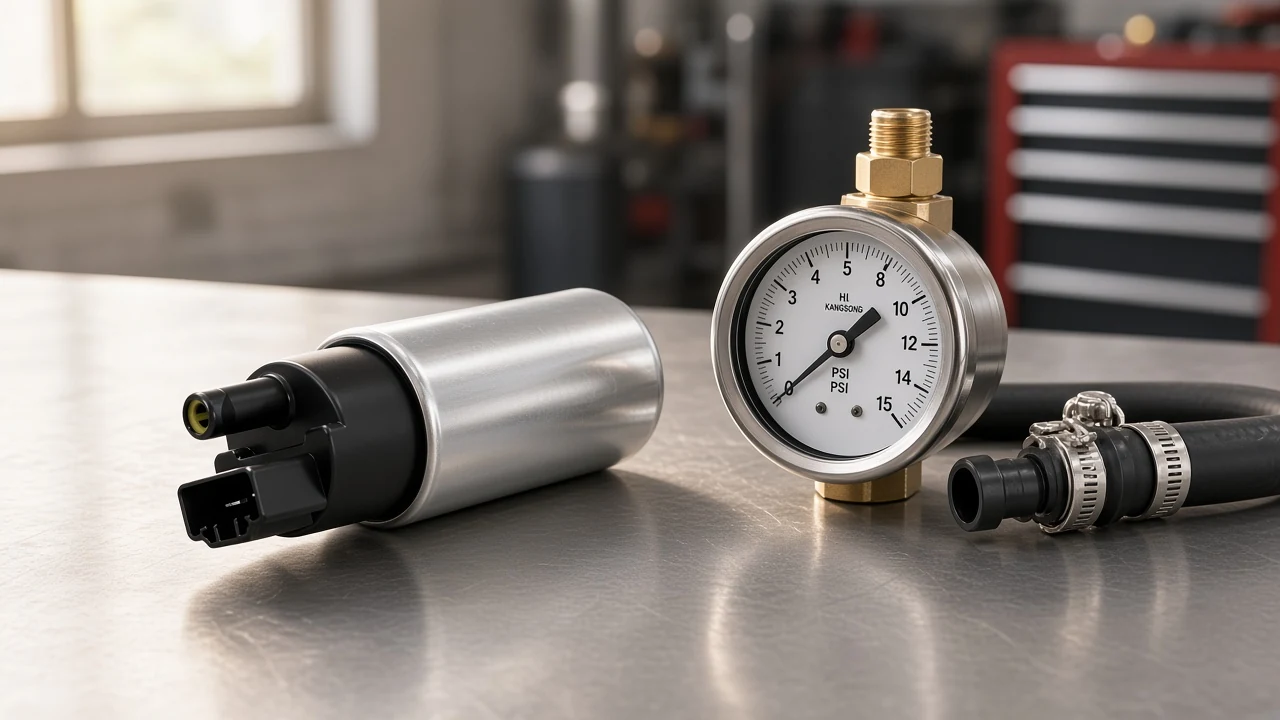
| Fuel system | Supply pattern it expects | What that means at purchase |
|---|---|---|
| Carbureted engine | Low pressure into a float chamber | Shop the low-pressure family and budget for a regulator and a gauge |
| Port or throttle-body injection | Higher and steadier pressure | Match the vehicle’s required band; do not guess from a free-flow number |
| Fuel transfer or dispensing | Volume into a nozzle, not rail pressure | Different duty—an engine-feed pump is not a substitute |
Flow Ratings: Read Them at Operating Pressure
A free-flow GPH number without pressure and voltage is a weak buying figure. Flow falls as system pressure rises, and it also moves with the voltage at the pump.
Performance catalogs often publish LPH at a stated PSI and a test voltage such as 13.5 V. Automotive replacement listings more often print GPH alone.
Diesel dispensing equipment may quote GPM for a completely different job. Two numbers only compare once the unit, the duty, and the test pressure match.
Independent selection notes make the same point: free-flow ratings without pressure and voltage mislead, and published flow should be read at the pressure the system will actually hold.
One manufacturer illustration shows roughly a fifth more volume when terminal voltage rises from 12 V to 13.5 V at high pressure. Use that as a method reminder, not as a capacity claim for any Kangsong listing.
When you compare candidates, write down the pressure you need first, then ask which listing publishes flow at or near that pressure. A “300 LPH” sticker with no pressure attached is advertising language until those conditions appear.
Mount Location: Electric External Fuel Pump vs In-Tank
An electric external fuel pump mounts outside the tank, usually along the frame rail or near the tank outlet. An in-tank fuel pump lives submerged in fuel as a module or assembly.
Because an electric pump needs no mechanical power from the engine, it can sit anywhere between the tank and the engine. Factories still prefer in-tank mounts for cooling, quieter running, and easier priming.
External mounts win on service access and on vehicles where dropping the tank is impractical.
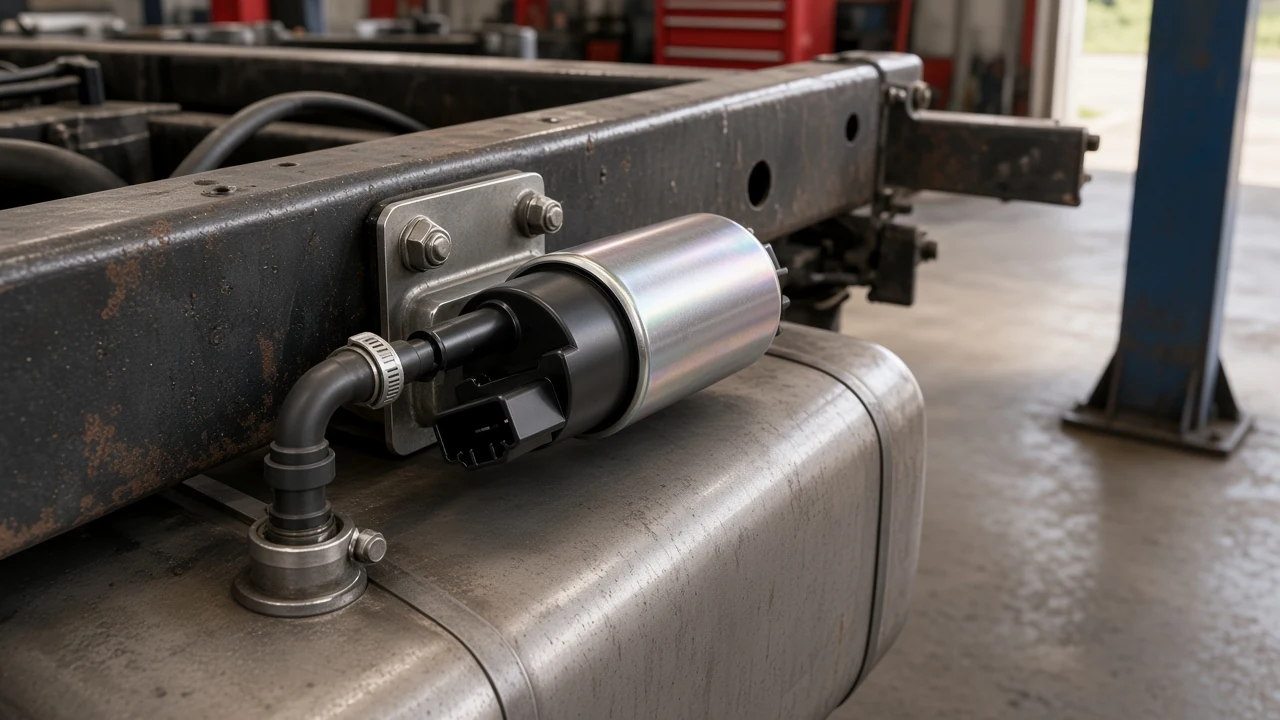
The hard rule for an external pump is height and distance. Electric fuel pumps push far better than they pull.
Mount the pump low and as close to the tank as you can so gravity helps feed the inlet. A pump hung mid-chassis under suction is a common path to cavitation, vapor lock, and early failure.
From the field: On r/EngineBuilding, builders repeat the same mount advice in plain language: put the pump on the frame rail “below gas tank or as close to below as you can get,” because “these pumps are pushers, not suckers.” Another thread on a failed inline install after an EFI swap points to the same failure mode—too high or too far from the tank, plus an overly restrictive pre-pump filter—even when a relay is already in the circuit. That is owner practice, not a dyno sheet.
For a deeper external-versus-internal comparison, use external fuel pump vs internal. The case for electric delivery in general lives on advantages of an electric fuel pump.
Gasoline Inline Supply Pumps Are Not Diesel Injection Pumps
The word “inline” also names a diesel inline injection pump architecture. That is a different device class from a gasoline or low-pressure electric supply pump mounted in the fuel line.
Encyclopedia and diesel-system writing treat high-pressure injection pumps—inline, plunger, common-rail, and related forms—as engine-driven hardware that can run at thousands of psi. The pump discussed here is a supply pump that feeds a carburetor or a fuel rail at far lower pressure.
If your search landed on diesel injection families, stop and open diesel fuel pump types before you compare gasoline electric listings. Mixing those catalogs is how a procurement file ends up with the wrong part number family.
Connector, Plumbing, and Fitment Checks Before You Buy
Whether an install is a drop-in comes down to the connector, the inlet and outlet sizes, the kit contents, and the application or interchange list printed on the product page.
Good product pages publish a connector pin count, hose or fitting sizes, and either an application table or an interchange list. A 2-pin main connector, a stated flow range, and a vehicle table tell you the shape of the job before any tool comes out.
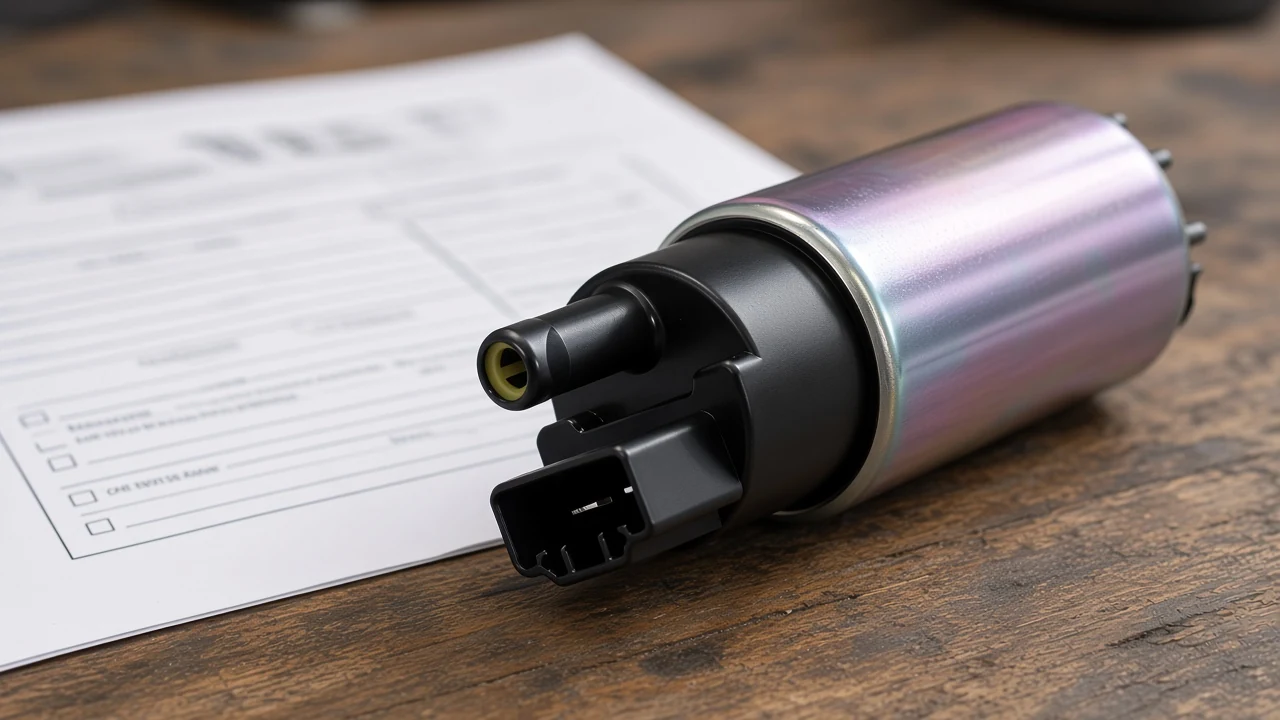
Walk the page in this order: confirm the fuel and the pressure class, confirm the published flow, confirm the electrical interface, then read the application or interchange list against the vehicle in front of you.
Where a page prints a field without a unit, treat that field as unusable. OE interchange long-tails belong on the product page, not copied into a blog post.
Recommended Electric Gasoline Fuel Pumps to Check
After the checklist, open scoped first-party pages and compare only the fields those pages publish. The two starting points below are electric gasoline fuel pumps with published DC 12V, flow, and connector data.
Use them as comparison endpoints after you have decided an electric inline / external path is the right morphology. Do not treat the titles as a claim that every SKU is a frame-rail housing when a page describes a tank or assembly install.
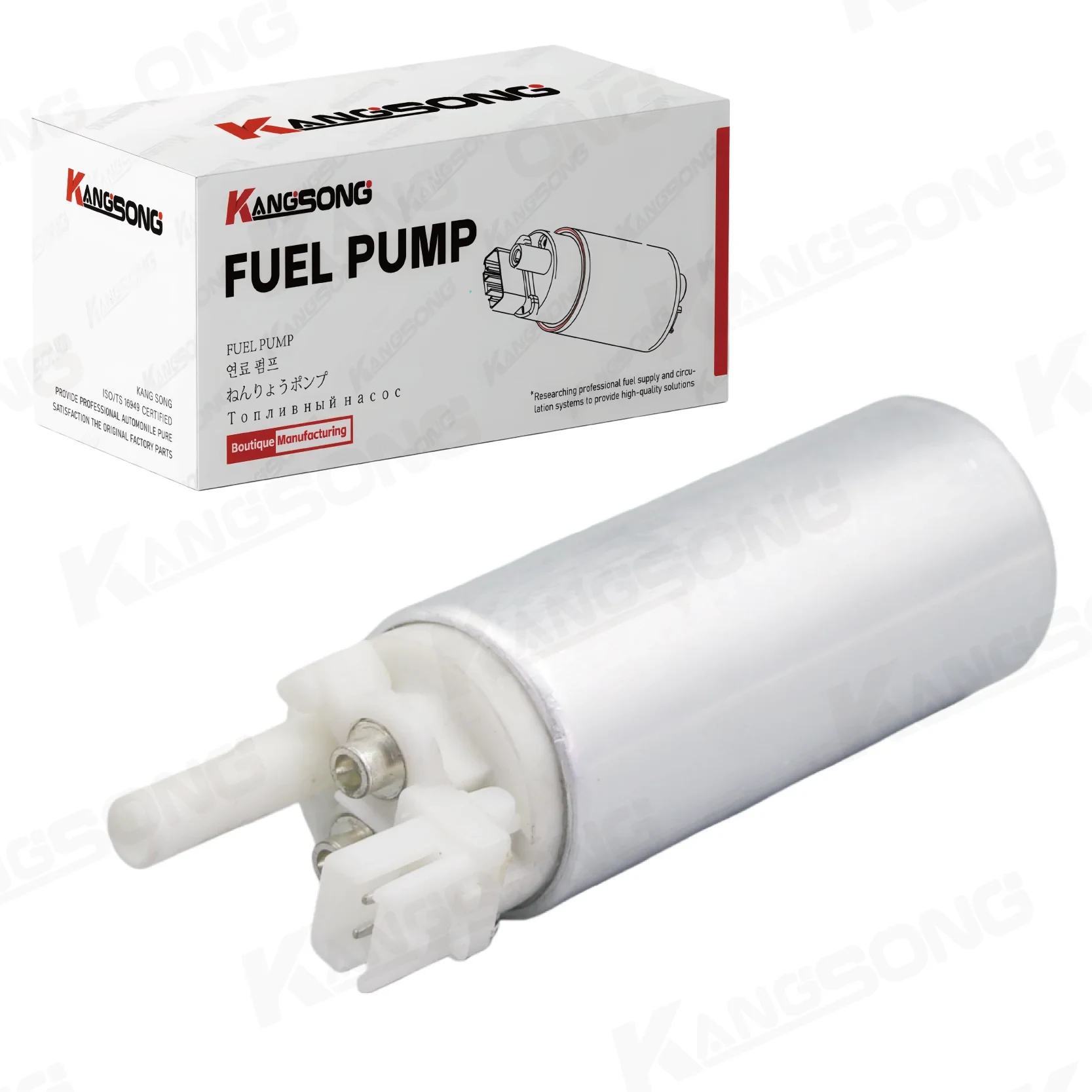
The first option is an electric gasoline fuel pump with installation kit scoped to the 1987–1995 C/K pickup application named in its title. The page publishes DC 12V working voltage, a 43.3–49.5 GPH flow range, a 2-pin main connector, included accessories, and a −40 °C to +85 °C working temperature range. Read the interchange list on that page for the numbers themselves.
The second option is an electric gasoline fuel pump for Hyundai and Kia applications. It publishes the same 43.3–49.5 GPH flow range and 2-pin connector style, plus a 0.30 kg weight, a 170×80×85 mm size, and a make/model/year application table covering the listed Hyundai and Kia platforms.
| Published field | Product 2551 (C/K kit) | Product 2552 (Hyundai/Kia) |
|---|---|---|
| Working voltage | DC 12V | See product page |
| Flow (GPH) | 43.3–49.5 | 43.3–49.5 |
| Main connector | 2 pins | 2 pins |
| Accessories included | Yes | Yes |
| Size / weight | See product page | 170×80×85 mm / 0.30 kg |
| Fitment evidence | Titled C/K application + interchange list on page | Published Hyundai/Kia year table |
Browse related hardware from the products catalog root when the vehicle is outside those two scopes. Skip invented diesel fitment, MOQ, certification, or warranty terms that are not published for the comparison.
FAQ
What is an electric inline fuel pump vs an in-tank pump?
An electric inline (external) pump mounts outside the tank along the fuel line or frame rail. An in-tank fuel pump sits submerged in fuel, often as part of a module with a strainer and level sensor. External wins on access; in-tank usually wins on cooling and quiet running.
Where should I mount a 12-volt electric inline pump?
Mount it low and as close to the tank outlet as practical so the pump pushes fuel instead of pulling a long suction column. Keep it away from exhaust heat. Mid-chassis suction mounts are a common failure pattern.
Can I replace a failed in-tank pump with an electric external fuel pump?
Sometimes, when tank access is blocked and the pressure class, plumbing, and safety cutoffs are redesigned for an external mount. It is not a drop-in of the same part. Confirm pressure, filtration, and circuit protection before you bypass a failed in-tank unit.
What pressure do I need for carburetor vs EFI?
Carbureted mechanical supply is a low-pressure job—about 10–15 psi is the encyclopedia typical for that pump class, and many carb setups run even lower at the float bowl with a regulator. Older port and throttle-body injection typically needs about 40–60 psi. Direct-injection high-pressure pumps sit outside the supply-pump selection covered here.
Do I need a fuel pressure regulator with an in line fuel pump electric setup?
On carburetor systems, usually yes whenever the pump can exceed what the needle and seat will hold. On EFI systems, follow the rail/regulator design the engine already uses. Guessing without a gauge is how flooding or lean conditions start.
Is a diesel inline fuel pump the same thing?
No. A diesel inline injection pump often names a high-pressure injection architecture.
The hardware covered here is a gasoline or low-pressure electric supply pump mounted in the line. Use the diesel fuel pump types page when your job is injection hardware.
How should I read GPH or LPH ratings?
Read flow at the operating pressure and the voltage the listing used for the test. Free-flow numbers without those conditions are weak comparisons. Convert units only after the duty matches.
How do I verify fitment on a product page?
Match the vehicle to the published application or interchange list, then confirm voltage, flow, connector, and fittings. If the vehicle is not on the page, keep browsing the catalog root instead of forcing the listing.