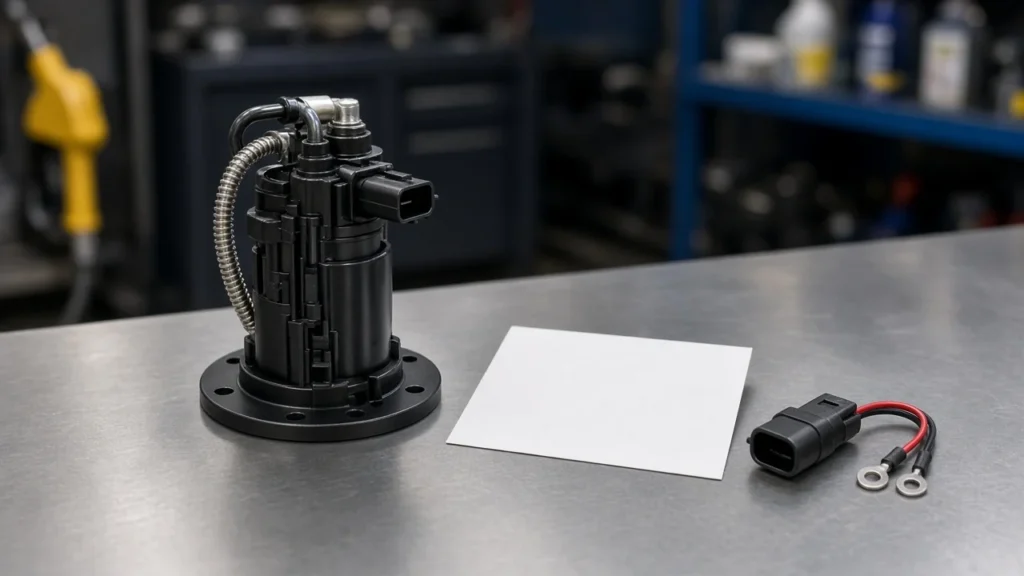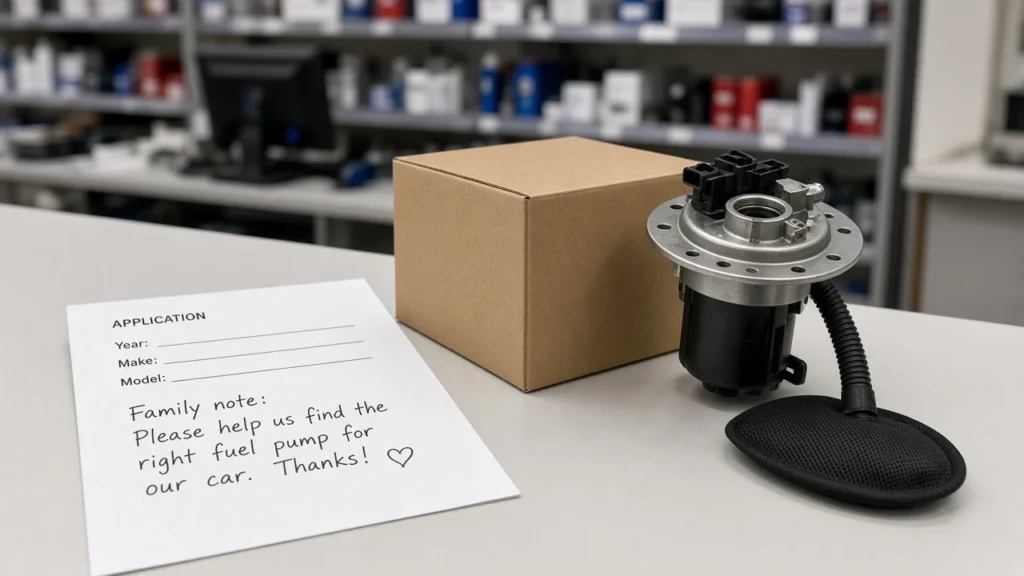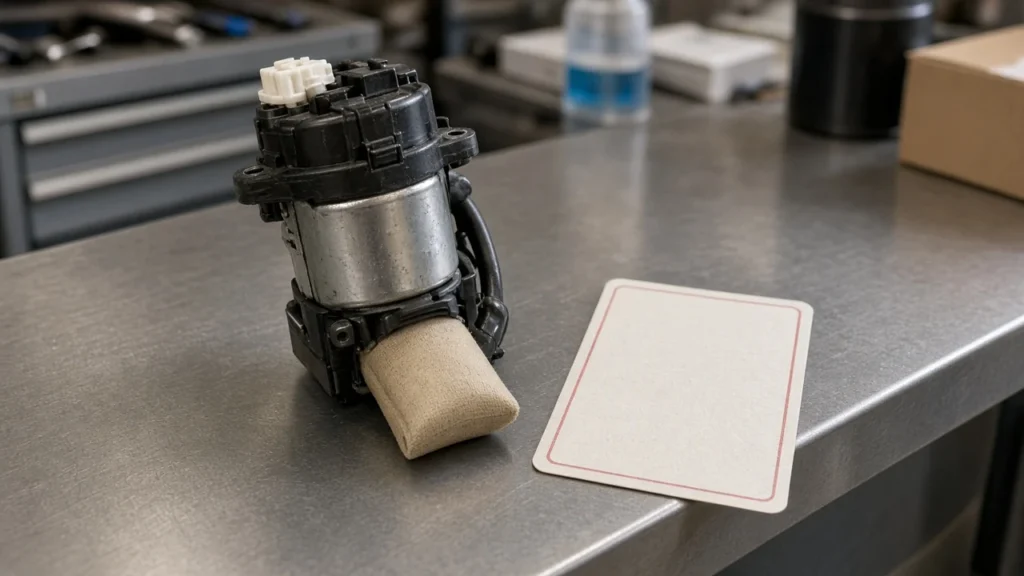
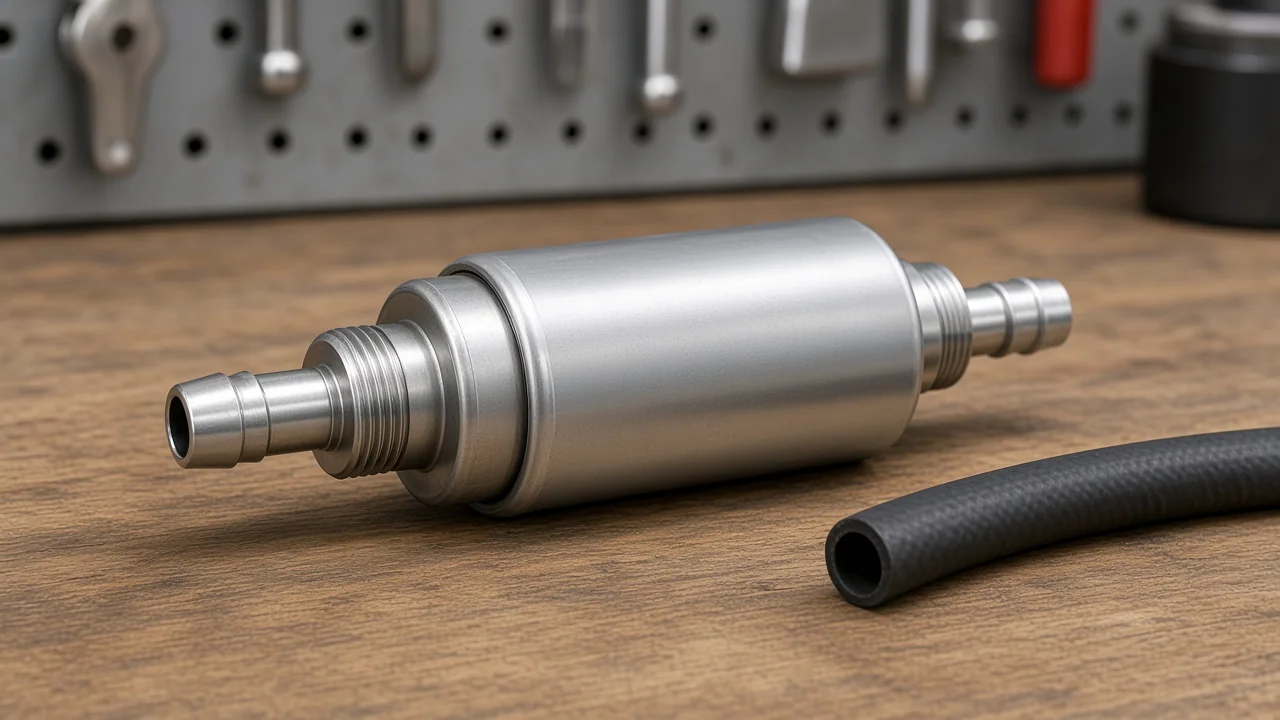
Answering what is an inline fuel pump in one line: it is an external electric fuel pump mounted outside the tank—often on the frame rail in the fuel line—that draws fuel from the tank and pushes it toward a carburetor or fuel rail. Zhejiang Kangsong (Kangsong, 浙江康松) is an automotive fuel pump OEM / manufacturer; this definition page keeps the inline form clear before a Kangsong kit or assembly is quoted.
Product path: inline/electric electric gasoline fuel pump kit · Audi HPFP SKU · HPFP category · hub
This page defines that in-line fuel pump, shows how an inline electric fuel pump works, explains why gravity feed matters, and keeps a short contrast with in-tank designs—without turning into a full comparison or diesel injection-pump lecture.
What an Inline Fuel Pump Is (and What It Is Not)
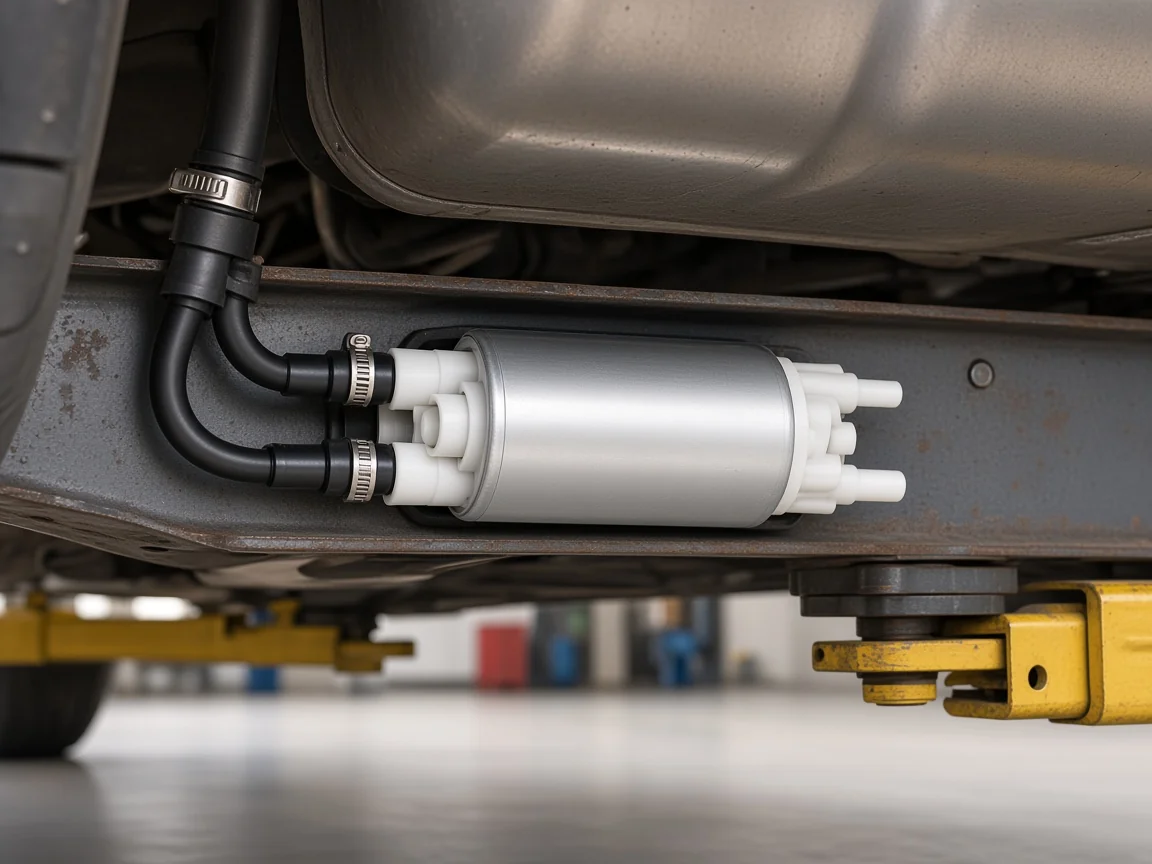
An inline fuel pump is an electric fuel pump installed outside the fuel tank, typically spliced into the supply line along the chassis or frame rail.
In plain terms, it is the pump that hangs on the vehicle instead of living in the gasoline. Builders also call it an external fuel pump or an in-line fuel pump—the same mounting idea with different spelling.
It is not the submerged in-tank fuel pump module that most late-model cars use. It is also not a diesel mechanical in-line injection pump (a cam-driven multi-plunger pump that meters injection events). Those diesel “in-line” systems share a name fragment and a different job.
For a broader map of electric, mechanical, and module styles, see Kangsong’s overview of fuel pump types.

How an Inline Electric Fuel Pump Works
When you ask how does an inline fuel pump work, the short answer is: battery power spins a motor and a pumping element that pulls fuel in and pushes pressurized fuel toward the engine.
Key-on or run power feeds the motor. The pumping element—often a rotary vane, roller vane, or gerotor / vane element—creates a low-pressure inlet zone and a higher-pressure outlet path. Fuel then leaves toward the carburetor or the fuel rail that feeds injectors.
Many electric designs include a check valve so residual pressure does not drain straight back into the tank when the pump stops. A fuel filter on the inlet side protects those tight clearances from debris before the pump has to swallow it.
| Stage | What happens | Reader takeaway |
|---|---|---|
| Power on | Motor receives vehicle voltage | No power, no fuel movement |
| Inlet draw | Low pressure at the inlet invites tank fuel | Gravity feed helps this step |
| Pressurize | Vane/gerotor element raises outlet pressure | Flow and psi are system-specific |
| Deliver | Fuel moves to carburetor or fuel rail | Downstream hardware sets the target |
Independent technical primers often cite multiport electric pumps in a broad band around 30–85 psi depending on the application. Carbureted mechanical pumps on many older engines sit much lower, often near 6–8 psi. Treat those as orientation ranges, not a single universal target for every build.
Why Gravity Feed and Mount Location Matter
Mount the pump low and close to the fuel tank because electric pumps push better than they pull.
The ideal story is simple: keep the inlet near the bottom of the tank so the weight of the fuel—and atmospheric pressure on the tank—helps fill the pump.
Long suction lifts, engine-bay mounts high above the tank, or long frame runs that force the pump to “suck” increase inlet vacuum. That vacuum can boil the light ends of gasoline into bubbles.
The result is cavitation: the pump spins on vapor instead of liquid, pressure collapses, and heat climbs.
Important: Frame-rail mounts below the tank beat convenient engine-bay mounts above it. Community builders summarize the same rule as “pushers, not suckers”—an external pump that has to lift fuel for long stretches works harder and fails earlier.
Keep the housing away from exhaust heat, use isolation mounts when noise travels through the chassis, and confirm flow direction markings before clamping hoses. Detailed wiring diagrams belong in a separate installation article; the principle here is location first.
Inline vs In-Tank: The Short Contrast
In-tank units run submerged for cooling and quieter delivery, while inline units trade that bath for access and tank-preserving installs.
| Topic | Inline / external | In-tank |
|---|---|---|
| Location | Outside tank, often frame rail | Inside tank / module |
| Cooling & noise | Air-cooled; more audible | Fuel-cooled; quieter |
| Service access | Usually easier without dropping the tank | Often needs tank drop or access panel |
| Delivery habit | Must be fed carefully (gravity / short suction) | Pushes from inside the tank volume |
OEM fuel-injected vehicles largely standardized on submerged pumps because the fuel cools and quiets the motor and the entire line stays under push. That does not make every external pump a bad idea—it means the install details carry more of the reliability burden. A dedicated external-versus-internal decision page can go deeper later; this section only orients the definition.
Where Inline Fuel Pumps Still Show Up
Classics, carbureted builds, and tank-preserving EFI retrofits still use external pumps when the plumbing respects gravity feed.
A 1960s–1970s carbureted truck that needs steadier electric supply without cutting an access hatch is a common scene. Mild EFI conversions that keep a stock tank sometimes start with an external pump because the builder can bolt it on, run lines, and prove pressure before committing to a full in-tank module. Race or temporary setups also favor service access when a roadside swap must happen without draining a cell.
Those use cases still fail when someone mounts the pump for convenience instead of inlet physics. If you are sizing a carbureted or EFI retrofit program beyond the definition, Kangsong’s inline fuel pump selection guide covers application matching without repeating this page’s job.

Pressure and Flow Numbers Readers Often Mix Up
Treat psi and flow as system-specific targets, not a single universal rating stamped on every inline pump.
Pressure (psi) describes how hard the fuel is pushed. Flow (GPH or LPH) describes how much volume the pump can move.
A carbureted bowl may be happy at low single-digit to low teens psi, while many EFI rails sit far higher.
Copying a neighbor’s LPH number without matching horsepower, fuel type, regulator style, and return layout is how builds end up loud, hot, or lean.
When a product card lists a pressure band or a GPH window, read it as that SKU’s published envelope—then confirm the vehicle system’s required pressure with a gauge after install. Numbers on a catalog page do not replace a rail reading.
Recommended Electric Gasoline Fuel Pump with Installation Kit
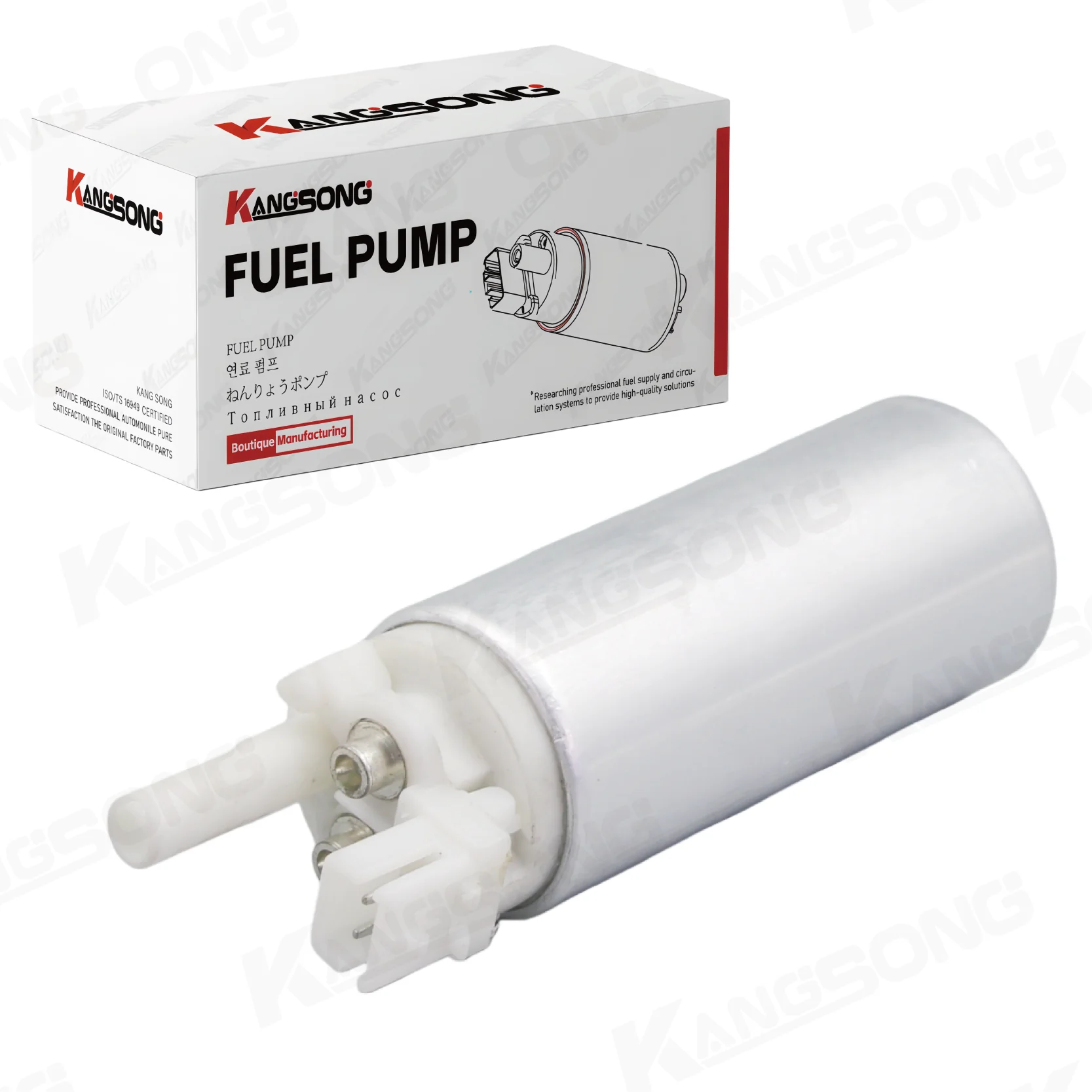
For readers who need a concrete electric gasoline pump with install accessories, Kangsong’s Electric Gasoline Fuel Pump with Installation Kit (product 2551, brand KS-360501) is a first-party example in this family.
Published PDP fields include DC 12V operation, accessories included, a 2-pin main connector, GPH 43.3–49.5, and a maximum air pressure band of 12–26, with OE crosses such as EP240, EP386, and 25168719 listed on the product page. Use those fields for the applications named on that page—do not treat the SKU as a universal swap for every truck or as an equivalent to third-party performance brands.
Related catalog browsing can start from the fuel-pump product category when you already know the OE number or vehicle line.
Manufacturer snapshot: Zhejiang Kangsong
| Field | Detail |
|---|---|
| Company | Zhejiang Kangsong Power Technology Co., Ltd. (brand Kangsong / 浙江康松) |
| Role | Automotive fuel pump OEM / manufacturer |
| Product types | Automotive electronic fuel injection pumps; fuel pump assemblies / modules |
| Applicable here | External / inline electric fuel pumps (not diesel mechanical in-line injection pumps) |
| MOQ / lead time | Quote-based — confirm via Contact / Inquiry (no universal MOQ published on About) |
| Certificates | National high-tech enterprise certificate; 28 patents (About Kangsong). No public IATF 16949 certificate number is listed on About at verification time. |
FAQ
Does Kangsong make inline fuel pumps as an OEM manufacturer?
Zhejiang Kangsong (Kangsong) manufactures automotive electronic fuel pumps and assemblies as an OEM / manufacturer. Inline here means an external electric pump in the line—not a diesel mechanical in-line injection pump.
Which Kangsong OEM fuel pump page fits a classic inline electric install?
Start with the printed electric gasoline fuel pump with installation kit when the voltage and gasoline scope match, or browse products-root. Confirm the PDP text before ordering.
Where is the Kangsong manufacturer overview for inline OEM sourcing?
Use About Kangsong for company facts and Contact / Inquiry for OEM / ODM quotes.
How does an inline fuel pump work?
Battery power spins a motor and pumping element that draws fuel from the tank and pushes it toward the carburetor or fuel rail. Filtration and a check valve usually sit around that path to protect the pump and hold residual pressure.
How is an inline pump different from an in-tank pump?
An inline unit mounts outside the tank in the fuel line; an in-tank pump sits submerged in the tank, usually as part of a module. The submerged design cools and quiets the motor; the external design trades that for easier access.
Where should an inline electric fuel pump be mounted?
Mount it low and close to the fuel tank—ideally near the tank bottom—so gravity feed helps the inlet. Avoid long suction lifts and hot engine-bay placements above the tank.
Can mounting an inline pump too high cause vapor lock or cavitation?
Yes. High mounts increase inlet vacuum, which can boil light fuel ends into vapor. The pump then cavitates, pressure falls, and the housing can overheat.
Is an inline fuel pump the same as a diesel in-line injection pump?
No. The gasoline/aftermarket “inline” electric pump is an external supply pump. A diesel in-line injection pump is a cam-driven multi-plunger injection device with a different purpose.
Why do many modern cars use in-tank pumps instead?
Submersion cools and quiets the motor and lets the pump push from inside the tank volume, which stabilizes delivery for most OEM EFI layouts.
Do electric inline pumps usually include a check valve?
Many electric designs use a one-way check valve to hold residual line pressure when the pump stops, which can shorten cranking time. Confirm the feature on the specific unit you buy.
When do builders still choose an inline / external fuel pump?
When they need access, want to keep a stock tank, or are proving a mild carbureted or retrofit EFI system—provided the pump is gravity-fed and kept away from exhaust heat.
About Kangsong
Zhejiang Kangsong (Kangsong, 浙江康松) is an automotive fuel pump OEM / manufacturer of electronic fuel injection pumps and fuel-pump assemblies. Use this page’s technical decision first, then open company and product paths:
- About Kangsong — manufacturer profile and quality notes
- Contact / Inquiry — RFQ, samples, MOQ and lead time
- Electric gasoline fuel pump with installation kit — printed fitment only as shown on that product page
- Products catalogue — browse when the vehicle is not on a single PDP