Across workshop and supplier technical sources, contaminated fuel and dirt particles are the most commonly cited answer to what is the most common cause of fuel pump failure—especially for premature electric in-tank pump damage. That ranking sits ahead of wiring faults and chronic low-fuel overheating, which still matter as major co-drivers. This page walks the evidence chain from contamination to dry-run heat, then covers voltage drop, low-fuel cooling loss, brief faulty-pump cues, and the checks to finish before ordering another assembly.
Contaminated Fuel Is the Most Common Cause Cited for Premature Pump Failure
Contaminated fuel and dirt particles are the most commonly cited premature failure cause for in-tank electric pumps.
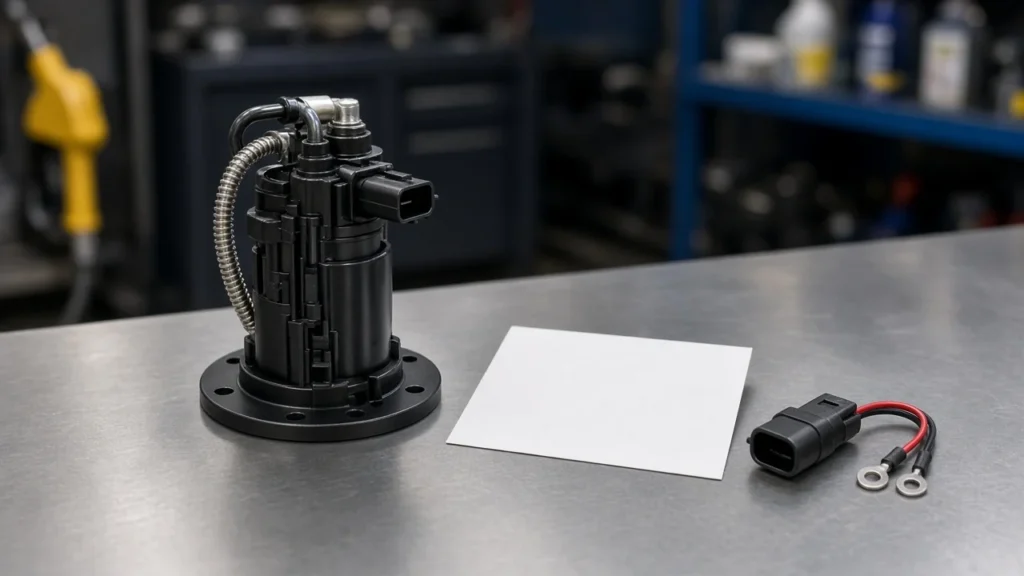
The primary entity here is the Electric in-tank fuel pump, cooled and lubricated by the fuel it moves. Fuel contamination / dirt particles abrade the impeller and pack the intake screen until the motor works harder than it should.
Supplier technipedia and independent repair education converge on that ranking. Training materials aimed at technicians call contaminated fuel the number-one cause of in-tank electric pump failures. Aftermarket fuel-supply education similarly names dirt particles as the leading failure driver.
Moisture makes the problem worse. Water in fuel can promote rust or lime-like deposits that jam rotating parts or clog screens.
Older steel tanks are especially vulnerable when condensation forms in cool, humid weather and the tank sits partly empty. Fine grit still gets through many inlet socks.
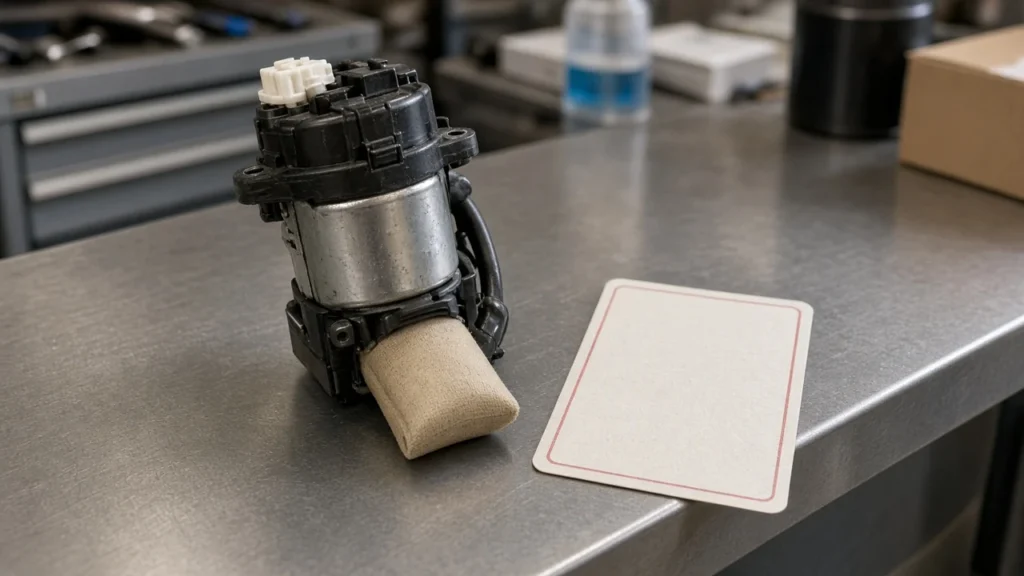
The Inlet strainer (sock) is only a coarse pre-filter. Typical strainer designs often pass particles smaller than roughly 70 microns, so clean-looking fuel can still damage the pump.
For fleet and wholesale readers, the takeaway is blunt. If a pump failed with rusty or milky fuel, black sediment in the sock, or a tank that smells sour, treat contamination as the default root cause until proven otherwise.
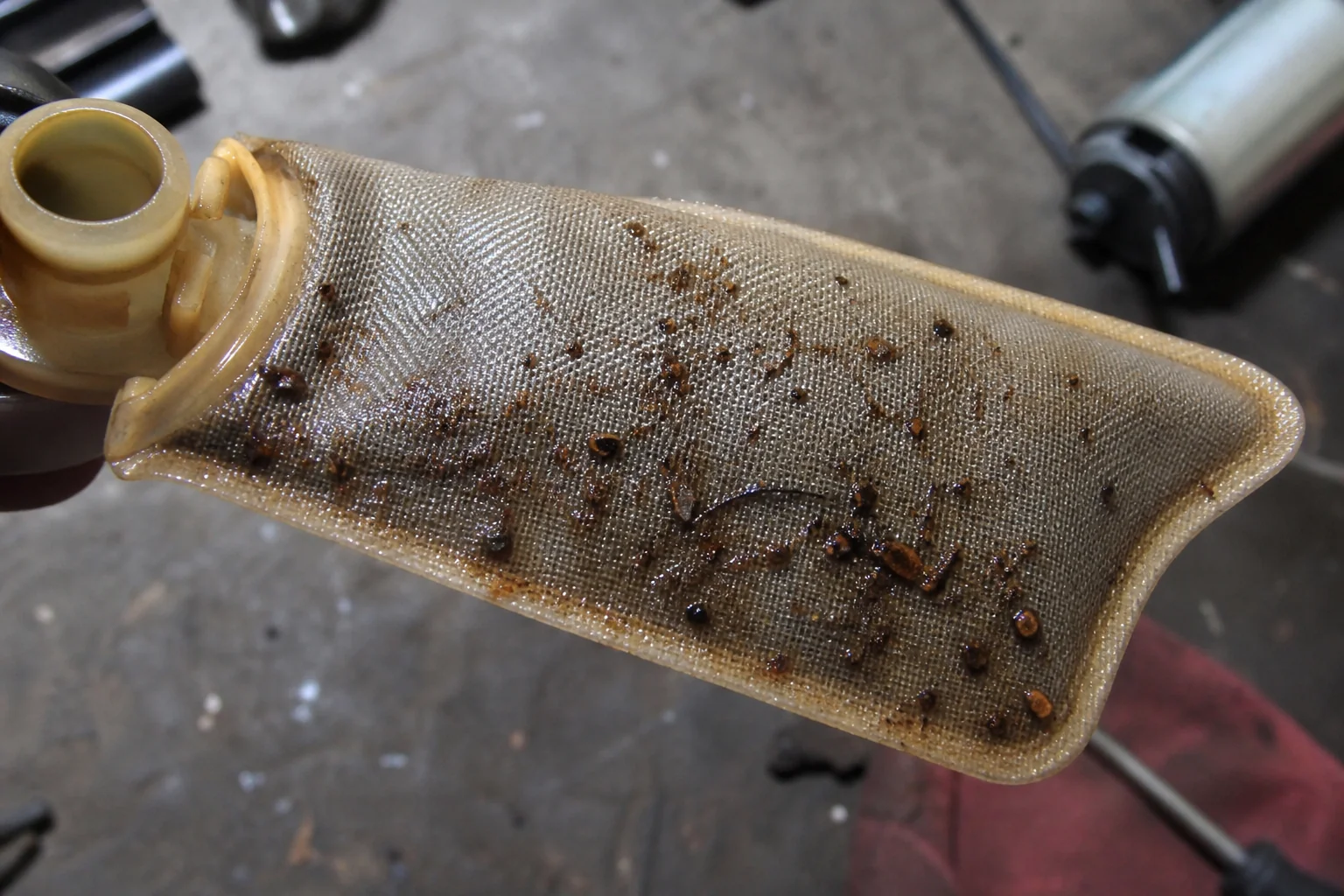
How Clogged Strainers Turn Contamination Into Dry-Run Damage
A clogged inlet strainer starves flow so the pump loses cooling fuel and can dry-run to failure.
Modern electric pumps rely on fuel flowing through and around the motor for lubrication and cooling. When the sock packs with debris, delivery rate falls and operating noise rises.
Dry running / overheating follows when the pump pulls vapor or air instead of liquid. Workshop damage guides warn that dry running damages the pump system quickly.
The chain is easy to miss on a busy bay floor. The driver reports hesitation; the tech hears a louder rear-tank whine; fuel pressure sags under load.
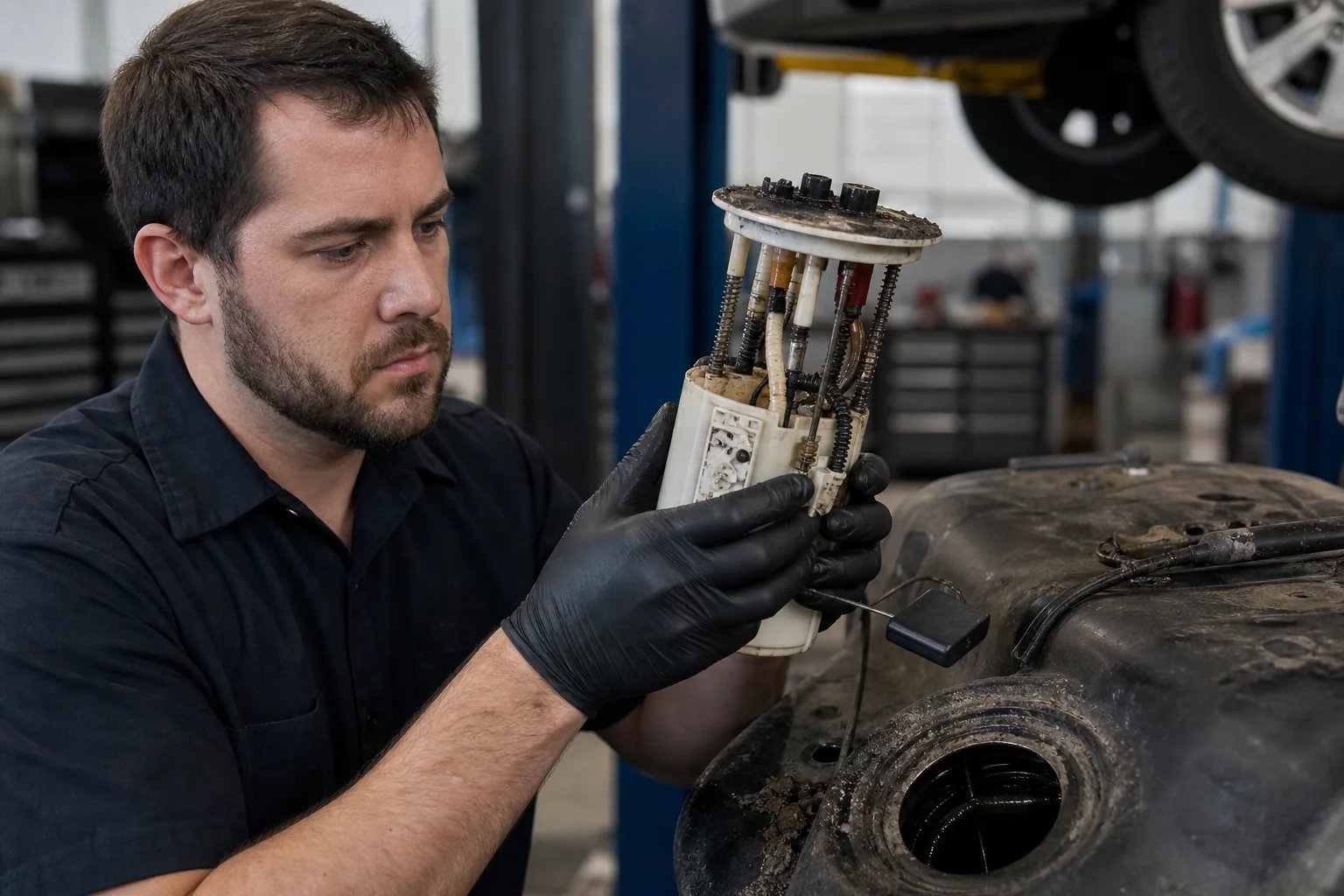
Someone then swaps the pump while the sock stays brown and packed. Within weeks the replacement repeats the same noise because the restriction never left.
The Fuel filter (inline) plays a related role. A plugged filter raises the work the pump must do to hold pressure.
That extra load shows up as heat and early brush or impeller wear. When you answer what is the cause of fuel pump failure for a specific vehicle, inspect the strainer and filter together—not only whether the motor spins.
Dirt can also stick the Check valve open so residual rail pressure bleeds down and cranking times stretch.
Electrical Voltage Drop and Bad Connections as a Major Co-Driver
Poor connections and voltage drop heat the motor and can mimic a dead pump.
Industry training materials rank electrical connection problems as a major second-line reason pumps get replaced. Voltage drop / connectors cut supply under load even when the impeller is still capable.
The motor then draws more current, runs hotter, and either fails early or looks dead during a quick listen-for-prime check. A blown fuse or sticky relay can stop delivery without any contamination inside the tank.
Sister guidance on how to test a fuel pump fuse covers that branch. This page only needs the principle: measure supply and ground quality before you condemn a module that never received clean power.
Connector inspection is cheap insurance. Black sooty deposits, eroded pins, or heat-distorted housings belong on the work order beside any pump SKU.
Low Fuel, Overheating, and Dry-Run Risk in the Tank
Repeatedly running the tank very low reduces liquid cooling and shortens pump life.
Carmakers place many electric pumps in the tank so liquid fuel can carry heat away from the motor. Shop guidance repeatedly warns that habitually driving below about a quarter tank leaves the pump with less cooling bath.
Community technicians make the same point in plain language: fuel cools the pump; when the tank runs near dry the unit can suck air and overheat.
Nuance matters for modern modules. Many late-model assemblies sit in a reservoir cup that stays wet until the tank is nearly empty.
A single low-fuel trip is not automatic doom. The risk compounds when low fuel is chronic, when the strainer is already dirty, or when the vehicle truly runs dry.
Trade articles often note that pumps can reach 100,000 miles or more when lubrication and cooling hold. Heat and contamination, not calendar age alone, usually write the ending.
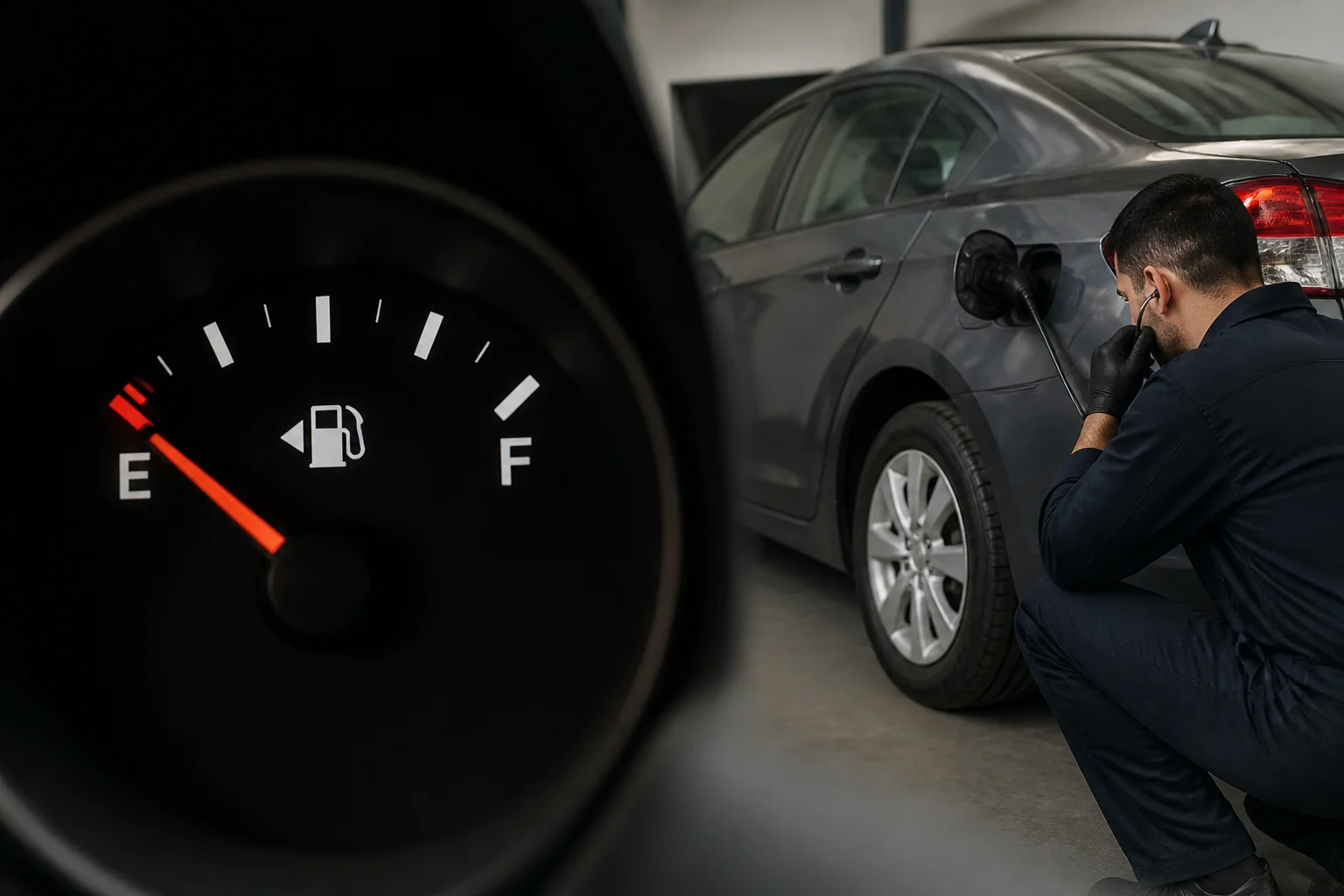
What a Faulty Fuel Pump Does—and What It Sounds Like
A failing pump may hard-start, stall, lose power under load, or whine loudly from the tank area.
Readers also ask what does a faulty fuel pump do. In short, it stops delivering stable pressure and volume.
Common patterns include long cranking, stalling after a short run, hesitation on hills or under tow, and a no-start that still cranks. Those patterns overlap with clogged filters, bad relays, and pressure-regulator faults.
Treat them as clues that fuel delivery is weak—not as automatic proof the impeller is dead. For a fuller symptom walkthrough, use the sister pages on symptoms of a bad fuel pump and in-tank fuel pump symptoms.
What does a faulty fuel pump sound like? A healthy prime is usually a brief, quiet hum from the rear.
A failing unit often shifts to a louder, higher-pitched Whining noise or buzz, especially with a low tank or a restricted sock. Sudden silence on key-on can mean the motor stopped—or that a fuse/relay never powered it.
This article is not a vacuum-mechanical pump primer. If you are testing a carbureted vacuum-driven pump rather than an electric in-tank module, follow the separate vacuum fuel pump test guide instead.
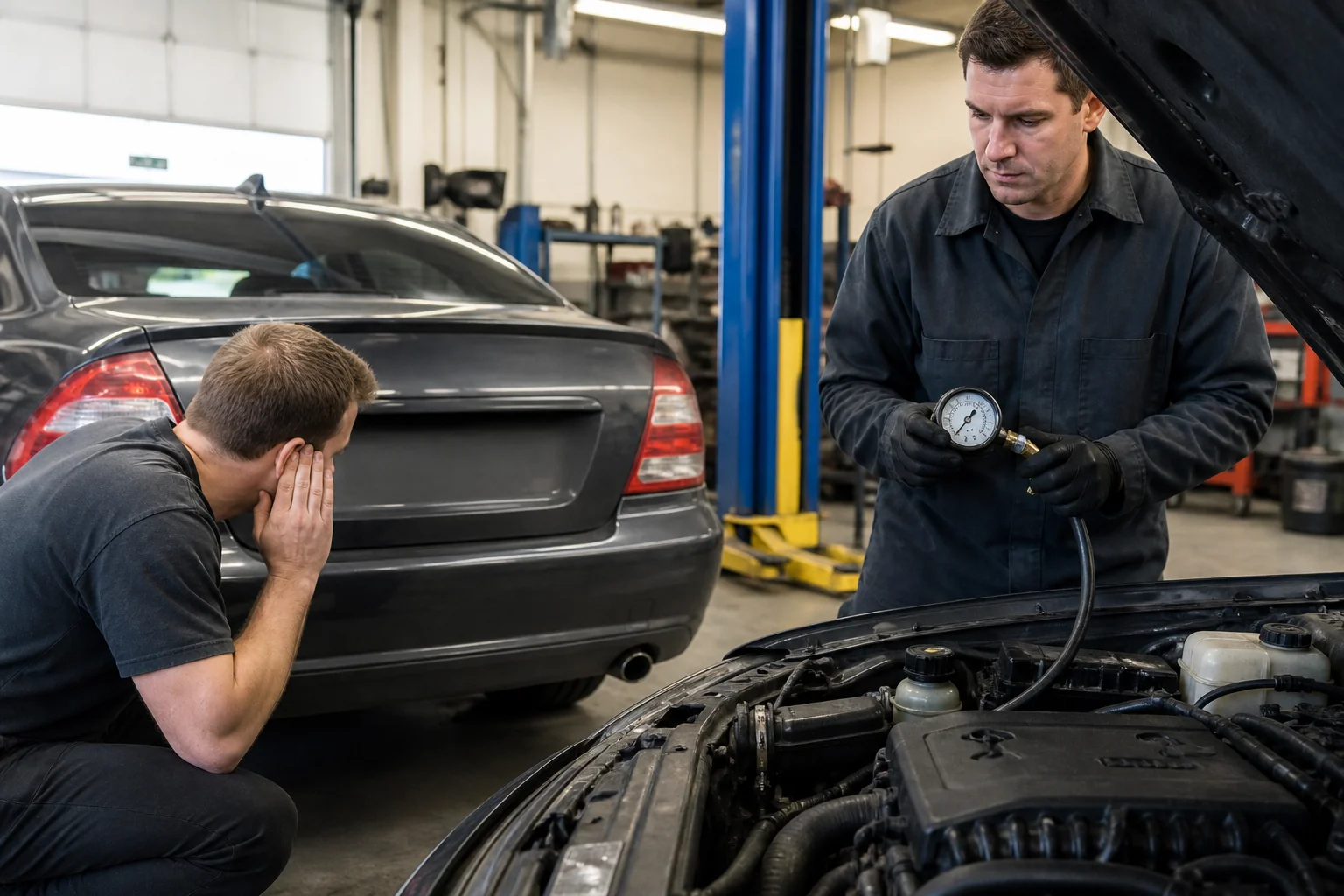
Cause Checks Before You Replace the Pump
Inspect tank contamination, strainer/filter load, and supply voltage before ordering another assembly.
Important: Skipping tank inspection and cleaning after a contamination-driven failure is one of the top reasons a replacement pump fails again quickly — source: https://ricksfreeautorepairadvice.com/what-causes-fuel-pump-failure-and-how-to-prevent-it/. Drain, inspect, and clean (or replace) a dirty tank, and renew the strainer and fuel filter with the module when contamination is evident.
From the field: Drivers and techs often argue about whether sediment myths are overstated — source: https://www.garagejournal.com/forum/threads/vintage-diesel-test-kit.558341/. The durable workshop habit is the same: write down pressure and voltage evidence instead of guessing parts, and remember low fuel still matters because the pump needs liquid cooling.
Use the two tables below as a buyer checklist, not as a substitute for vehicle-specific service data.
Table 1 — Cause ranking and mechanism
| Rank / role in evidence | Cause | What it does to the pump | First check |
|---|---|---|---|
| Most commonly cited premature-failure driver | Contaminated fuel / dirt / moisture debris | Abrades impeller; packs strainer; can jam rotating parts | Inspect sock, drained fuel sample, tank interior |
| Mechanism that finishes the kill | Clogged strainer / starved flow | Removes cooling fuel → dry-run heat | Compare noise + pressure with filter history |
| Major co-driver (often second in training materials) | Voltage drop / bad connectors | Extra amps, heat, false “dead pump” | Voltage under load; connector/pins; fuse/relay |
| Usage co-driver | Chronic low fuel / run-dry events | Less liquid cooling; air ingestion | Fuel-use pattern; reservoir-cup design notes |
Table 2 — Pre-replace checks and next actions
| Finding | Likely story | Next action before another pump order |
|---|---|---|
| Rust, water, or packed sock | Contamination primary | Clean/replace tank; new strainer + filter with module |
| Melted or sooty connector; low volts under load | Electrical primary or co-driver | Repair circuit; retest pressure before condemning pump |
| Habitual near-empty operation; hot noisy prime | Cooling / dry-run risk | Change fill policy; inspect sock for sediment slurry |
| Whine + weak pressure after recent pump swap | Root cause left in place | Revisit tank cleanliness and voltage; do not only swap brand |
Recommended Electric Fuel Pump Assemblies and Modules After Root-Cause Checks
After root-cause checks, browse Kangsong electric pumps and modules by fitment in the products catalog.
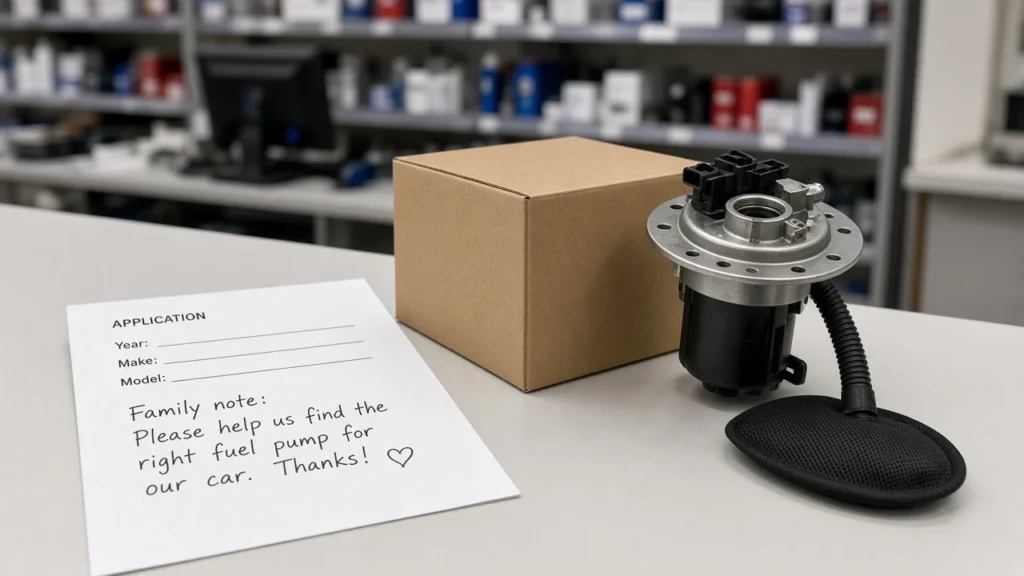
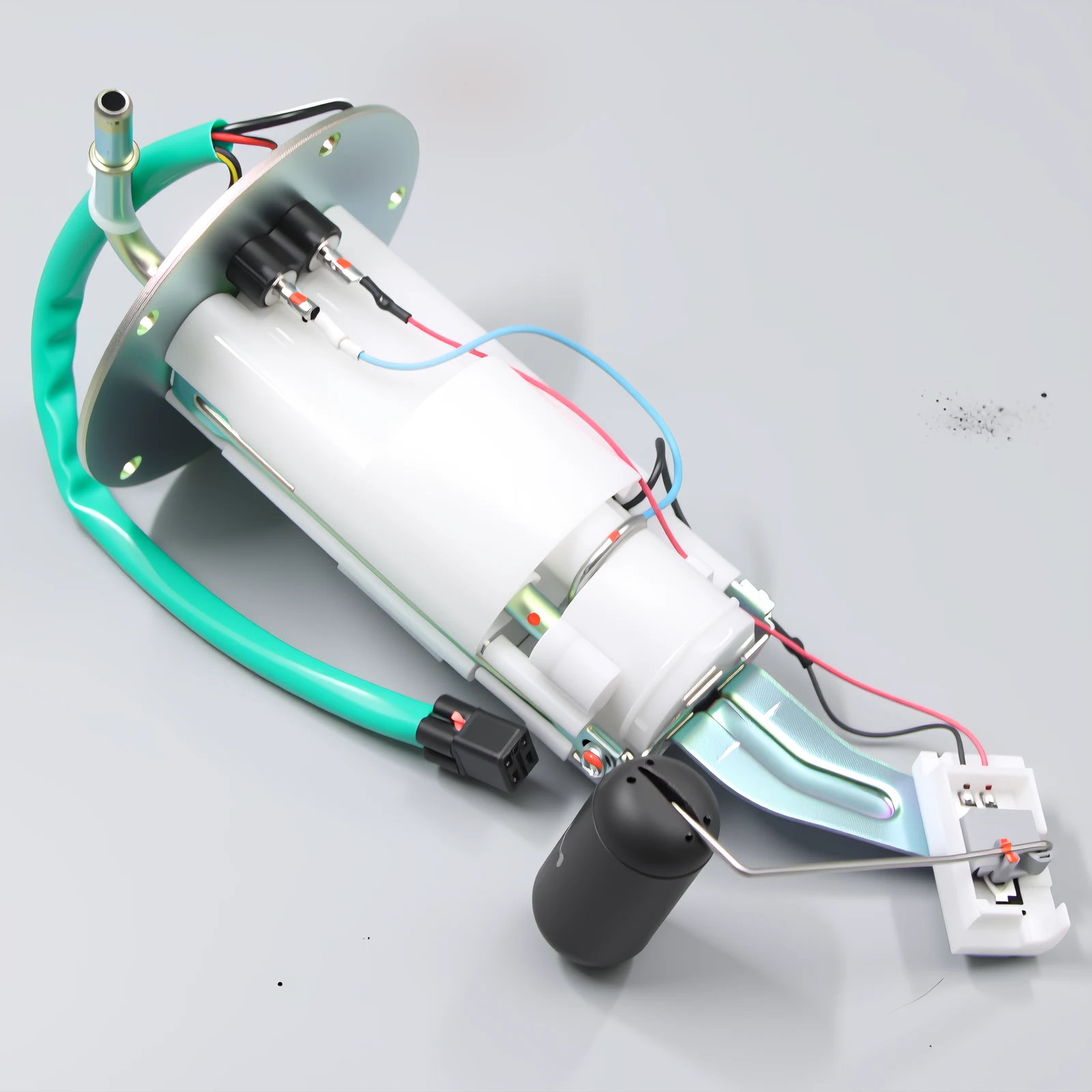
Once contamination, voltage, and cooling risks are documented, buyers still need a fitment-first Fuel pump assembly / module path. Kangsong publishes electric fuel pump assemblies and modules for distributor programs.
Start at the products catalog root and match the vehicle-scoped listing—for example this electric gasoline fuel pump with Hyundai/Kia-compatible Accent/Sephia coverage when that application is the actual platform.
Do not treat any one SKU as a universal pump, and do not assume third-party brand equivalence.
FAQ
What is the most common cause of fuel pump failure?
Across workshop and supplier technical sources, contaminated fuel and dirt particles are the most commonly cited cause of premature electric in-tank fuel-pump failure. Electrical problems and chronic low-fuel overheating remain major co-drivers.
What is the cause of fuel pump failure besides contamination?
Voltage drop, damaged connectors, clogged filters/strainers that force dry running, water-related rust or lime debris, and habitual low-fuel operation that removes cooling are the main additional causes covered here.
Does running on empty damage a fuel pump?
It can. Fuel cools and lubricates the electric motor; running near dry can let the pump ingest air and overheat. Modern reservoir cups reduce everyday low-fuel risk until the tank is nearly empty, but chronic empty running still raises wear.
What does a faulty fuel pump sound like?
Often a louder high-pitched whine or buzz from the tank area instead of a brief quiet prime hum. Sudden silence can mean no power or a dead motor—confirm fuse/relay and voltage before replacing parts.
What does a faulty fuel pump do to the vehicle?
It typically causes hard starting, stalling, power loss under load, or a crank-no-start when pressure collapses. Confirm with pressure and electrical checks; see the symptom sister articles for deeper pattern lists.
Can a clogged strainer or filter cause pump failure?
Yes. Restriction starves flow, raises noise, and can push the pump into dry-run damage even if the motor windings were originally healthy.
Why did my new fuel pump fail again quickly?
The most common operational reason is that tank contamination or an electrical fault was never corrected. Clean the tank, renew the strainer/filter, and verify voltage under load.
Should I check voltage before condemning the pump?
Yes. Poor connections can mimic a failed pump and can also destroy a good replacement through excess heat. Check fuse, relay, and loaded voltage at the connector.
References
- Wikipedia — Fuel pump
- Rick Muscoplat — What causes fuel pump failure and how to prevent it
- EPA — Gasoline standards
- Garage Journal — Vintage diesel test kit thread