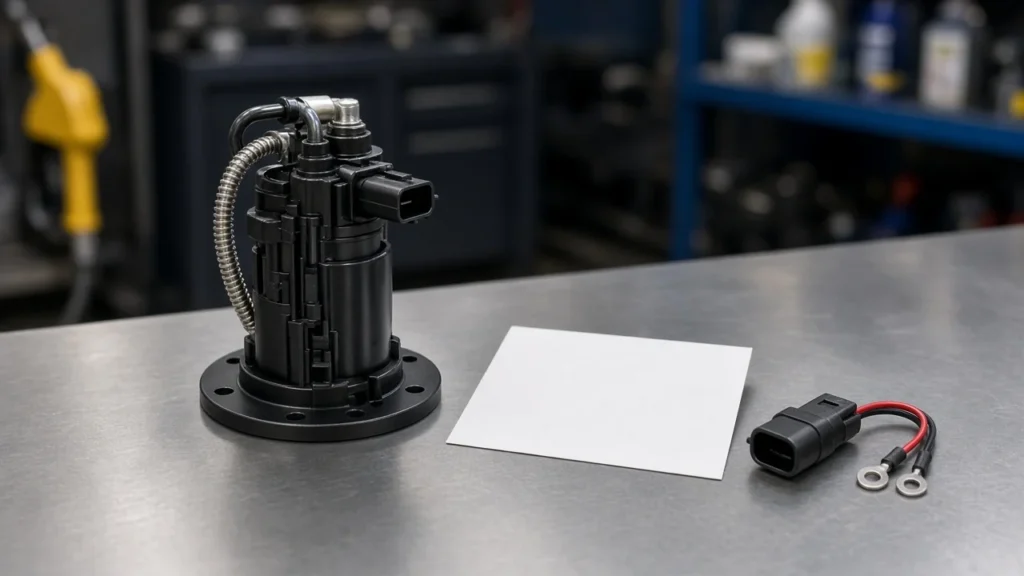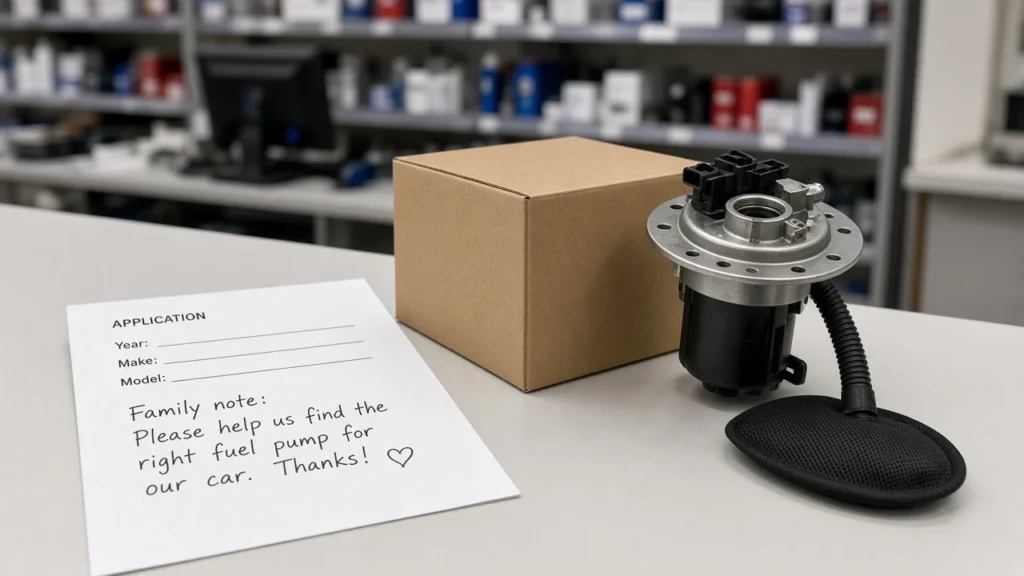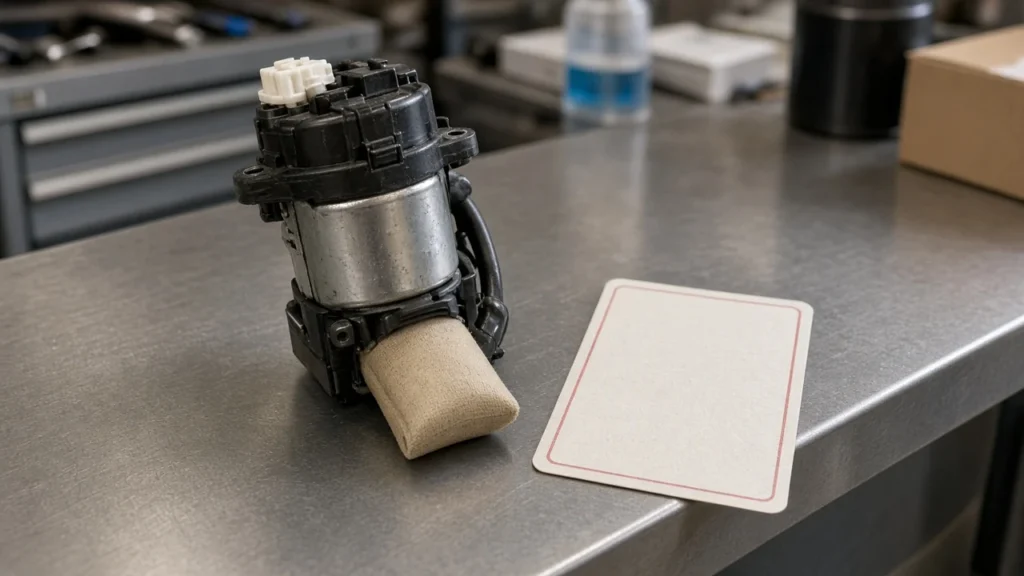
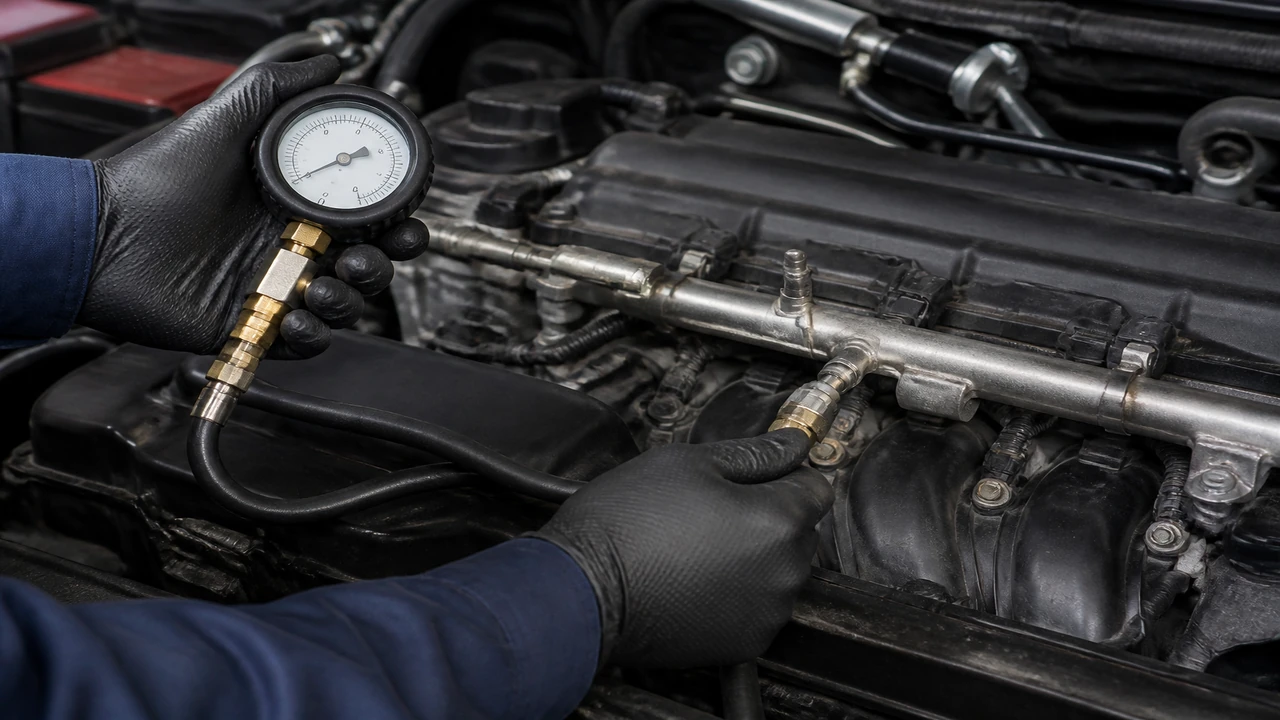
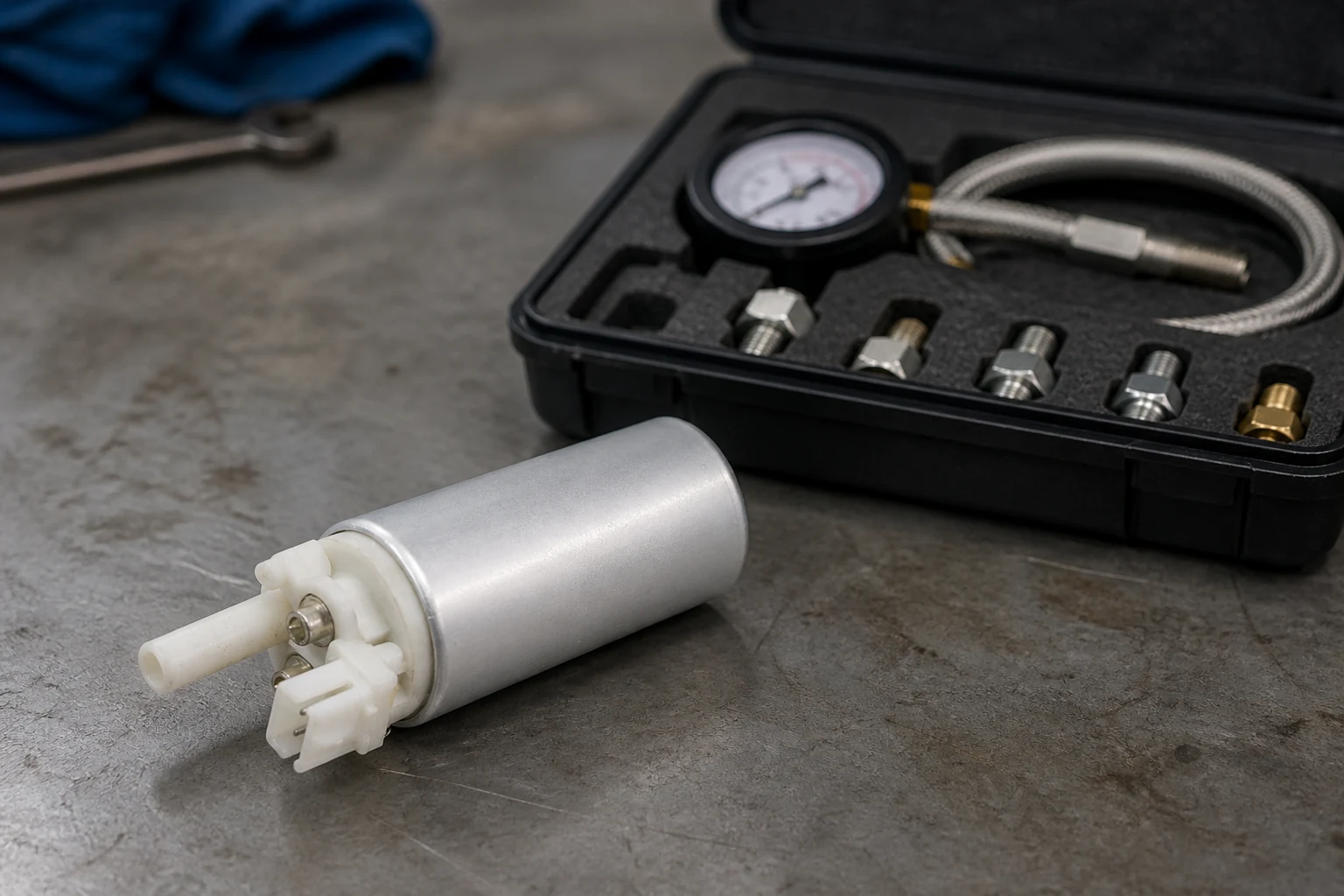
A “fuel pump tester” request is not enough to support a parts decision by itself. Before buying a tool, ordering a pump, or comparing supplier responses, identify the approved procedure, the application record, the tool interface, and exactly what the recorded result is meant to show.
Define the tester request before choosing a tool
The word “tester” can describe a gauge set, an electrical check, an adaptor arrangement, or a broader diagnostic routine. Keep those meanings separate in the work order. A useful request describes the controlled procedure first and the tool second.
| Request field | Record it as | Why it matters |
|---|---|---|
| Application record | Buyer-supplied vehicle, engine, or equipment documentation | Keeps the procedure tied to the actual system |
| Test purpose | The question the check is intended to answer | Stops a result being used outside its purpose |
| Tool interface | The documented connection or adaptor requirement | Avoids assuming that one tool connects everywhere |
| Procedure source | The approved manual, bulletin, or internal process | Gives the result a reviewable basis |
| Result record | Reading, conditions, and any stated limitation | Lets a technical reviewer interpret the evidence |
Build an evidence packet, not a loose test note
A result is most useful when it can be reviewed alongside the method that produced it. Ask the service team or buyer to hand off:
- The controlled application record and the exact component question.
- The procedure source used for the check.
- The tester or adaptor identity and its documented interface.
- The recorded result, including the conditions stated by the approved procedure.
- Any unresolved electrical, supply, restriction, or installation question noted by the technician.
- The original part identifier or other controlled identity evidence for the requested part.
This does not turn a tool reading into a universal pass or fail. It creates a common record so purchasing, engineering, and a supplier can distinguish confirmed information from items still needing review.
Keep testing evidence separate from a parts claim
Do not use a tester name, a symptom description, or a familiar component label as a substitute for identity and application evidence. A test result can indicate that a further review is needed; it does not by itself establish a replacement part, a cross-reference, or a fitment decision.
For a related article on defining a feed-side request before sourcing, see the fuel lift pump buyer guide. It addresses component-boundary evidence, not tester selection.
Route a Defined Pump Requirement to Product Documentation
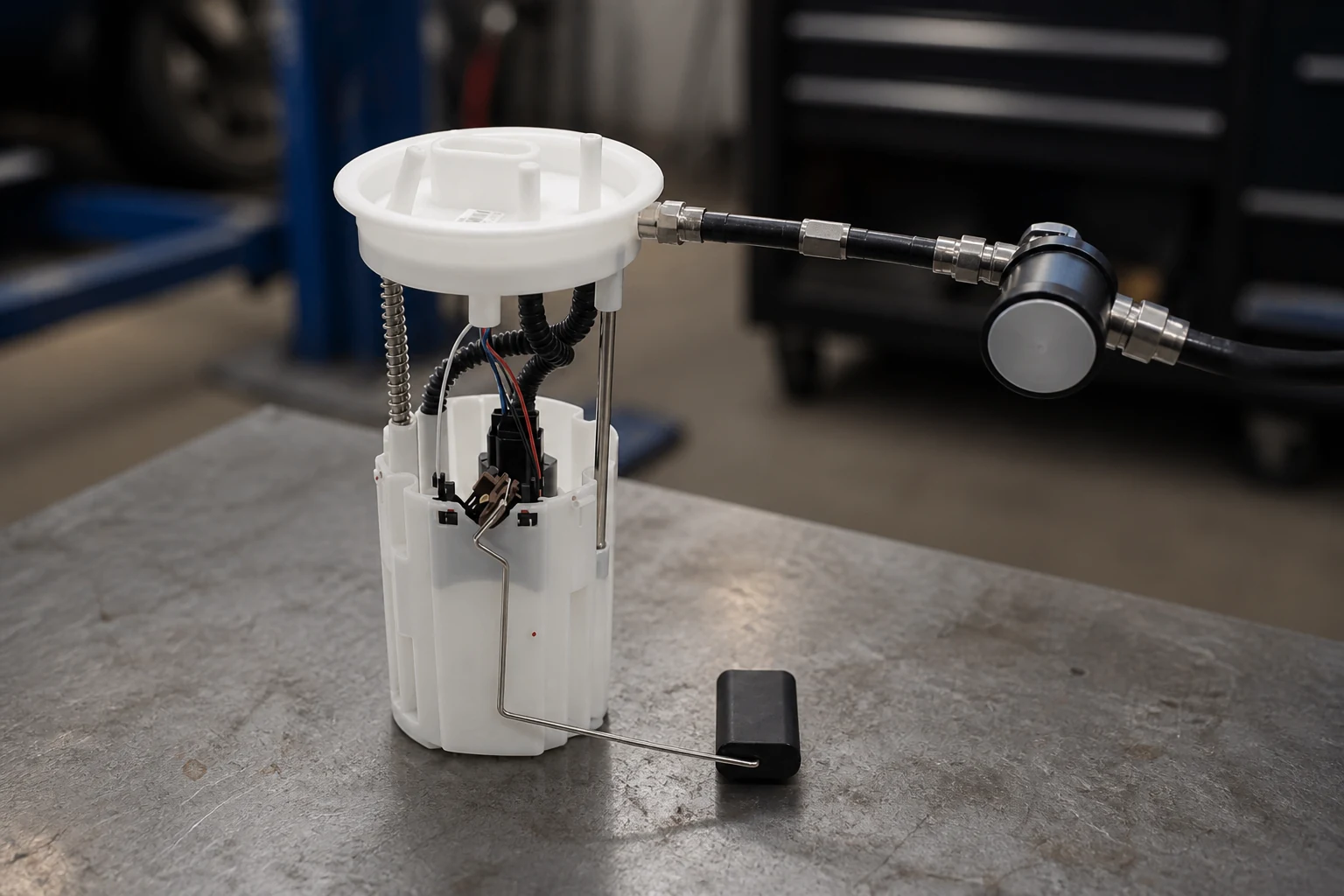
Once the buyer has documented the component requirement and evidence packet, use the Kangsong products overview to begin a product-family discussion.
That route is not a tester recommendation, a technical result, a cross-reference, or a fitment guarantee. Supply the documented identity and application evidence before treating any product route as relevant.
A concise request for the next review
“Please review this pump-related request against the attached application record, approved procedure, tool/interface identity, result notes, and original component identifier. Mark each item as confirmed, not applicable, or requiring additional evidence. Do not infer a part match from the tester name or result alone.”
References
- Kangsong products overview — product-family navigation only; it does not support a tester or fitment claim.
- Kangsong WordPress media record 4030 — provenance record for the illustrative opening image.