
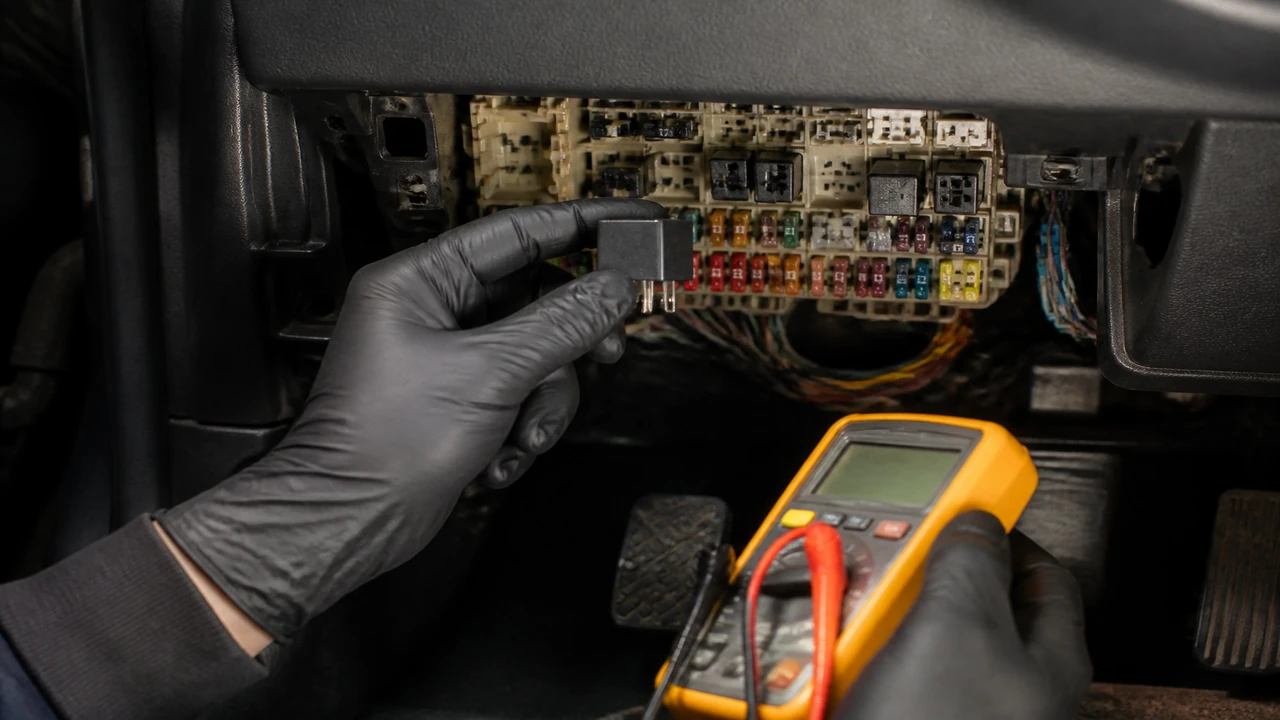
A fuel pump relay is the low-current controlled switch that powers the fuel pump circuit; when it fails open, shops see cranks-no-start and missing prime that look like a dead pump, so service channels should verify relay, fuse, and voltage at the pump before quoting an assembly. This technical guide helps jobbers and fleet service lanes separate relay faults from confirmed pump demand. It is a service-planning aid, not a substitute for OEM TSBs or vehicle-specific wiring diagnosis.
- FAQ
Part 1. What a Fuel Pump Relay Does in the Circuit
The fuel pump relay lets a low-current control signal (from the PCM/ECM or ignition logic, depending on design) switch the higher current that runs the pump. On many platforms the pump receives a short key-on prime, then runs under control strategies while the engine is cranking or running.
For distributors, the commercial point is simple: if the relay cannot close, the pump never receives power—even when the pump hardware is healthy. Counters that skip this step push expensive modules into returns after a low-cost relay would have restored prime.
Pair this article with the sibling bad fuel pump symptoms guide when buyers arrive with symptom language only.
Part 2. Failure Signs That Mimic a Dead Fuel Pump
| Failure pattern | Shop observation | Likely relay-side cue |
|---|---|---|
| Open contacts | Cranks, no start, no prime sound | No click / no voltage at pump power feed |
| Intermittent / heat fail | Starts cold, dies hot, or random no-start | Temporary restore after cool-down or tap |
| Stuck closed (less common) | Pump runs with key off | Continuous pump noise / battery drain complaint |
| Poor socket contact | Intermittent after vibration | Burn marks, loose terminals in fuse box |
Industry forum and Q&A threads repeatedly document “new pump still dead” cases that cleared after an identical-form relay swap. Capture whether the shop heard a prime pulse before authorizing assembly stock moves.
Important: Do not condemn an in-tank pump or module until fuse integrity, relay operation, and voltage at the pump connector are documented. (Source: field testing patterns summarized in CarParts.com — signs of a bad fuel pump relay and testing.)
Part 3. Service-Channel Testing Workflow
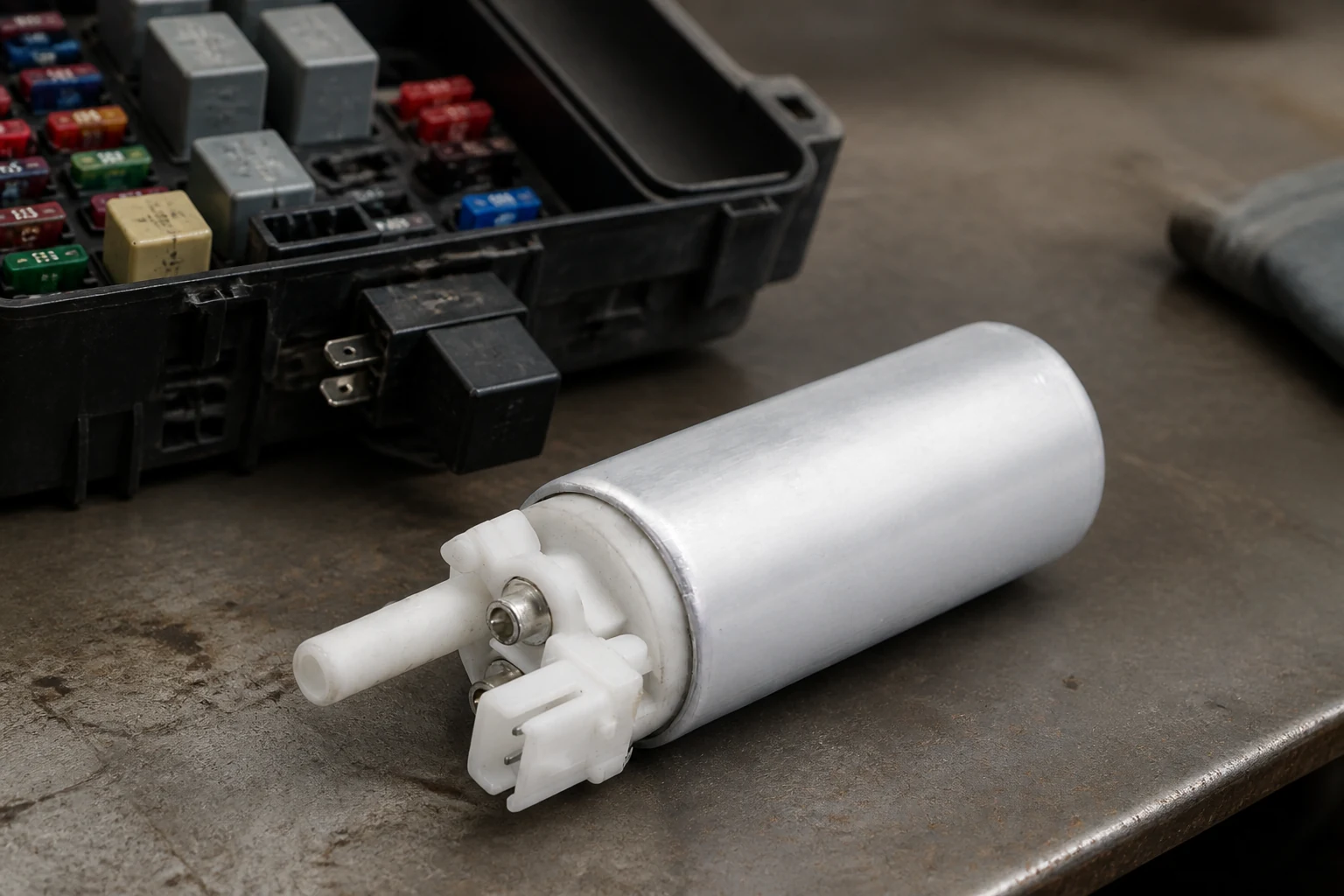
Use a screening sequence that service counters can require on the work order:
- Identify the correct relay cavity from the fuse-box lid or OEM service data—never guess by color alone.
- Inspect for heat damage, corrosion, and loose terminals.
- Swap with an identical, non-critical relay of the same form factor only when the lid map confirms compatibility.
- Listen for prime and measure voltage at the pump connector during key-on / commanded run.
- If power is present and delivery is still weak, move to pressure diagnosis per OEM procedure (see also scan-tool methods in Brake & Frontend — fuel pump diagnosis).
This workflow is a screen, not a full OEM pin-by-pin procedure. Platform wiring diagrams remain authoritative.
Part 4. Replacement Practice for Counters and Shops
When the relay is confirmed faulty:
- Replace with the correct OEM-equivalent form factor and terminal layout for that box position.
- Re-seat neighboring fuses if heat or moisture was present.
- Retest prime and starting before releasing the vehicle.
- Document the failed part and cavity ID on the invoice for warranty trails.
Avoid quoting invented OE numbers from memory. Match the physical relay and published service identification for the VIN. For fleet buyers comparing labor and parts scope after a true pump failure, point them to the fuel pump replacement cost guide.
Part 5. When the Pump Remains the Failure After Relay Work
If a known-good relay restores power but pressure or volume is still out of specification, the failure has moved past the control switch. At that point:
| Check | Why | Send with quote |
|---|---|---|
| Voltage/ground at pump under load | Proves power reached the unit | yes |
| Measured fuel pressure vs OEM | Separates electrical from hydraulic | yes |
| Filter / strainer restriction notes | Prevents repeat failure | yes |
| OE pump/module number | Locks SKU family | yes |
| Campaign / bulletin context if any | Aligns with recall stocking workflows | conditional |
Do not keep shipping relays into a documented low-pressure failure. Escalate to module/pump identification with OE references.
Part 6. Assembly Routes After Confirmed Pump Demand
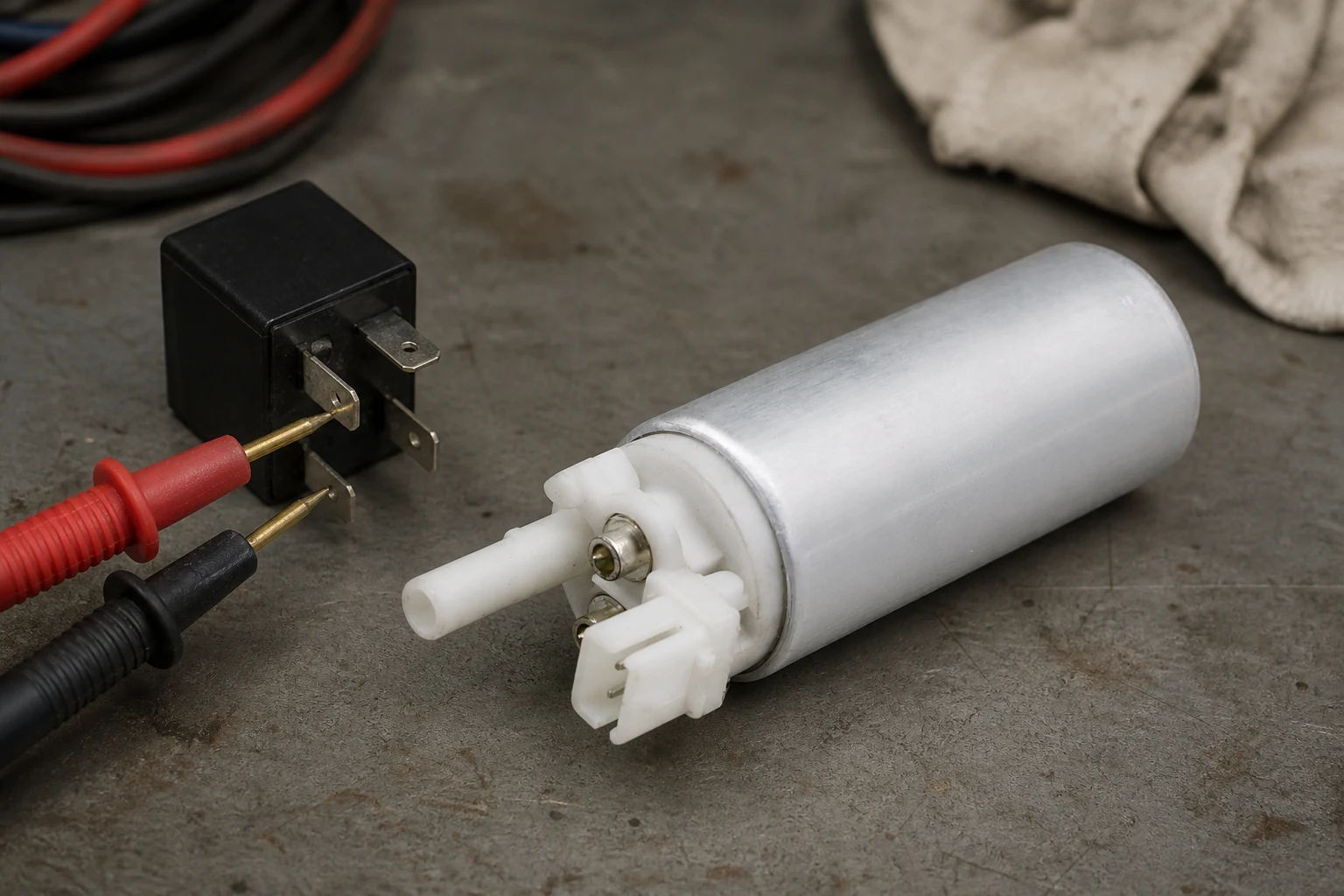
Kangsong (Zhejiang Kangsong) develops and manufactures fuel pump assemblies, electric fuel pumps, and module-level components for aftermarket and OEM/ODM programs. According to public company materials, the catalog covers 300+ fuel pump models and 1,700+ assembly models, with export coverage across North America, Europe, and Australia.
Product recommendation after the relay path is cleared and pump failure is confirmed:
- Browse matching families on Kangsong products using documented OE references.
- Submit quantity bands, test/traceability needs, and diagnosis notes via Contact Kangsong.
- Share About Kangsong when the buyer’s quality packet requires manufacturing background.
Fit Boundary: this page is a technical and service-planning aid for separating fuel pump relay faults from pump failures. It is not a substitute for OEM TSBs, wiring diagrams, or vehicle-specific diagnosis, and it does not invent OE numbers, prices, or amp ratings. Kangsong is not positioned here as a relay catalog for undiagnosed no-starts.
FAQ
What does a fuel pump relay do?
It uses a low-current control signal to switch the higher current that powers the fuel pump so the control module does not carry the full pump load directly.
What are common fuel pump relay failure signs?
Cranks with no start and no prime, intermittent hot no-starts, and—less often—a pump that keeps running with the key off when contacts stick closed.
How should a shop test a suspect fuel pump relay?
Confirm the correct cavity, inspect terminals, perform an identical-form swap only when compatible, then verify prime and voltage at the pump connector.
Can a bad relay make the fuel pump run continuously?
Yes, though it is less common. Stuck-closed contacts can keep the pump powered after shutdown and should be treated as an electrical fault, not a pump hydraulic issue.
What should be checked if symptoms remain after relay replacement?
Confirm voltage at the pump under load, measure fuel pressure against OEM data, and inspect filter/strainer restriction before quoting a pump or module.
When should service channels source pump assemblies from Kangsong?
When relay/fuse/voltage checks and pressure diagnosis support pump replacement and the buyer can supply documented OE references for OEM-equivalent or ODM assembly supply.


