
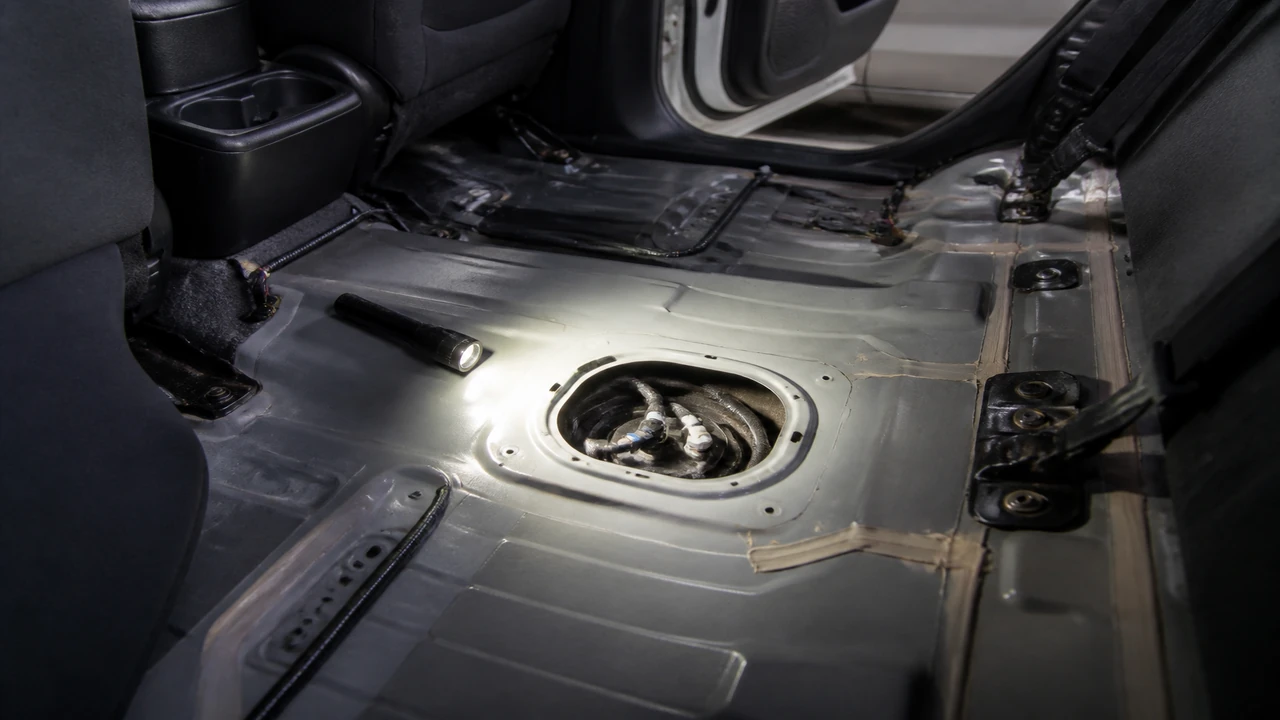
For service parts planning, “where is the fuel pump located” is answered at architecture class level—most modern light-vehicle EFI uses an in-tank module, while inline and engine-mounted pumps remain common on older or specialty systems—not as a VIN teardown map. Planners who classify the architecture first stock the right assembly family and adjacent kits without inventing DIY steps.
Part 1. Why Location Class Matters More Than a Photo
Consumer SERPs for where is the fuel pump located reward vehicle-specific photos. Wholesale planners need a different answer: which architecture class drives SKU family, labor assumptions, and kit contents.
A planner who only stores “tank” without saying module vs pump-only still creates counter errors.
Use location class as the first filter, then attach OE numbers—never reverse that order for stocking depth.
Part 2. In-Tank Module Architecture for Stocking
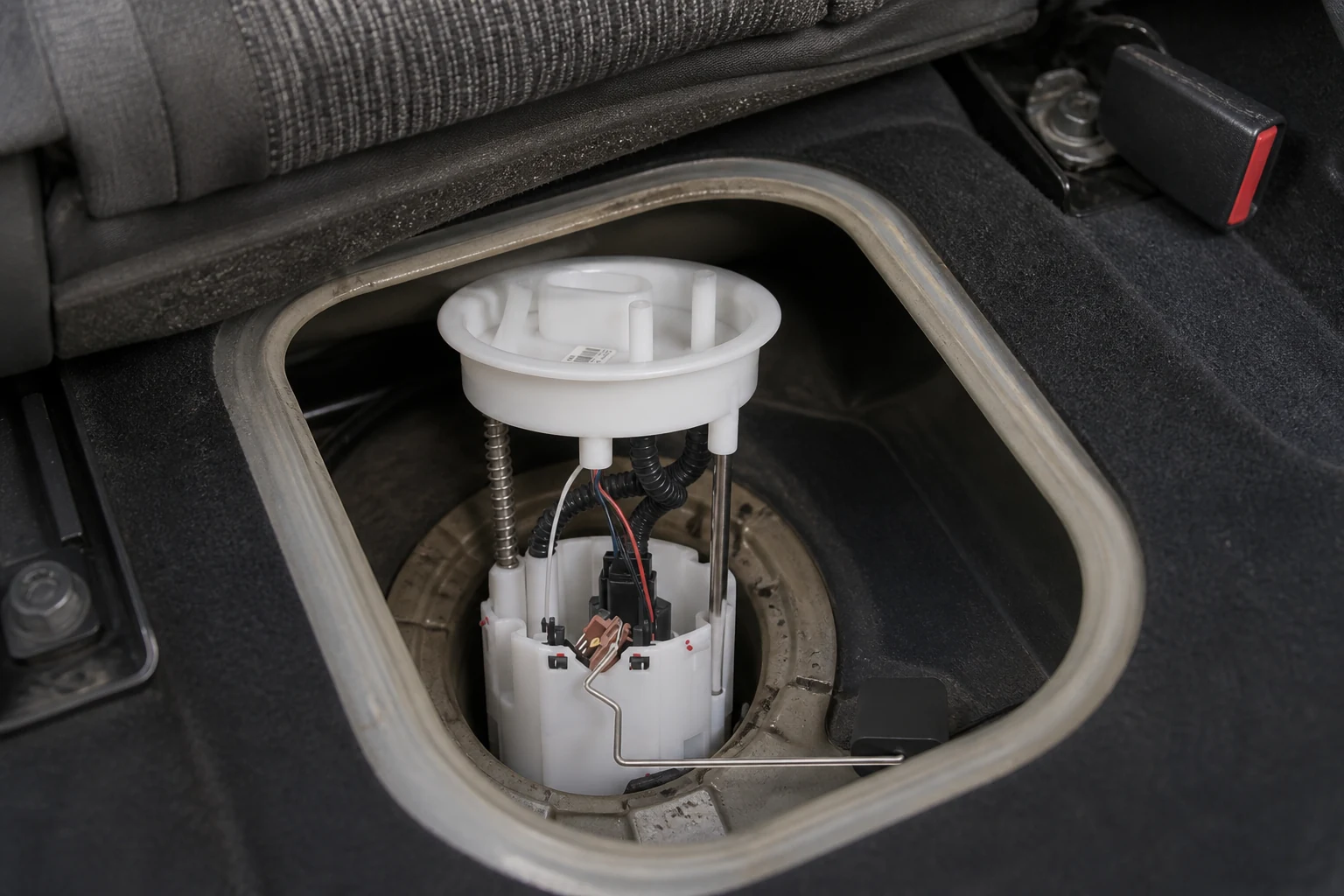
On many late-model passenger and light-truck EFI platforms, the electric pump sits inside the fuel tank as part of a module with sender, strainer, and often a pressure regulator or jet pump. Access may require a tank drop or an interior service hatch.
| Planner field | In-tank implication | Stocking note |
|---|---|---|
| SKU family | Full module vs cartridge | Prefer complete assemblies for comeback control |
| Labor proxy | Tank access hours | Do not invent hours; use shop data |
| Contaminant risk | Sock/strainer critical | Kit strainer with module |
| Electrical | Tank harness / lock ring | Confirm connector identity |
When recall campaigns mention high-pressure stages, still verify which stage failed using the fuel pump recall stocking guide—location class alone is not campaign coverage.
Part 3. Inline and Engine-Mounted Architectures
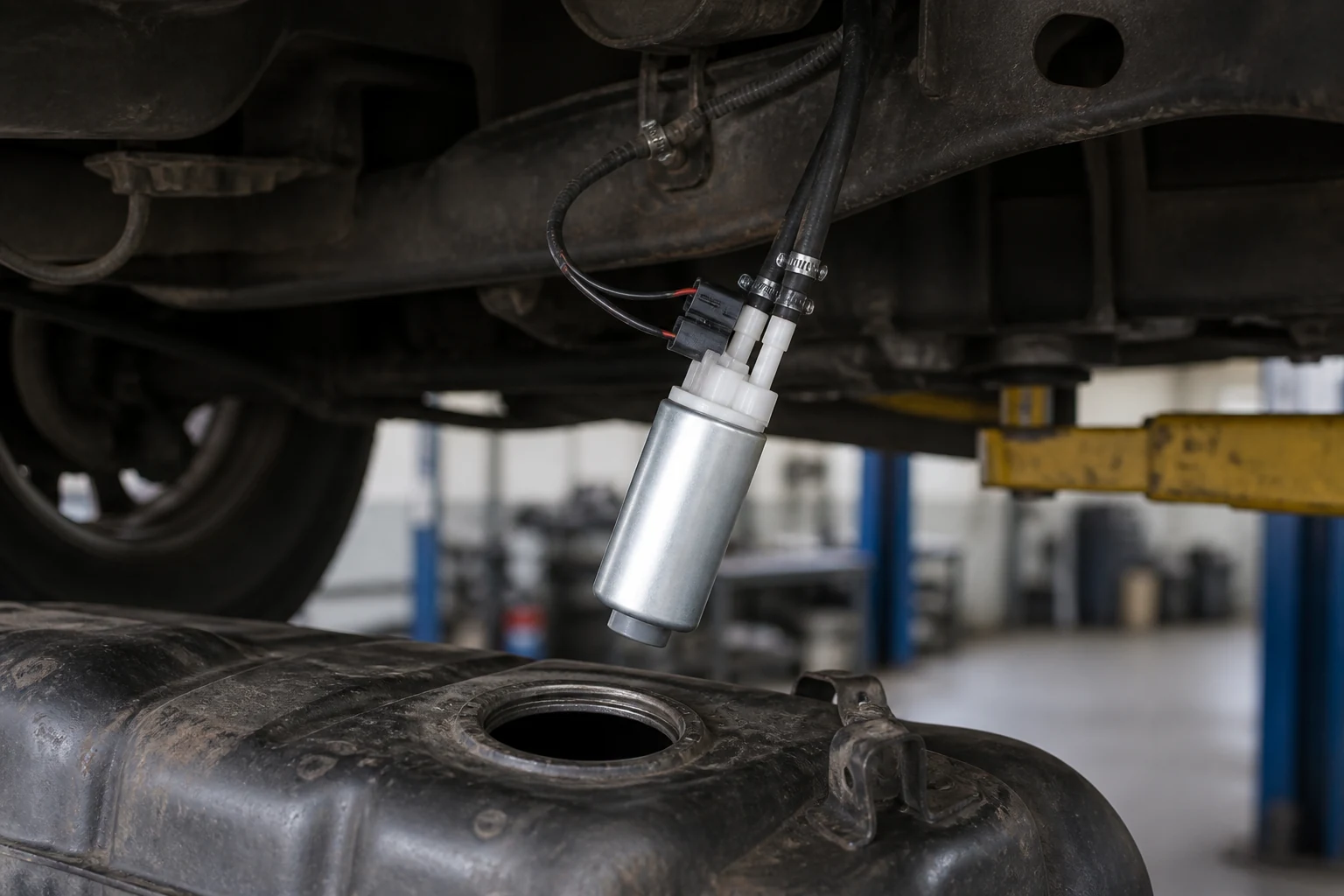
Inline electric pumps mount in the supply line outside the tank. Mechanical engine-mounted pumps remain on many carbureted and classic platforms. Both classes change which brackets, hoses, and electrical kits planners should hold.
| Architecture | Typical placement | Planner risk if mis-tagged |
|---|---|---|
| Inline electric | Frame rail / supply line | Ordering an in-tank module for an inline job |
| Mechanical engine-mounted | Engine block / cam drive | Ignoring gasket and lever interface parts |
| External lift (diesel) | Frame or engine bay | Confusing lift pump with HPFP |
Forum threads often describe “pump on the frame” failures that were inline units miscataloged as modules—tag the architecture on the bin label.
Part 4. Dual-Stage Feed Plus HPFP Planning Notes
Gasoline direct injection and many diesels use a low-pressure feed stage plus a high-pressure pump on the engine. Asking only “where is the fuel pump located” without naming the stage produces half-stocked programs.
| Stage | Typical location class | Planner stock focus |
|---|---|---|
| Low-pressure feed | In-tank or inline | Module/cartridge, strainer, harness |
| High-pressure (HPFP) | Engine-mounted | Pump, seals, drive interface notes |
| Combined quote | Both stages named | Prevent under-quoting one stage |
Important: Do not treat a single consumer “fuel pump location” answer as proof which stage failed on dual-pump platforms—confirm the stage in the RFQ before assembling stock. (Source: OEM dual-stage fuel system service literature patterns.)
Labor and retail totals still swing with access; see the fuel pump replacement cost guide after class and stage are known.
Part 5. Adjacent Parts Tied to Location Class
Location class predicts which hangers, straps, seals, and electrical pieces move with the pump. Planners who stock “pump only” on hatchless in-tank platforms inherit comebacks.
Attach strainer, lock-ring seals, and sender notes to in-tank bins. Attach hose, clamp, and bracket notes to inline bins. Attach gasket and drive notes to mechanical bins.
Keep claim photos requirements aligned with location class so returns include the connector and mounting evidence that actually matter.
Part 6. Kangsong Assembly RFQs After Class Is Clear
Once the architecture class and OE numbers are known, route assembly demand to Kangsong catalog SKUs and keep DIY teardown questions out of the commercial RFQ.
| Location class | Route | RFQ focus |
|---|---|---|
| In-tank module | Kangsong products | OE numbers, module scope, connector |
| Inline / specialty | Contact for class confirmation | Hose/bracket notes + OE |
| Unknown class | Return for service literature | Architecture class first |
- Kangsong fuel pump products — in-tank modules and related assemblies once OE and architecture class are stated.
- Contact Kangsong — planner RFQ with location class, OE numbers, and module scope.
Factory program context is on About Kangsong.
Part 7. Fit Boundaries
This overview does not publish VIN-specific pump coordinates, under-seat diagrams, or step-by-step tank-drop tutorials. Confirm the exact location and stage from OEM service literature for the vehicle before setting stocking depth.
FAQ
Where is the fuel pump located on most modern cars?
Often inside the fuel tank as part of an electric module assembly, but planners must still confirm the architecture class for the platform family.
Is the fuel pump always inside the tank?
No. Inline electric, mechanical engine-mounted, and diesel lift/HPFP arrangements place pumps outside the tank.
What is the difference between in-tank and inline for planners?
In-tank programs usually stock modules and tank-access adjacent parts; inline programs stock line-mounted pumps with hose and bracket kits.
Does location change replacement cost?
Yes—access hours and adjacent parts change the total; use cost guides after class is known, not before.
Should planners stock pump-only for in-tank platforms?
Only when the program explicitly services cartridges; many late-model jobs need complete modules to control comebacks.
How do diesel lift pumps differ in location class?
Lift pumps are often external, while HPFP units sit on the engine—name the stage in every diesel RFQ.
Can this page tell me the pump location on my VIN?
No. It is a planner architecture overview, not a VIN teardown map.
What should an RFQ include after location class is known?
OE numbers, architecture class, module vs pump-only scope, connector notes, and any dual-stage identification; send via Contact Kangsong.


