

Fuel pump replacement cost in the US usually spans a few hundred to low four figures because the bill combines pump family, parts tier, and tank-access labor—not because a single SKU has a universal price. Wholesale buyers who understand that split quote fleet and jobber programs without margin surprises.
Published repair-market guides commonly cite roughly $400–$1,500 total for many passenger and light-truck jobs, with late-model in-tank module assemblies and difficult tank access pushing toward the upper band. Treat those figures as planning ranges for downstream pricing strategy, not as Kangsong factory quotes.
Important: Published totals from CarParts.com and similar guides vary by shop labor rate and tank access — never reuse a retail quote as a wholesale assembly price without your margin model.
Part 1. What do US fuel pump replacement jobs typically cost end to end?
Aggregated US repair guides cluster as follows:
| Source type | Typical total range cited | What it usually includes |
|---|---|---|
| Broad repair aggregators | ~$400–$1,400 | parts + shop labor for common sedans and trucks |
| Modern in-tank module jobs | ~$1,000–$1,300 | full assembly, filter, and tank access |
| Luxury / complex access | $1,200+ | higher parts and labor rates |
For wholesale planning, translate retail totals into components:
- Shop door price = parts margin + labor hours × local rate + shop supplies
- Jobber sell-in = assembly unit cost + freight + warranty reserve
- Fleet program price = contracted labor cap + agreed assembly tier + core policy
Distributors win when they sell documented assemblies that reduce comebacks, not when they chase the lowest pump-only price on a module platform.
Part 2. How do in-tank modules, inline pumps, and HPFP lines differ in price?
| Pump configuration | Parts cost driver | Common wholesale note |
|---|---|---|
| In-tank module assembly | sender, pump, regulator, harness | full assembly SKUs reduce comebacks |
| Inline electric pump | pump + brackets + wiring | common on retrofit and older EFI |
| Mechanical engine-mounted | pump + lever/block interface | classic and some diesel lift paths |
| GDI / diesel HPFP | high-pressure pump on engine | parts high; labor often lower than tank drop |
Direct-injection gasoline and diesel programs may carry two pump stages (low-pressure feed + HPFP). A retail quote that only addresses one stage under-budgets the job — fleet buyers should specify which stage failed before comparing prices.
Part 3. Why does labor swing more than parts on many vehicles?
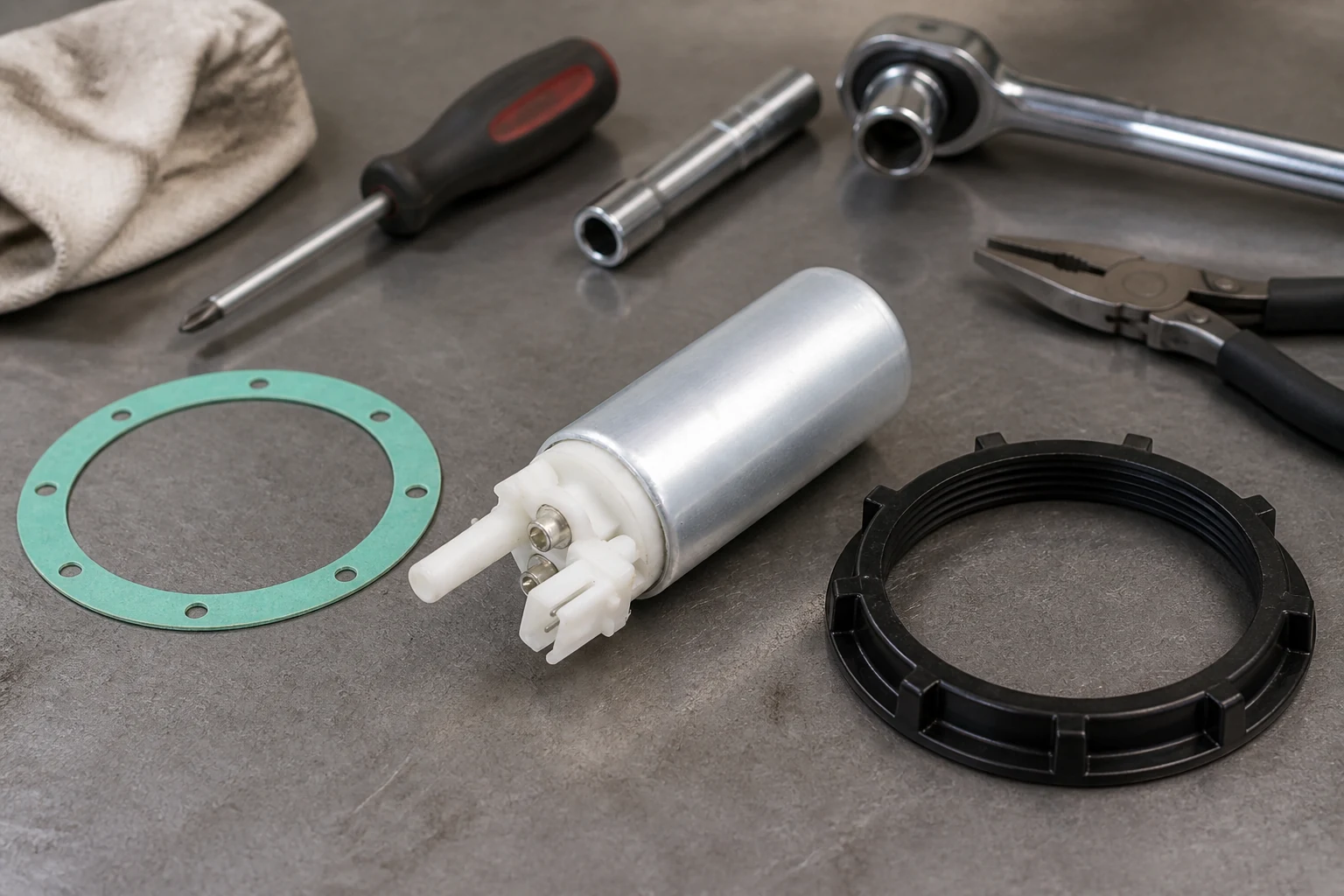
Labor spreads cited in consumer repair guides often land near $90–$400+ depending on region and shop type, but the dominant variable is access:
- Tank drop required — 2–4+ hours common when no service hatch exists; rusty straps and full tanks add time.
- Under-seat or internal access panels — lower hours but still require cleaning and leak checks.
- Engine-bay HPFP — often 1–2 hours on many platforms because the tank stays in place.
Fleet buyers should attach platform labor codes to RFQs instead of asking suppliers to guess shop time. Importers should stock complete assemblies when labor markets make repeat tank drops expensive for their customers.
Part 4. How should wholesalers compare OEM, OES, and aftermarket assembly tiers?
| Tier | Distributor trade-off | Send with quote |
|---|---|---|
| OEM dealer part | highest shelf price, lowest dispute risk on warranty accounts | yes |
| OES / same-supplier tier | moderate price with brand continuity | yes |
| Aftermarket OEM-equivalent assembly | best margin when traceability and test reports are solid | yes |
| Pump-only kit in module tank | lowest unit cost, highest comeback risk | conditional |
Net margin includes return rate, warranty credits, and technical hotline load — not purchase price alone. A cheaper pump-only line that doubles comebacks destroys distributor profit even when shelf margin looks better.
Part 5. When is full assembly replacement cheaper than pump-only repair?
Full fuel pump module replacement is often the right wholesale recommendation when:
- the failed unit includes a non-serviceable sender or regulator;
- the tank sock or harness shows heat damage;
- the fleet policy caps labor hours and forbids second tank drops within 12 months;
- contamination risk requires a clean-slate assembly.
Pump-only repair can fit accessible inline pumps or classic mechanical pumps with separate parts availability — but jobbers should confirm the customer buys the correct kit (pump, filter, seals, wiring).
Fit Boundary: retail totals vary by city, shop type, and vehicle condition. This article gives structure for wholesale quoting, not a guaranteed repair price for a specific VIN.
Part 6. What RFQ inputs unlock realistic Kangsong assembly quotes?
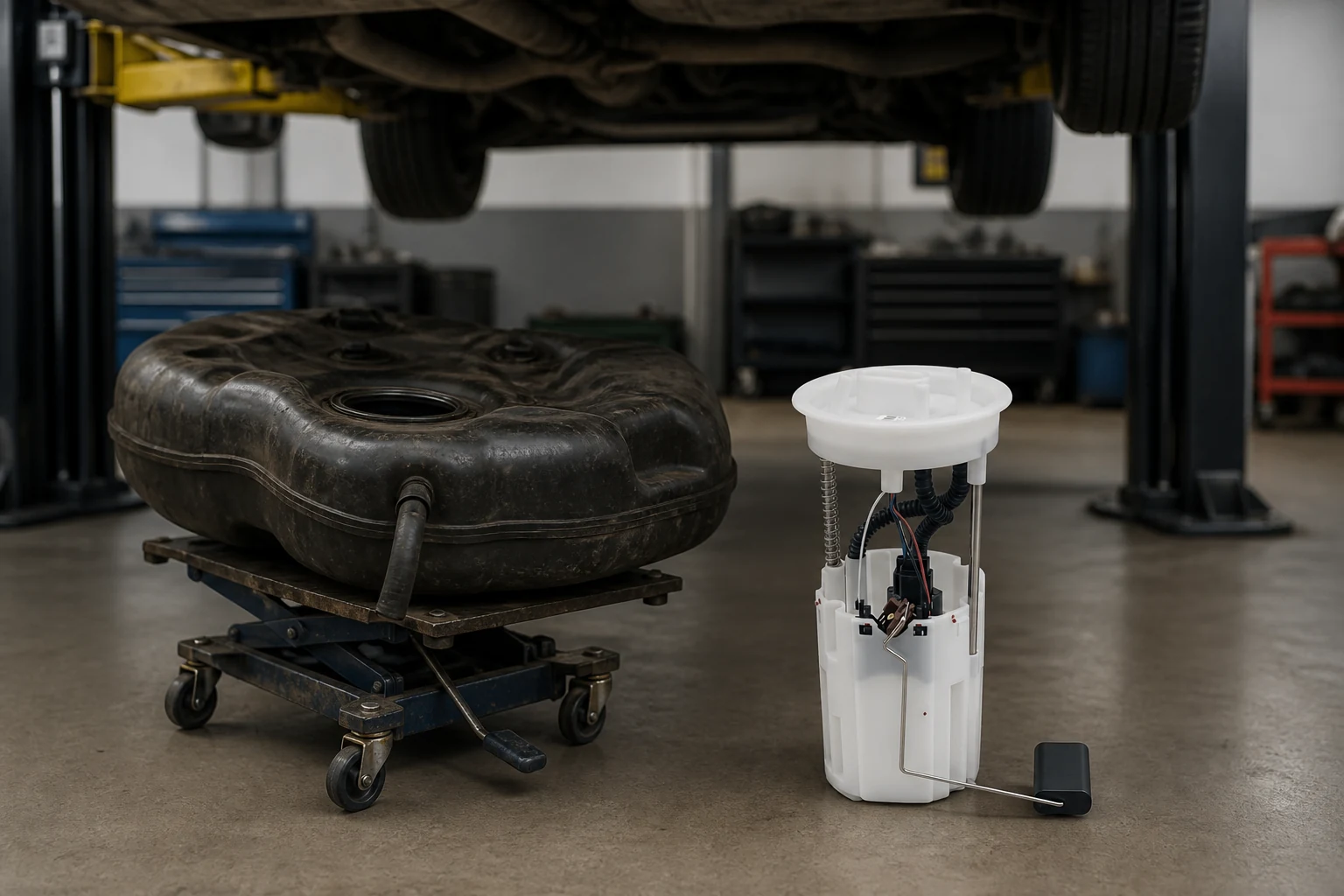
Kangsong manufactures fuel pump assemblies, electric pumps, and related modules for global aftermarket and OEM/ODM buyers. Factory-side pricing depends on documented inputs, not on a generic “fuel pump replacement cost” search phrase.
| RFQ field | Why Kangsong needs it | Send with quote |
|---|---|---|
| OE or interchange number | defines assembly BOM | yes |
| Pump type (module / inline / HPFP) | fixes tooling and test setup | yes |
| Voltage, pressure, and flow targets | prevents wrong spec tier | yes |
| Quantity bands and destination market | drives packaging and compliance | yes |
| Required tests or samples | sets validation timeline | yes |
| Target tier (service vs fleet program) | aligns component spec | yes |
Start catalog review at Kangsong products, then send consolidated RFQs through Contact Kangsong. Company background for qualification packets is on About Kangsong.
Procurement verification workflow
Build a margin model on identical assumptions: assembly tier, warranty rate, average labor reimbursement, and core charge policy. When a supplier quote changes pump family or omits harness/sender components, record it as a deviation — not a like-for-like discount.
FAQ
How much does fuel pump replacement cost in the United States?
Published repair guides commonly cite roughly $400–$1,500 total for many vehicles, with module replacements and difficult tank access toward the upper end. Use ranges for planning, then quote from documented assemblies.
Is aftermarket assembly cheaper than OEM for distributors?
Usually yes on unit cost, but net margin depends on return rate and warranty support. Compare tiers with comeback data, not shelf price alone.
How much of the total is labor versus parts?
Guides often show labor near 40–55% on mainstream vehicles, but tank-drop jobs can push labor higher even when parts are moderate.
Why do some vehicles exceed $1,200 for fuel pump replacement?
Full module price, rusted tank hardware, luxury labor rates, and dual-stage fuel systems (feed + HPFP) all raise totals.
When should fleets replace the full module instead of the pump only?
When sender, regulator, or harness damage makes partial repair risky, or when policy limits repeat tank-drop labor.
What should importers send Kangsong for assembly pricing?
OE/interchange numbers, pump type, electrical and pressure specs, quantities, destination market, and test/sample requirements via the contact form with supporting documents.


