High pressure fuel pump oil dilution is a possible fault on some engine designs, but gasoline in the engine oil does not prove the pump is leaking. A workshop must distinguish a pump-to-crankcase leak from fuel entering through the cylinders and from an incorrect oil-level assessment. Confirm the vehicle, operating history, and approved diagnostic procedure before ordering parts. A rich-mixture code or fuel odor is a starting observation, not a universal pump-replacement instruction.
This article explains how to build that diagnosis and a useful replacement enquiry. It does not provide a universal fuel-pressure limit, dilution percentage, or do-it-yourself test for opening a high-pressure circuit.
Why the pump can be involved on some engines
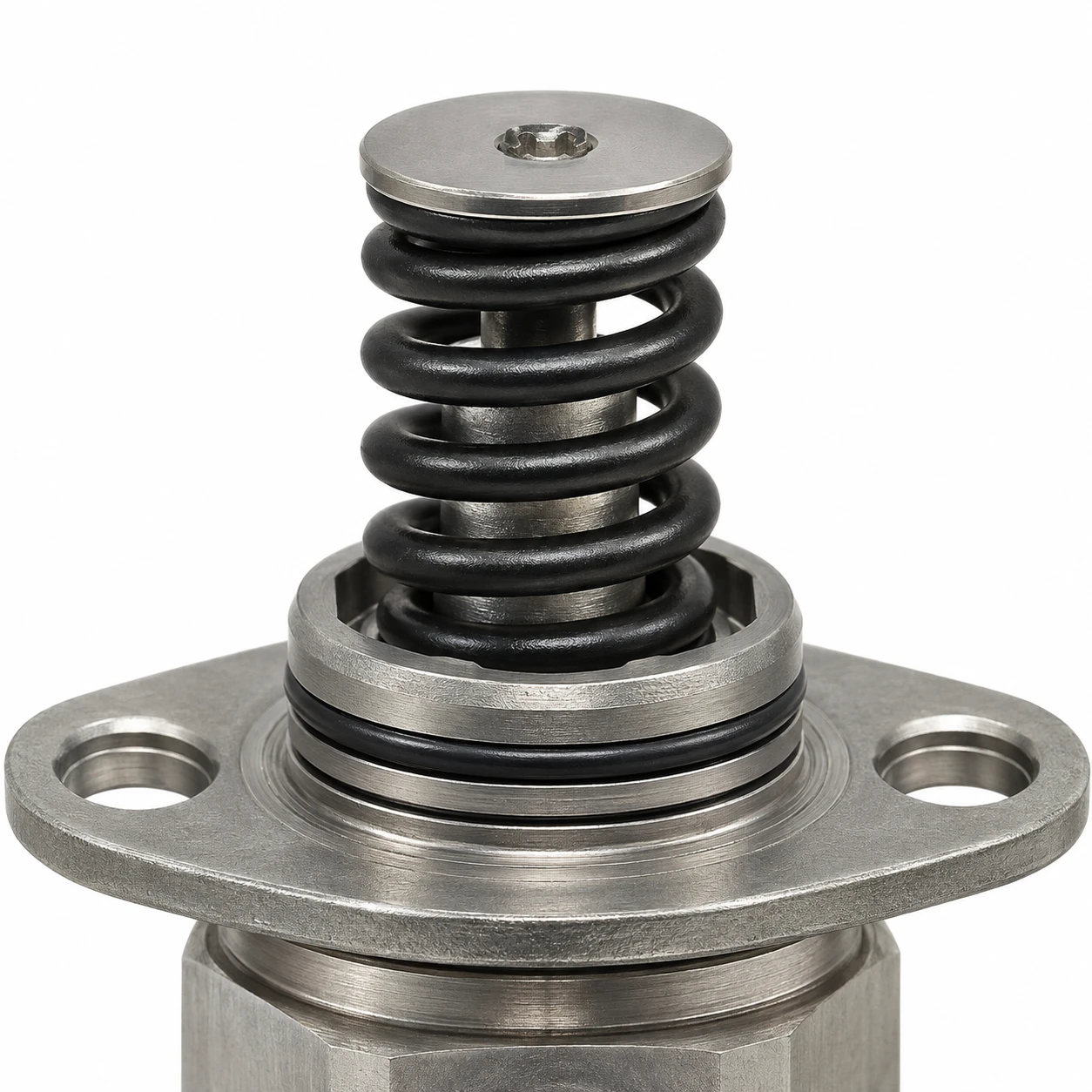
In a cam-driven gasoline direct-injection arrangement, the pump’s mechanical drive and fuel-handling sections must remain separated as designed. A failure at the relevant internal boundary can create a fuel path toward the engine. Whether that path exists, and how it is tested, depends on the pump and engine architecture.
A documented example appears in GM special coverage bulletin 12313B. It describes plunger-shaft seal wear allowing fuel into the crankcase on certain listed 2.4L LAF vehicles. This establishes a specific historical failure mechanism. It does not establish that every Buick pump, every direct-injection engine, or the product illustrated in this article has that defect.
Treat service bulletins as bounded evidence. Check engine code, model year, production information, and current service guidance. The title of a bulletin is not enough to confirm applicability, and historical special coverage is not a promise of present warranty eligibility. A workshop should verify the current position for the individual vehicle.
Short-trip operation can produce a different problem
Not every fuel-enriched oil complaint begins inside the pump. GM bulletin 22-NA-056 addresses certain LTG applications where frequent short trips can allow fuel to collect in the crankcase. It explicitly separates that operating condition from a verified fuel-component fault and warns that replacing the pump or injectors will not correct the stated condition unless those parts are actually responsible.
The diagnostic consequence is straightforward: ask how the vehicle is used before deciding what to replace. Record trip length, repeated cold starts, recent changes, and whether the concern began after a repair. Those observations do not diagnose the cause by themselves, but they can determine which official procedure should be followed first.
Do not convert this into a blanket instruction to drive a suspect vehicle until the fuel disappears. If the oil level is above its permitted range, a warning is active, or the engine runs abnormally, follow the manufacturer’s service and recovery instructions. A vehicle requiring repair should not be treated as an experiment in longer journeys.
Confirm what the initial observation means
Check oil level using the specified vehicle position, engine condition, and waiting period. An inconsistent measurement can make a normal change look like a rising level. Record the method and compare like with like. Include the recent oil-fill quantity and service history where available, because an overfill and a developing contamination problem are different questions.
Fuel odor can be useful information, but it is not a calibrated measurement of contamination. Do not deliberately inhale vapors to compare strength. Where the service process calls for analysis or additional checks, use the prescribed method. If a laboratory is involved, record the sampling conditions and the method used rather than comparing unrelated reports as if their results were identical.
Avoid setting a universal acceptable fuel percentage from a forum post or a different engine’s report. The relevant limit and action belong to the engine’s service information and the measurement method. The same discipline applies to scan data: a code can direct investigation without proving which component has failed.
Separate the diagnostic branches
The table is a work-planning framework based on the distinction between the two GM examples above. It contains no universal pass or fail limits. Each branch must be resolved using the procedure applicable to the actual engine.
| Observation | Question to investigate | Evidence needed before a parts decision |
|---|---|---|
| Oil level appears to rise | Is the level measured consistently, and was the engine overfilled? | Repeatable measurement method and service record |
| Repeated short cold trips | Does an operating-condition bulletin apply? | Vehicle identity, usage history and current service guidance |
| Suspected pump internal leak | Is there a supported fuel path and an approved isolation test? | Engine-specific test result tied to the pump |
| Rich code or cylinder-related complaint | Are injector delivery or other control faults involved? | Guided diagnosis rather than a code-to-part assumption |
| Oil visible outside the pump | Is this an external oil leak rather than fuel entering the oil? | Confirmed fluid and leak location |
| Concern returns after repair | Was the original source proven and the oil-service requirement completed? | Before-and-after checks under recorded conditions |
Use pressure data without over-interpreting it
Fuel-pressure data describes the system under the conditions of the measurement. It does not automatically identify where fuel is going. Record requested and actual values where the procedure requires them, along with engine temperature, speed, load, and the conditions under which the complaint occurs.
A pressure-retention result needs the same care. More than one component or path can affect pressure after shutdown. Do not assume that pressure loss proves a crankcase leak, or that an acceptable reading excludes every intermittent fault. Use the correct connection points, tools, and isolation steps instead of importing a limit from another engine.
For context on the separate retention question, see our guide to fuel pressure dropping after shutdown. The article on return and returnless systems explains another architectural distinction. Neither replaces the high-pressure system’s own diagnostic instructions.
Do not open a pressurized circuit to look for proof
High-pressure fuel service requires trained personnel, suitable tools, and the manufacturer’s pressure-relief and isolation procedure. Switching off the ignition is not, by itself, a statement that a circuit is safe to open. Do not loosen a fitting, feel for a leak by hand, or run a removed pump as an improvised diagnostic experiment.
Plan replacement parts before disassembly. The applicable service information may require renewing pipes, seals, fasteners, or other disturbed components. A pump-only quotation can be incomplete even when the pump number is correct. Ask the workshop to identify those requirements in the repair estimate rather than discovering them after the vehicle has been dismantled.
Keep the fuel path clean and protect mechanical interfaces during the work. If inspection reveals damage to a drive component, resolve it before fitting the replacement. Our high-pressure pump cam-follower guide covers the separate mechanical-drive question and explains why the exact follower arrangement matters.
Build a replacement enquiry around confirmed evidence
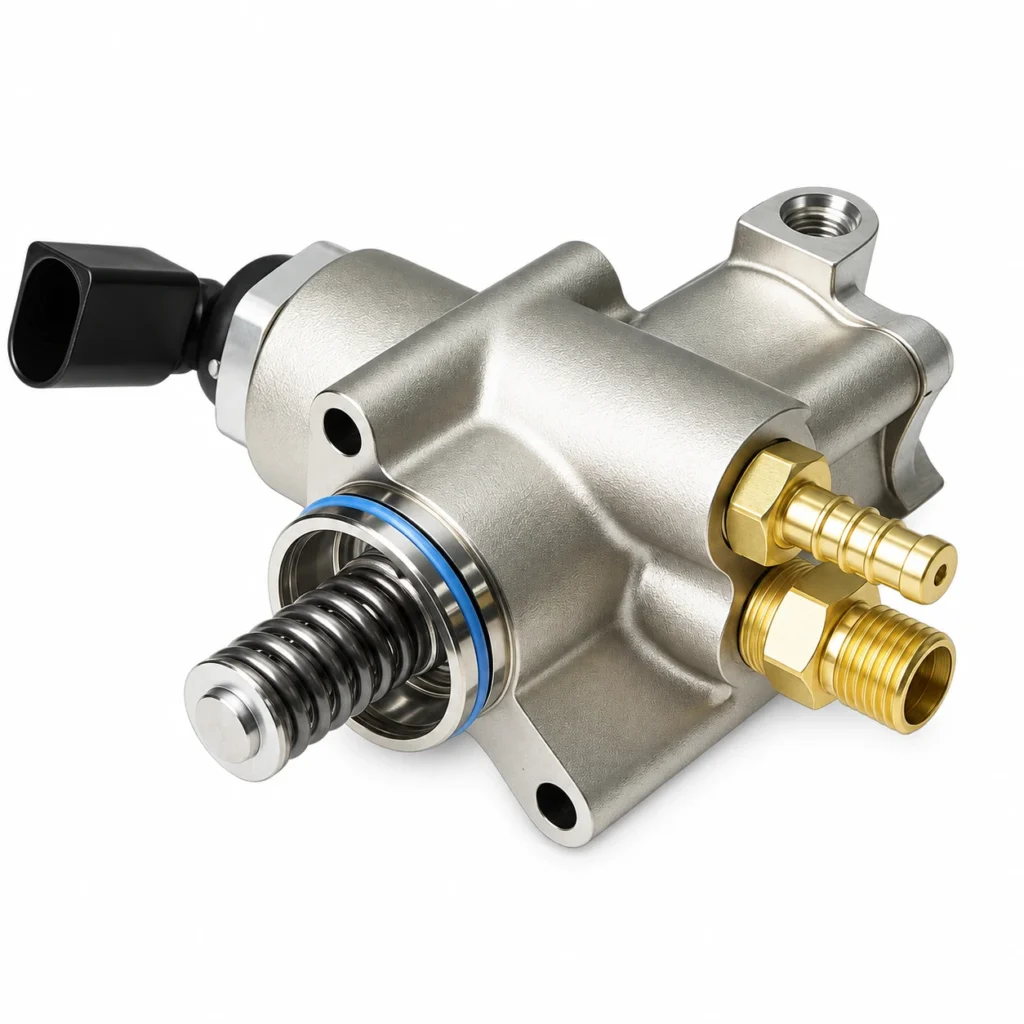
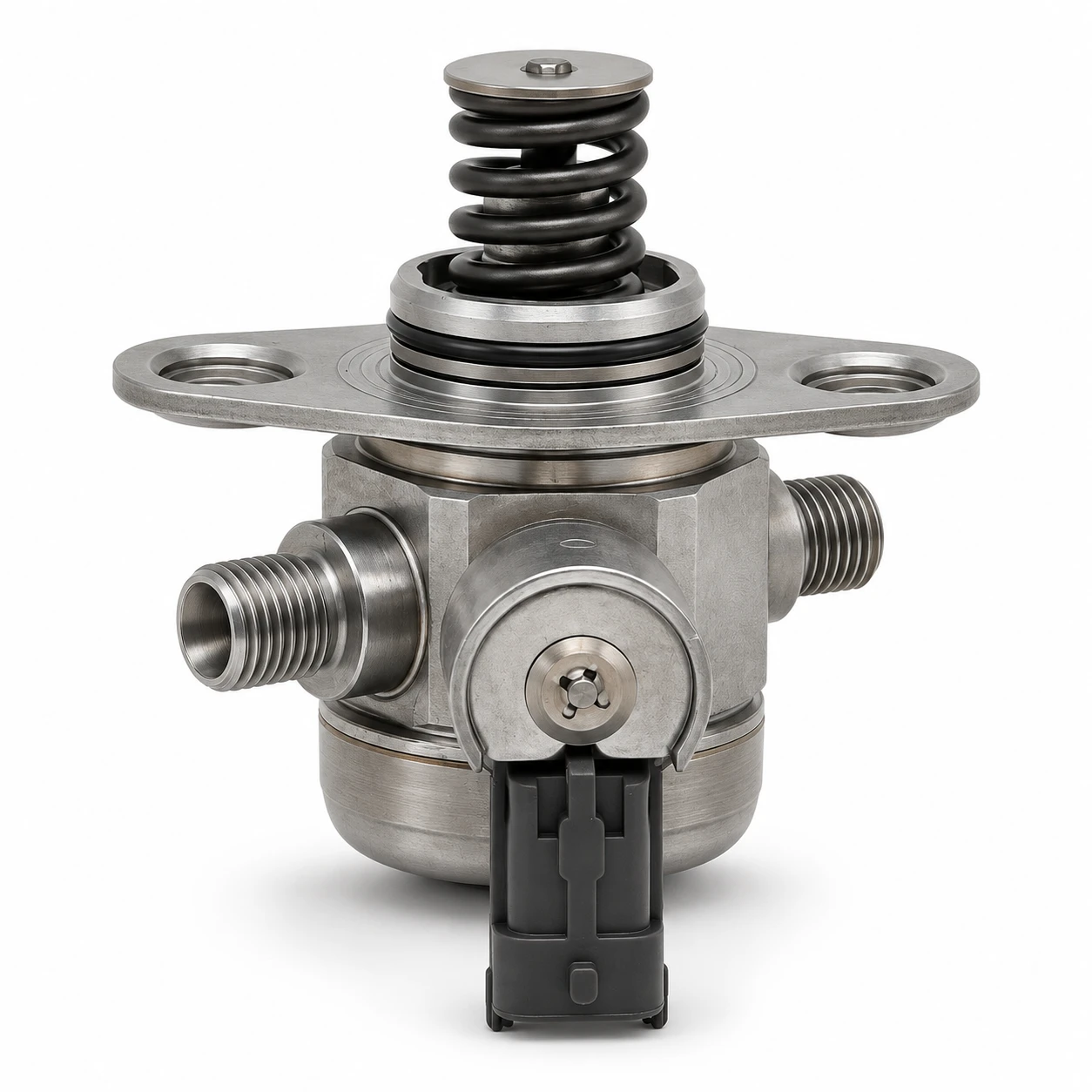
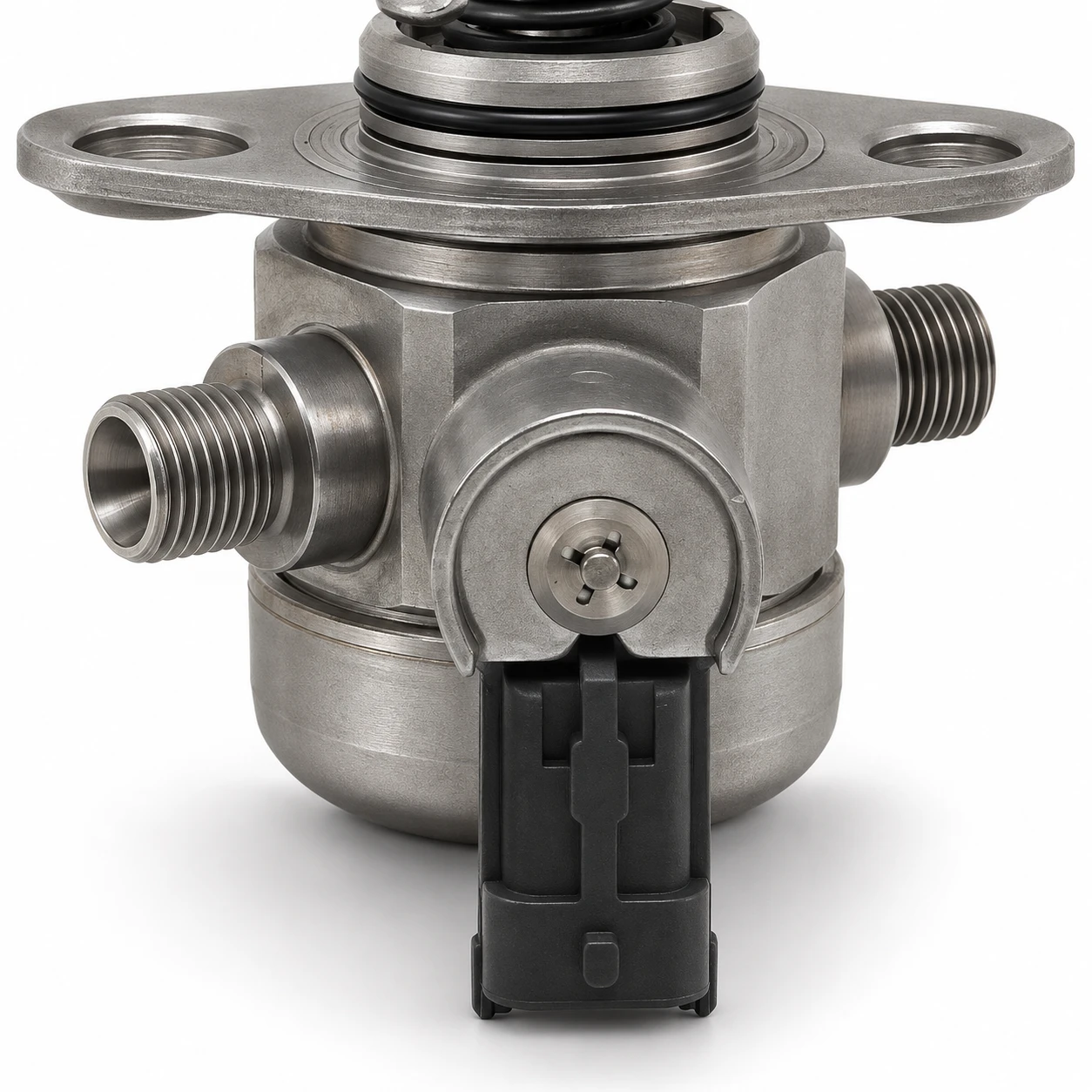
Once diagnosis supports pump replacement, provide the supplier with the vehicle identity, engine code, original pump number, and any verified supersession. Include clear photographs of the drive end, flange, ports, and connector. A similar external shape is useful for comparison but cannot prove internal calibration or application compatibility.
Kangsong lists a 12658478 / 12629135 / EP1029 high-pressure pump reference. Use its visible configuration to support a parts discussion. The illustration does not link that product to the historical GM defect described earlier, prove a pressure rating, or establish that it fits a vehicle with a similar complaint. Request application confirmation for the actual enquiry.
Send the diagnostic conclusion as well as the symptoms. A useful statement explains which approved checks identified the pump and what alternative causes were considered. Keep raw readings with their test conditions. That helps the supplier distinguish a fitment question, a suspected product defect, and a system problem that could recur after replacement.
Verify both the fuel repair and the oil condition
A repair plan should address the confirmed source and the consequences identified by the applicable procedure. Ask whether an oil and filter service is required, and use the specified oil and fill method. Replacing a fuel component does not automatically restore oil that has already been contaminated.
Establish a documented post-repair baseline. Record the oil level, completed leak checks, relevant scan results, and the conditions of any verification drive authorized by the service procedure. If the original complaint was intermittent, agree on a suitable follow-up rather than declaring success only because the engine starts in the workshop.
If the concern returns, compare the new evidence with the baseline. Do not repeatedly replace pumps without reconsidering the diagnosis. A clear record of the original tests, installed part identity, and follow-up findings is more valuable than a series of unexplained component swaps.
Watch the cold-operation explanation
Engineering Explained’s video discusses engine warm-up and the relationship between cold operation and lubrication. It provides background for understanding why usage history matters. It is not a diagnostic test for pump leakage, a repair instruction for an overfilled crankcase, or permission to drive a vehicle with an unresolved fault.

Engineering Explained: Should You Warm Up Your Car Before Driving?
For an overview of the product family, see the high-pressure fuel pump range. Narrow the application by engine and original part identity before requesting a quotation.
FAQ
Does gasoline smell in engine oil prove the high-pressure pump failed?
No. A pump leak is one possible path on some designs. Confirm the oil condition, usage history, engine identity, and the result of the approved diagnostic process before replacing the pump.
Can short trips cause a similar complaint?
They can on applications covered by relevant service guidance. GM bulletin 22-NA-056 provides a specific example, but its procedure should not be generalized to every engine or every oil-level concern.
Is a P0172 code enough to order a pump?
No. It directs diagnosis of a rich condition. The cause must be established through the applicable tests, with pump leakage distinguished from operating conditions and other fuel-system faults.
What should accompany a replacement-pump request?
Provide the exact vehicle and engine identity, original part number, connection photographs, confirmed diagnostic findings, and any required associated service parts. Ask for application confirmation before purchase.