Fuel injector O-ring replacement requires seals matched to the exact injector and installation, the specified preparation and lubricant, and a verified leak check after reassembly. A ring that looks similar is not enough. First identify whether the leak is at an external seal, inside the injector, or elsewhere in the fuel system. Replacing external rings cannot repair an internally leaking valve, a cracked housing, or a damaged fuel rail.
This guide concerns selection and service planning for port-injector external seals. Direct-injection combustion seals and diesel injector sealing arrangements need their own procedures, tools, and parts. Do not apply a port-injector method to those systems.
Identify which connection is leaking
Start with the observed location, not the most convenient replacement kit. On a typical port-injection installation, the rail-side and intake-side seals serve different interfaces. Fuel around the rail connection and an intake-side air leak are not the same fault. The actual arrangement must be checked against the engine’s service information.
A fuel smell alone does not locate the source. GM bulletin 18-NA-137, covering particular listed vehicles, directs inspection of other fuel and evaporative-system components before attributing the complaint to injector seals. It identifies displaced or damaged seals as possible causes, rather than treating every fuel odor as an injector diagnosis.
For a workshop, the useful result is a recorded connection and test condition: where the wetness appeared, whether the system was pressurized, and whether a line, rail, or injector had recently been disturbed. Stop work and address an active fuel leak safely. Repeatedly starting the engine to make a leak more obvious is not a substitute for an approved diagnostic process.
Choose by injector identity and installation
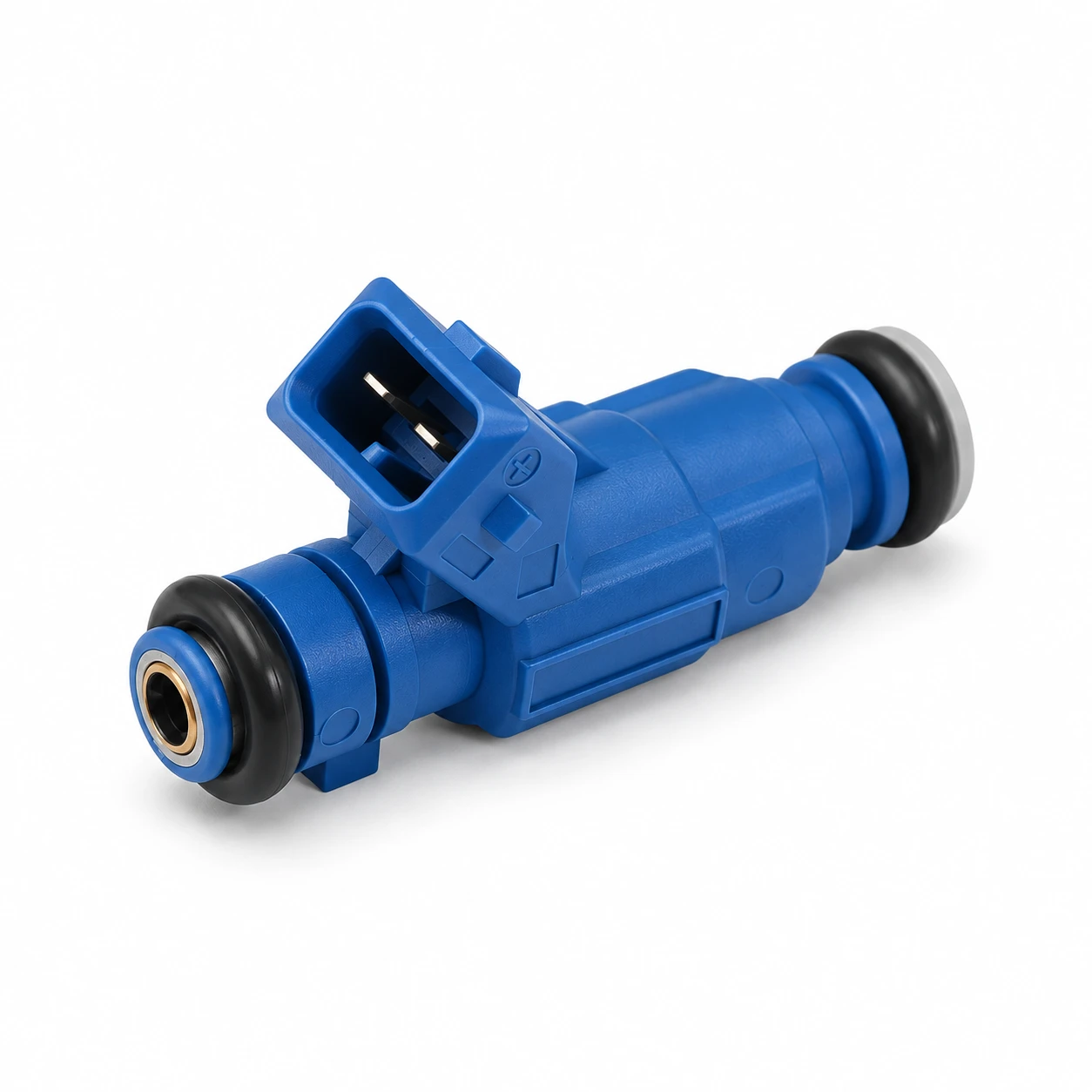
Read the injector’s original identification and confirm it against the vehicle’s parts information. Record the engine code and any verified replacement number. An injector body may fit the connector while having a different overall length, seal groove, or seating arrangement. A seal kit needs to belong to the exact assembly, not merely the vehicle brand.
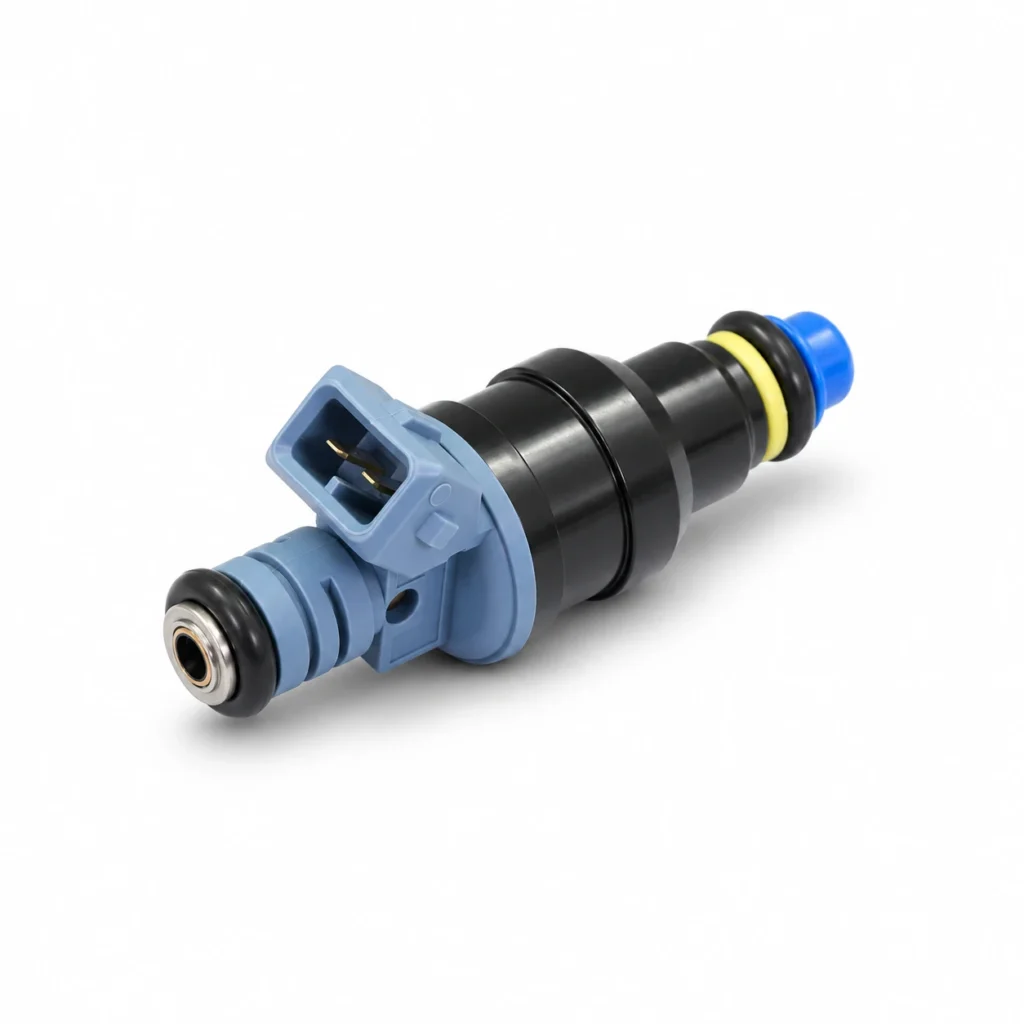
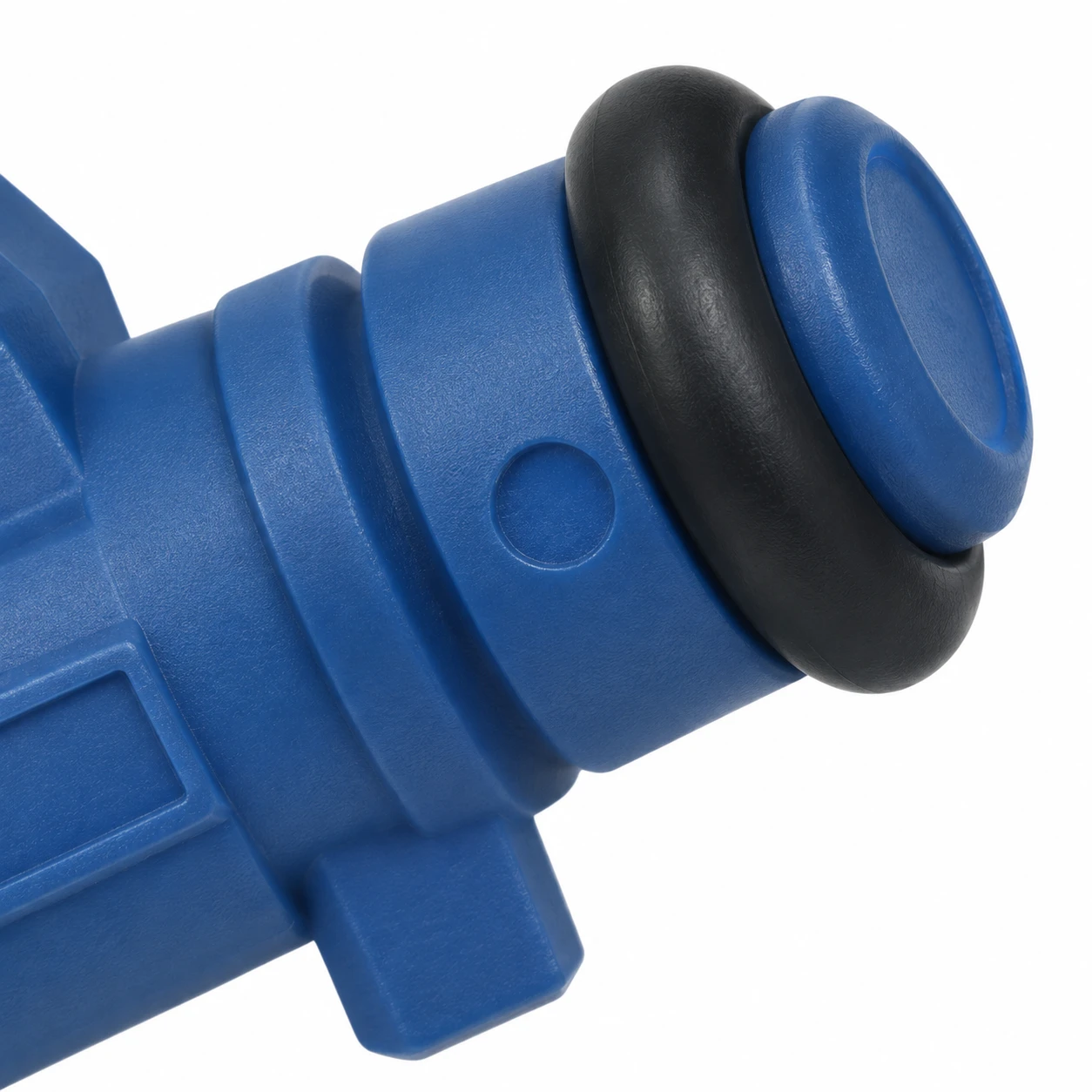
For an enquiry, provide photographs of both ends and the complete injector. If dimensions are required, use the specified measurement method and identify which dimension is being reported. A worn or swollen removed ring is a poor master sample. Its shape may no longer represent the intended new part.
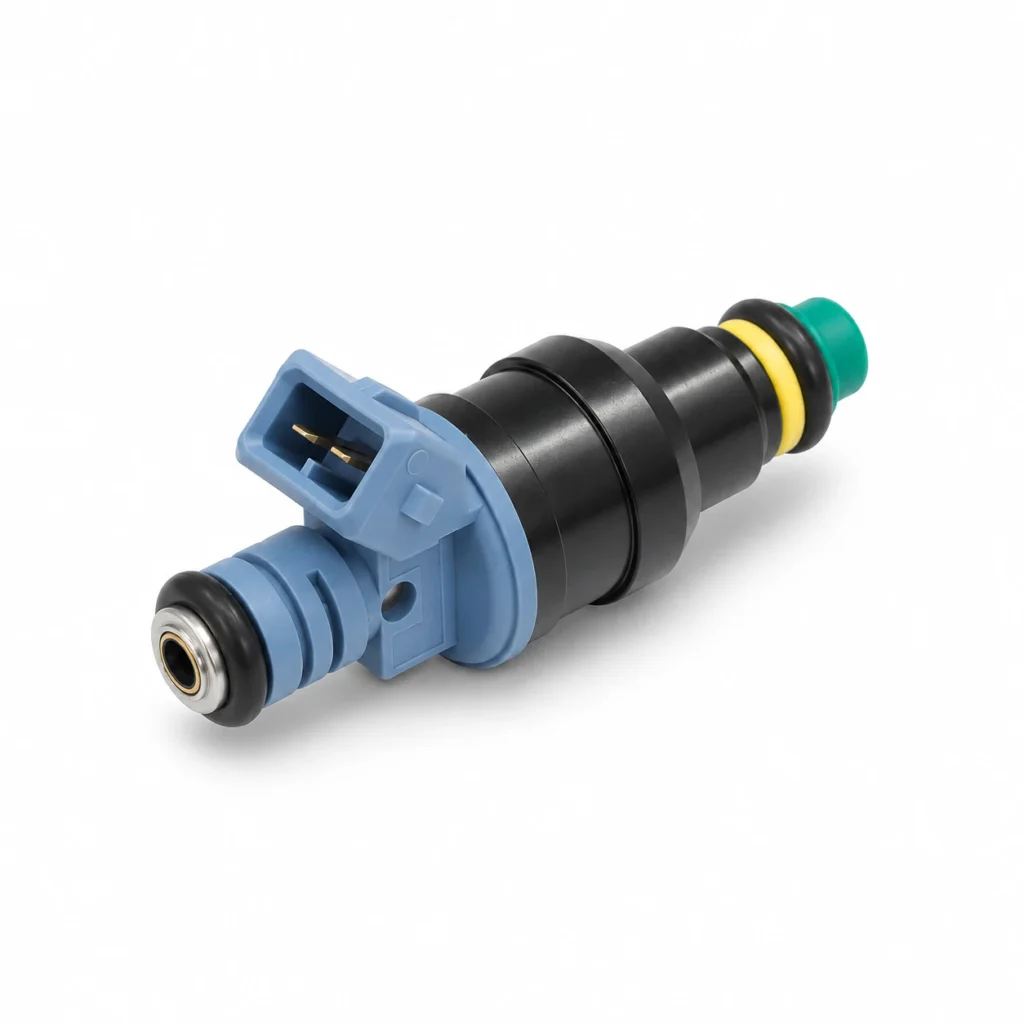
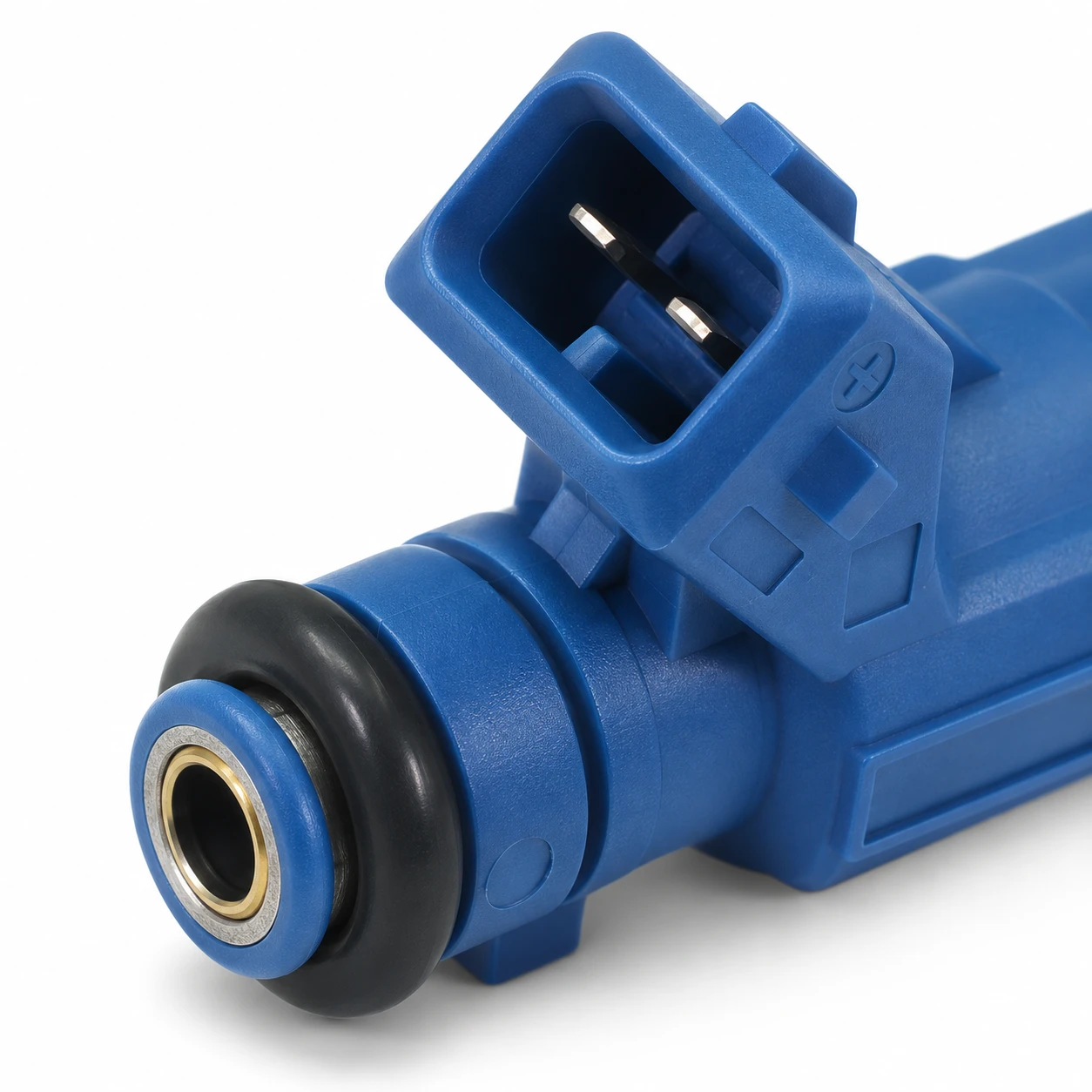
Kangsong’s 0280155794 port-injector reference shows a blue body with external black seals and a two-pin connector. The pictures identify visible features for a parts discussion. They do not establish the seal compound, approved fuel blend, pressure rating, or the correct service kit for another injector that looks similar.
Do not choose seals by color
Color can help organize a known kit, but it is not a universal material code. Two black rings need not have the same compound or dimensions. Two different colors do not automatically mean the rings serve different pressure ranges. Use the kit identification and the manufacturer’s application information.
Ask the supplier to distinguish supplied facts from assumptions. Useful information includes the supported injector number, seal positions, required spacers or backup rings, and any instruction sheet. If fuel compatibility is important to the application, request documented compatibility rather than inferring it from a broad material name.
Keep the kit intact until its contents have been checked against the procedure. Mixing remaining rings from several opened packages can destroy traceability. A low-cost seal should not become an uncertain substitute simply because it can be stretched over the injector. Record which kit went into which work order.
Plan the job before opening the rail
Confirm the pressure-relief procedure, isolation steps, access requirements, and fire precautions in the service manual. Have the correct seals, retainers, and any single-use components available before disassembly. If the installation requires special tools, arrange them first. The purpose is to avoid leaving open fuel connections while searching for parts.
The table below is a work-order checklist, not an interchangeable set of installation instructions. The GM bulletin above and Indian Motorcycle’s published fuel-rail repair instructions illustrate application-specific seal handling and inspection. Neither establishes a universal torque, lubricant, or leak-test time for the Kangsong reference injector.
| Stage | Evidence or item needed | Reason to stop and resolve |
|---|---|---|
| Fault identification | Confirmed leak location and test conditions | Fuel odor is present but the source is unknown |
| Parts matching | Injector number, application and exact kit | Only seal color or a worn sample is available |
| Disassembly planning | Pressure relief, access and isolation instructions | No approved way to make the circuit safe |
| Seal preparation | Specified lubricant, tools and replacement retainers | A generic chemical is being substituted |
| Seating | Correct orientation and undamaged mating surfaces | Resistance suggests a trapped or rolled seal |
| Release to service | Documented leak check under prescribed conditions | Engine starts, but seal integrity has not been checked |
Remove seals without damaging the grooves
A replacement ring can only seal properly against suitable surfaces. Follow the approved removal method so the injector groove, inlet, nozzle, and rail bore are not scratched. Do not treat a sharp pick as harmless simply because the old ring will be discarded. Damage to the mating surface can remain after the new ring is fitted.
Protect open passages from debris. Keep removed seals and clips accounted for, and separate them from new parts. If a fragment is missing, resolve where it went before reassembly. Avoid cleaning methods that push dirt into the injector or leave lint in the fuel path.
Inspect the injector and rail for damage that seal replacement will not correct. A cracked connector, deformed retaining feature, or damaged groove changes the repair decision. Photograph those findings for the work order. If the component’s serviceability cannot be established, obtain the manufacturer’s guidance instead of trying a thicker ring to compensate.
Lubrication and seating are application-specific
Use only the material named by the applicable instruction. A lubricant suitable for one elastomer or injector design may not be appropriate for another. Do not use household grease, an unspecified solvent, or fuel as an improvised substitute. Where instructions call for a particular film or preparation, follow that method rather than applying more in the hope of making assembly easier.
Install the seals in the specified locations and restore any required spacers, backup rings, or retaining clips in the correct order. Keep the injector aligned during seating. Unexpected force is a reason to stop, remove, and inspect using the authorized procedure, not a reason to tighten the rail bolts harder.
After seating, confirm that retainers and connections are fully engaged as the manual requires. A rail that appears flush does not prove every ring is correctly positioned. Check the complete installation, including hoses and connectors moved for access. A new seal does not protect against a loose connection elsewhere.
Keep direct-injection seals outside this shortcut
A direct injector may use a combustion-chamber sealing ring and additional support pieces that are different from a port injector’s external O-rings. Some systems require installation and sizing tools. Do not stretch on an arbitrary ring, reuse a disturbed combustion seal, or apply a port-injector lubricant instruction to a different seal type.
The same distinction applies to diesel injectors. Copper washers, internal oil or fuel interfaces, and injector sleeves are separate systems with their own requirements. An article about O-rings cannot supply a universal repair method for all of them. Identify the injection system first and obtain its current service procedure.
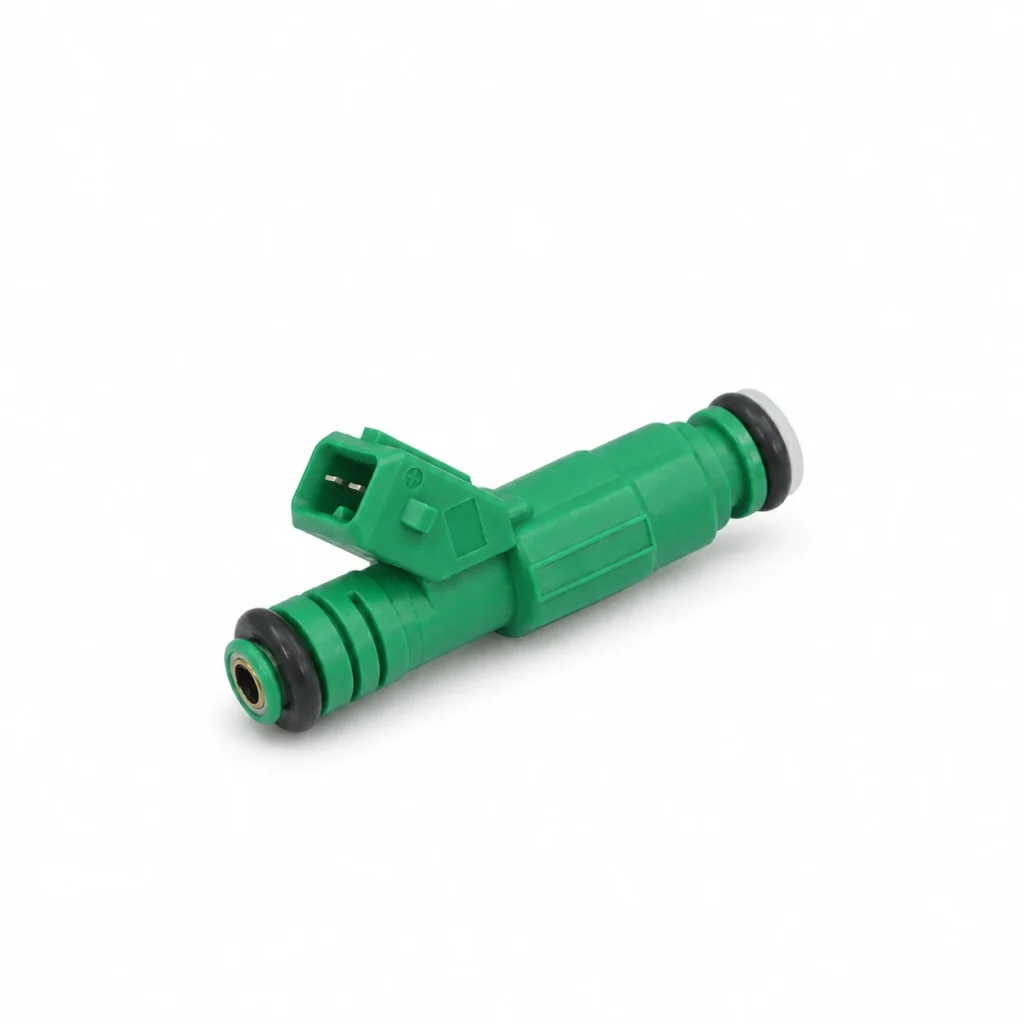
When asking for parts, explicitly state port injection, gasoline direct injection, or the relevant diesel system. If the supplier’s answer does not distinguish these arrangements, resolve the mismatch before ordering. Electrical connector similarity is not evidence that the sealing systems are equivalent.
Verify the repair before returning the vehicle
Complete the prescribed pressurization and leak checks before release. Starting successfully is only one observation. Record whether the repaired interfaces remained dry under the required test conditions, and inspect other connections disturbed during access. If leakage persists, stop and re-establish the source rather than repeatedly fitting rings.
An electrical test addresses another question. ScannerDanner’s educational waveform demonstration below helps explain injector command and response; it does not prove external seal integrity. A normal electrical pattern cannot certify that the rail-side connection is leak-free. Keep the mechanical leak check and electrical diagnosis as separate entries in the work order.
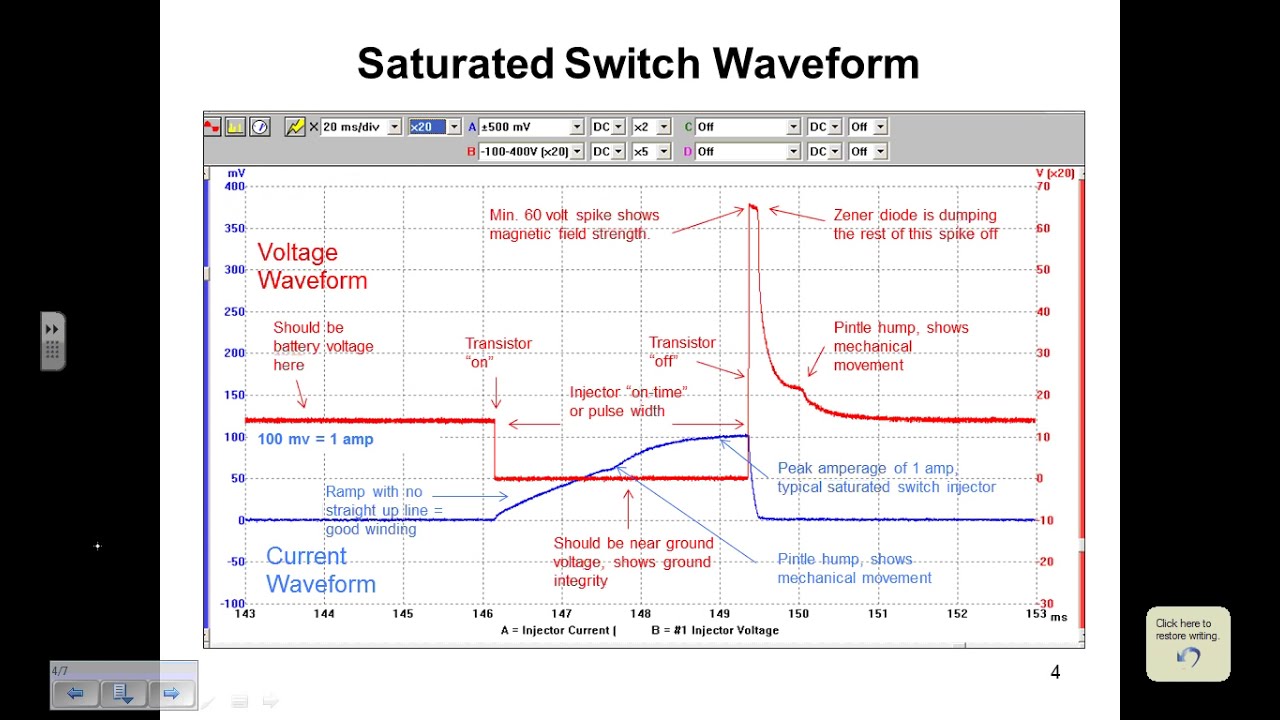
ScannerDanner: How to interpret fuel injector waveforms (a ScannerDanner Premium video)
For related topics, see high-impedance fuel injectors for electrical compatibility, injector dead time for calibration data, and injector flow matching for delivery-test reports. None of those checks replaces external sealing verification.
For the broader product family, see the fuel injector range. Select a documented application before comparing individual injectors or seal kits.
FAQ
Can I reuse O-rings that look undamaged?
Follow the exact service procedure and its replacement requirements. Appearance alone does not establish that a disturbed seal remains suitable. Plan the specified new seals before removing the injector.
Does a black O-ring identify its material?
No. Color is not a universal material or compatibility certificate. Match the documented seal kit to the injector, position, and application.
Will new O-rings repair an internally leaking injector?
External seals do not repair an internal valve fault or cracked body. Identify the leak path and test the injector through the appropriate procedure before deciding which component needs replacement.
Is a successful engine start enough to approve the repair?
No. Complete and record the prescribed leak check, including the repaired interfaces and other connections disturbed during access. Stop if fuel leakage or an unresolved fuel odor remains.