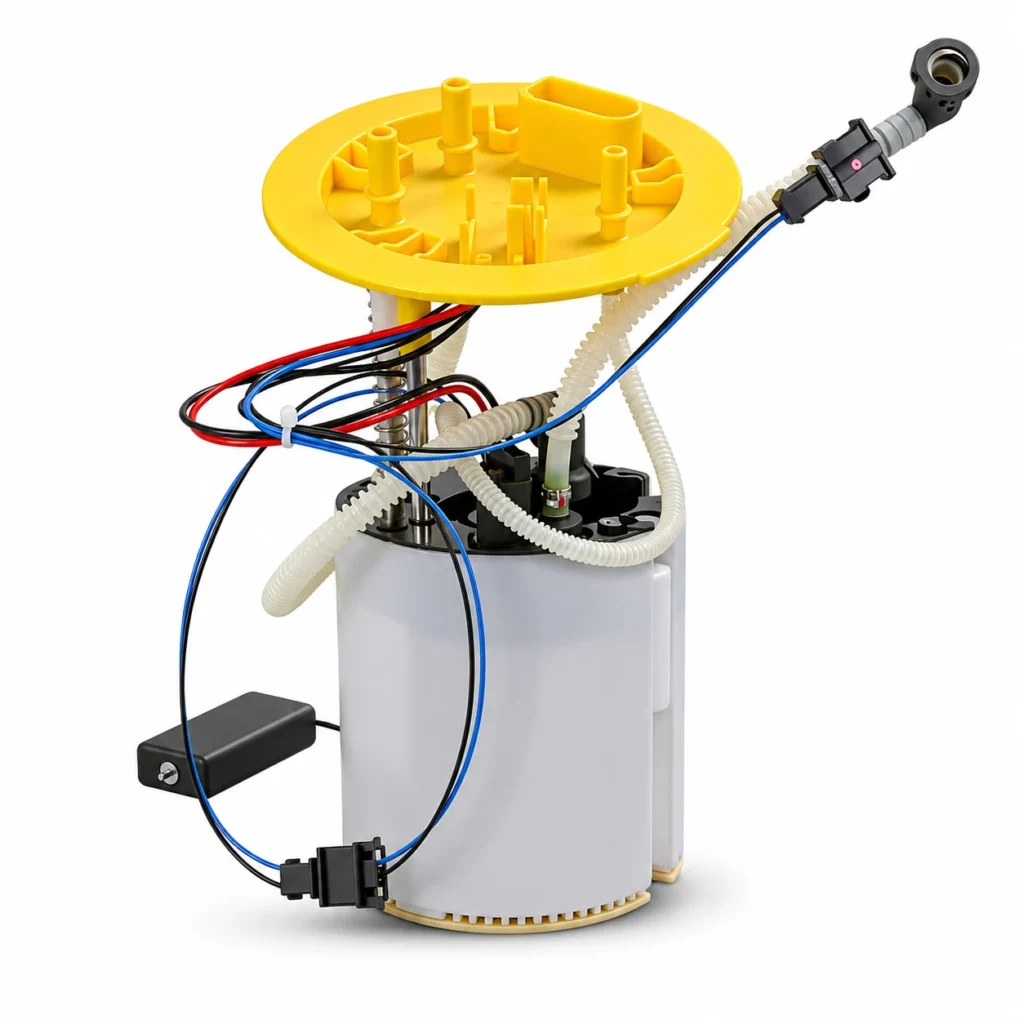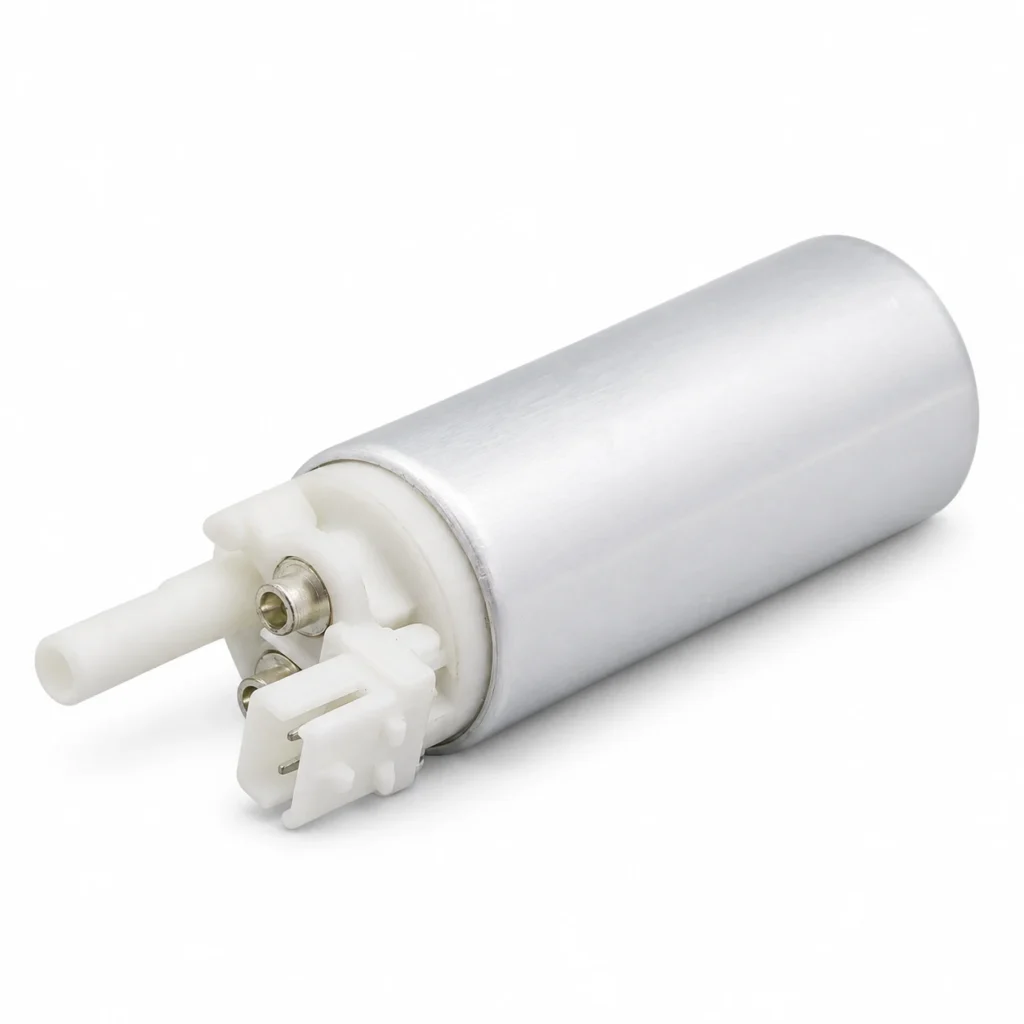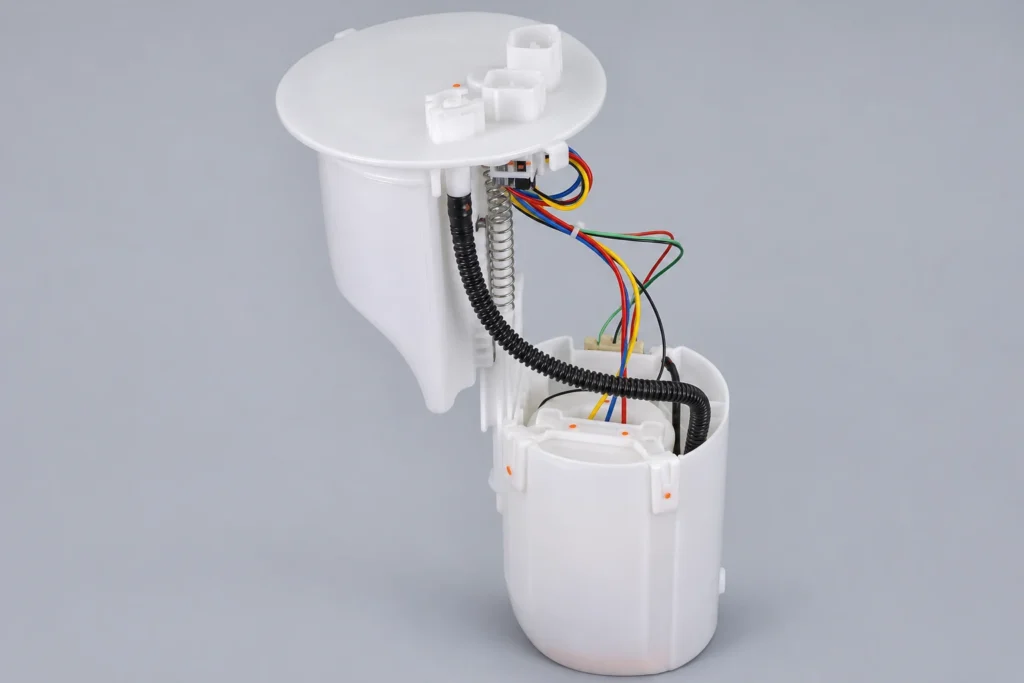
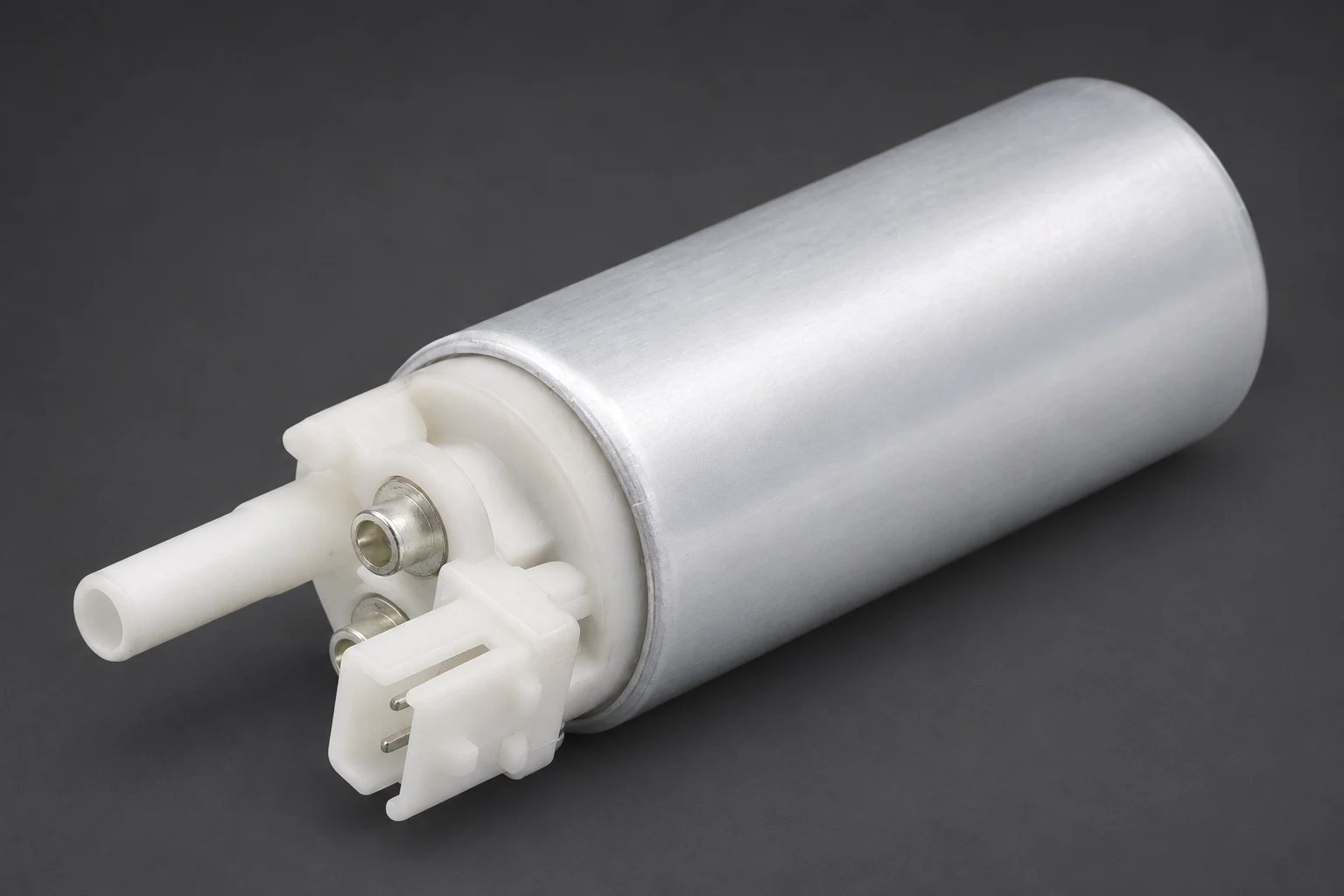
The main difference between a brushed vs brushless fuel pump is how its electric motor switches current between windings. A brushed motor uses physical brushes and a commutator; a brushless motor uses electronic commutation. That changes the drive electronics, wear mechanisms, and diagnostic approach. It does not by itself establish the pump’s flow, pressure, fuel compatibility, or suitability as a replacement. For a standard vehicle repair, match the original application and its control arrangement rather than selecting by motor label alone.
This guide explains the differences that matter to workshops and pump buyers, including controller compatibility, fair performance comparisons, and the documentation required before ordering.
Mechanical brushes or electronic switching?
Both designs use electromagnetic forces to produce rotation, and the motor drives a separate pumping mechanism. Current must be directed through the appropriate windings as the rotor moves. The difference is how that switching, called commutation, happens.
In a brushed DC motor, stationary brushes contact rotating commutator segments connected to the armature windings. The physical contact provides the switching sequence. In a brushless motor, electronic circuitry controls the winding sequence using the information required by the particular drive design. The controller may be separate from the pump or incorporated into an assembly.
Microchip’s AN885, Brushless DC Motor Fundamentals, explains electronic commutation and motor construction. It describes general motor principles; its example diagrams and ratings are not specifications for a particular automotive fuel pump.
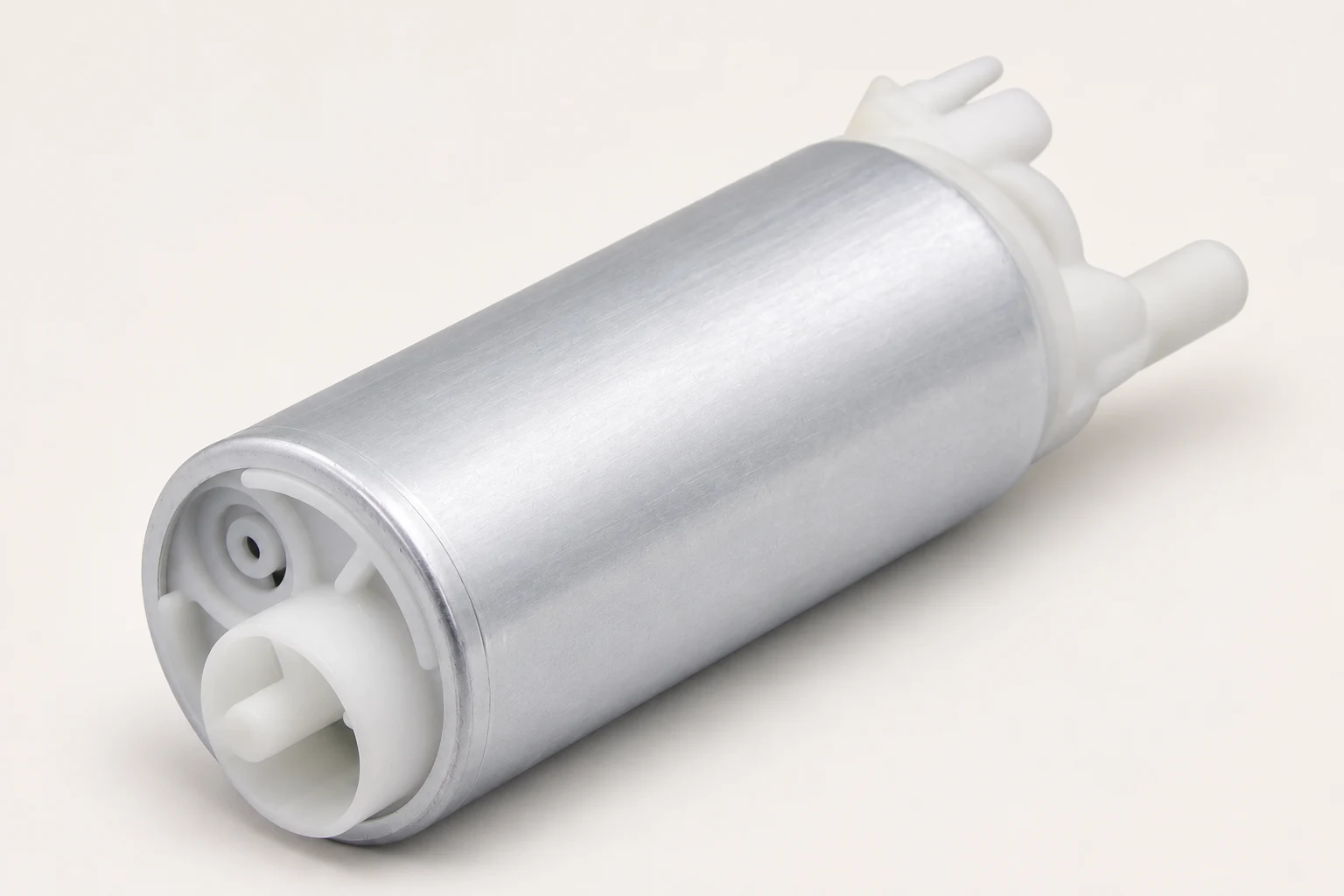
The visible pump housing does not reveal all of this internal arrangement. A silver cylindrical body, a plastic cap, or a familiar connector cannot establish the motor type reliably. Identify it from the exact component documentation. Do not open a sealed pump or improvise a power connection simply to discover which motor is inside.
Brushed vs brushless fuel pump comparison
| Question | Brushed design | Brushless design | What the buyer must confirm |
|---|---|---|---|
| How are windings switched? | Brushes and a segmented commutator provide mechanical switching | Electronic circuitry provides commutation | The actual motor and drive arrangement for the offered part |
| What wear mechanism changes? | Brush and commutator contact can wear | The brush-to-commutator contact is absent | Durability evidence for the complete pump and operating environment |
| Can speed be controlled? | Appropriate supply control can vary motor operation | The electronic drive manages the motor according to its design | Command method, controller compatibility, and operating range |
| How is it diagnosed? | Current-ripple analysis can assess relevant commutator behavior | Electronic drive and phase behavior require the specified test method | The correct procedure and measurement points |
| Does the label establish delivery? | No; the hydraulic design and operating conditions still matter | No; the hydraulic design and operating conditions still matter | Flow at required pressure, fuel, temperature, voltage, and command |
| Is it interchangeable? | Only where the application documentation establishes a match | Only where the application documentation establishes a match | Mechanical fit plus electrical, control, fuel, and system compatibility |
The table describes design distinctions rather than universal performance rankings. A complete pump combines a motor, hydraulic element, materials, and control interface. Each part affects whether the unit will do the required job.
What advantages can brushless operation offer?
Removing the brushes eliminates their rubbing electrical contact with a commutator. Brushless designs can also give the motor designer useful control over commutation and operating speed. Those are real engineering advantages, but the benefit in a vehicle depends on the complete design and its duty.
Texas Instruments’ brushless-DC motor training discusses the motor and drive principles behind potential efficiency, acoustic, and power-delivery benefits. The training also makes clear that the motor requires a suitable electronic drive. A motor-level advantage does not prove that every brushless fuel pump outperforms every brushed alternative at a specified operating point.
Likewise, removing brushes does not remove every possible failure. The pumping element, bearings, electrical connections, electronics, seals, fuel contamination, and installation remain relevant. A brushless label is not a lifetime guarantee, a fuel-compatibility certificate, or proof that inlet restrictions can be ignored.
For the broader tank-to-engine process, our electric fuel pump operation guide explains how the pump participates in delivery. Motor technology is one part of that system.
Check the controller, not just the connector
A brushed pump is not necessarily uncontrolled, and a variable-speed pump is not necessarily brushless. Supply modulation can be used with a brushed motor. Conversely, a brushless assembly may expose a supply and command interface while its electronics handle the winding switching internally. Connector appearance alone does not settle either question.
The useful specification identifies what the vehicle sends and what the pump or controller expects. Confirm the supply, command method, relevant feedback, diagnostic provisions, and required installation or calibration information. Do not apply a generic duty-cycle percentage or pin assignment from another vehicle.
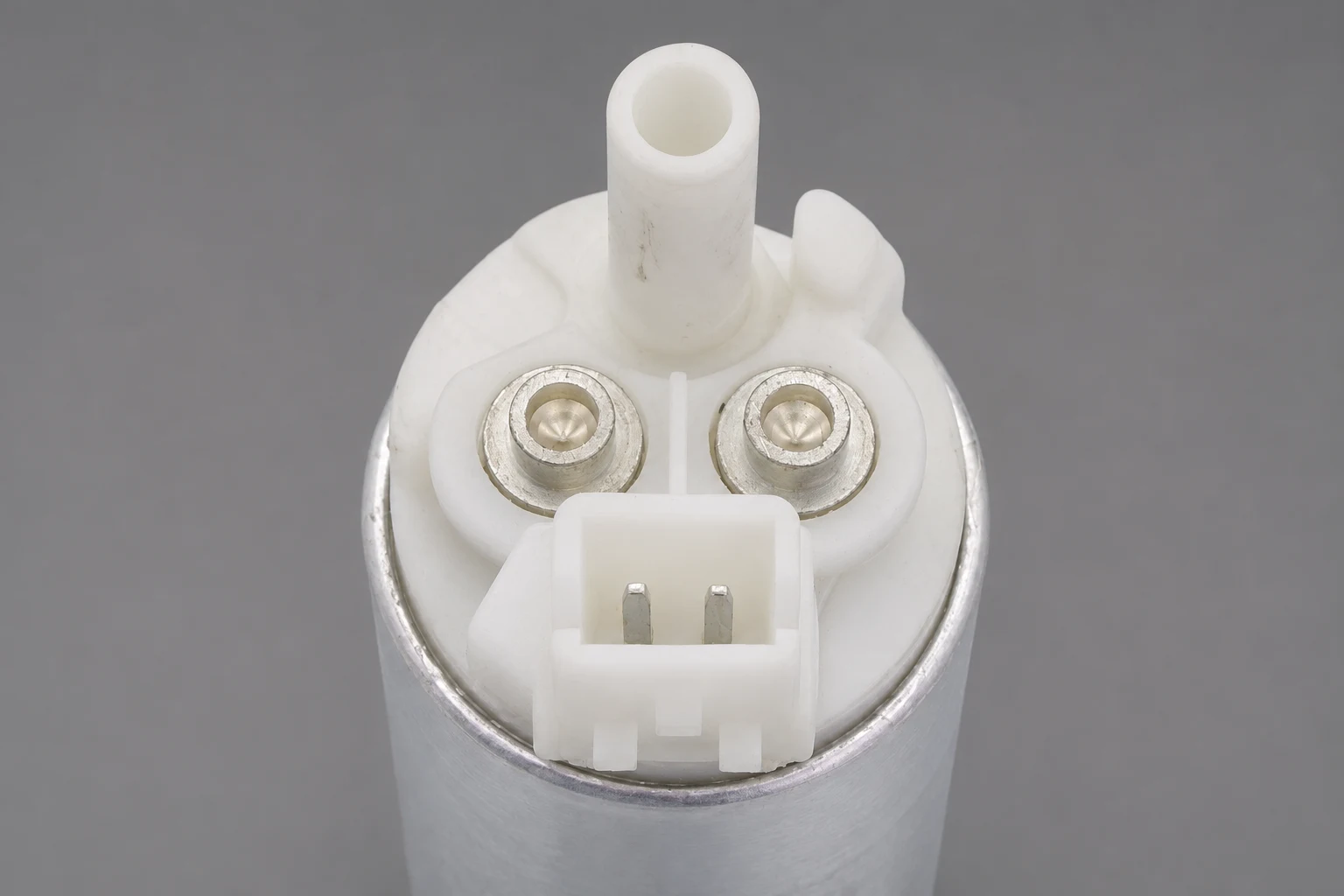
A physically matching replacement can still be unsuitable if the drive requirements differ. Before quoting an alternative, obtain written application confirmation rather than treating the same nominal voltage as proof of compatibility. Also establish whether a controller is included in the order or must remain with the vehicle.
Our fuel pump power-control module guide helps distinguish a separate control device from the pump assembly. Keep those component references separate in the inquiry.
How to make a fair performance comparison
Begin with the required fuel delivery at operating pressure. Compare pump data at the same fuel or defined test liquid, voltage, temperature, and command condition. A free-flow figure and a rating at pressure describe different points. A headline flow number alone cannot establish that one motor type is the better choice.
When comparing electrical demand, specify the measurement boundary. Pump-motor input, controller input, and the complete vehicle circuit can have different losses. Compare equivalent boundaries and operating points. Do not present a controller-inclusive measurement for one candidate against a motor-only measurement for another without explaining the difference.
The same discipline applies to noise. A pump on a bench, one installed in a tank, and one measured inside a vehicle do not provide directly comparable sound evidence. Mounting, fuel level, plumbing, operating speed, and the measurement method can affect the result. Ask for the test conditions behind an acoustic claim.
Durability evidence also needs context: fuel exposure, temperature, operating schedule, and acceptance criteria. A claim about eliminating brush wear should not be converted into an unsupported number of service hours. Use the manufacturer’s documented results for the actual product and intended conditions.
For flow-rating interpretation, see the fuel pump capacity guide. It covers the separate issue of specifying usable delivery rather than choosing a motor technology from a label.
Why the diagnostic method changes
On a confirmed brushed motor, current variations associated with commutation can help assess operation when captured and interpreted correctly. A brushless pump’s drive-related signals do not represent carbon-brush contact. Applying a simple brushed-motor ripple rule to the wrong architecture can therefore produce a false diagnosis.
In its Audi SQ5 electronically commutated pump case study, Pico Technology illustrates why motor design and the actual control arrangement matter to waveform interpretation. The case is an example for that application, not a normal-current or speed specification for unrelated pumps.
Use the relevant vehicle and test-equipment procedure. Verify power, ground, command, and delivery evidence as required. A control fault, poor connection, or hydraulic restriction can affect pump performance without establishing that the motor technology itself is inappropriate.
A replacement and sourcing checklist
For a standard repair, identify the vehicle, engine, market version, and original part number first. Confirm whether the request is for a pump element, a full module, a controller, or another component. Obtain the correct replacement application and preserve the vehicle’s intended control arrangement.
For an engineered alternative, provide a complete requirement: fuel range, delivery at pressure, electrical limits, control interface, mounting, connections, temperature range, operating duty, and validation expectations. Ask the supplier to identify the exact part and revision covered by its response.
The Kangsong C/K application gasoline pump listing is an application-specific catalog reference. Its product images support visible-interface identification; they are not a brushless-technology declaration or a universal conversion recommendation. Request explicit documentation for any motor-type or control-compatibility requirement.
When discussing an OEM program through the Kangsong manufacturer inquiry page, attach the requirement and supporting drawings or original-part details. A useful supplier answer should resolve the application and performance questions rather than simply repeat the word brushless.
Watch: electronic commutation explained
The Engineering Mindset’s educational animation explains brushless motors and electronic control. It illustrates the underlying principle, not the internal construction or an approved wiring method for the pictured fuel pump.
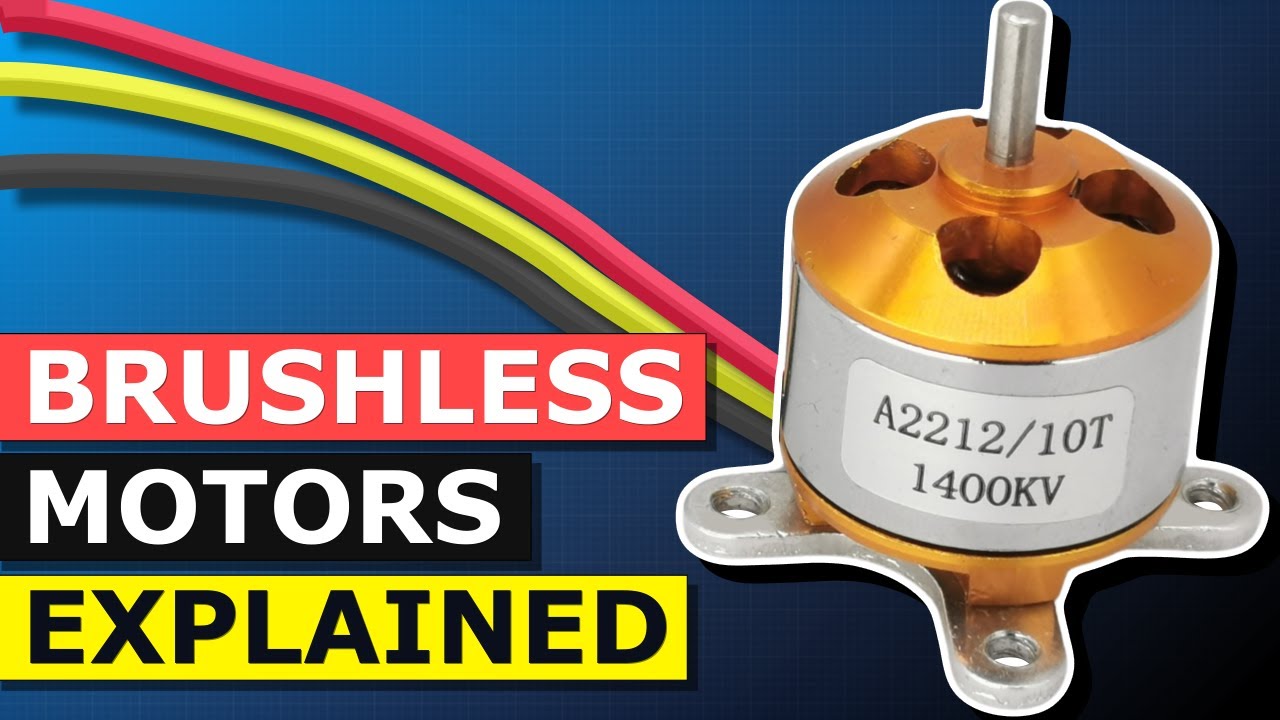
Watch the brushless motor explanation on YouTube.
Frequently asked questions
Is a brushless fuel pump always a better replacement?
No. The replacement must match the vehicle’s application, delivery, fuel, electrical, and control requirements. Motor technology alone does not establish suitability.
Does variable-speed operation prove a pump is brushless?
No. Brushed motors can also have controlled operation. Identify the motor and controller arrangement from the exact product and vehicle documentation.
Can I identify motor type from the housing or pin count?
Not reliably. Electronics may be integrated or separate, and visible interfaces do not reveal every internal feature. Use the correct component documentation.
Does removing brushes eliminate all pump failures?
No. The hydraulic mechanism, electronics, connections, materials, installation, and operating conditions remain relevant even when brush wear is removed.