A fuel caddy with pump order names the wheeled tank and the pump that empties that tank, because that pump does not feed a vehicle engine. The lines below cover the cart, the transfer pump, and a printed C/K window that belongs on a truck.
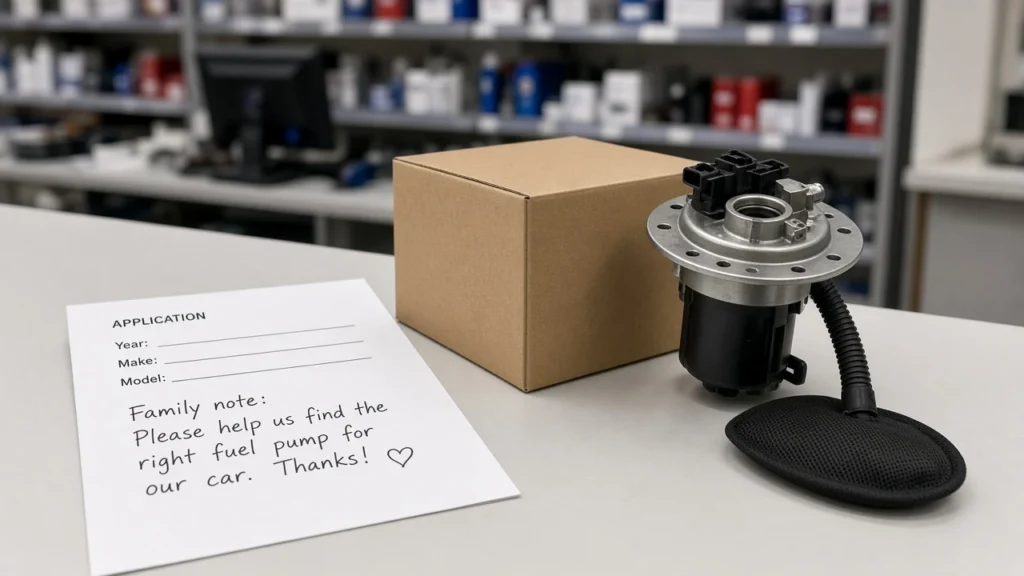
A counter with a yard sketch and a closed pump carton is the scene this page follows. The sketch shows a tank on wheels. The carton on the bench is still shut.
A fuel caddy with pump rolls the tank to the machine
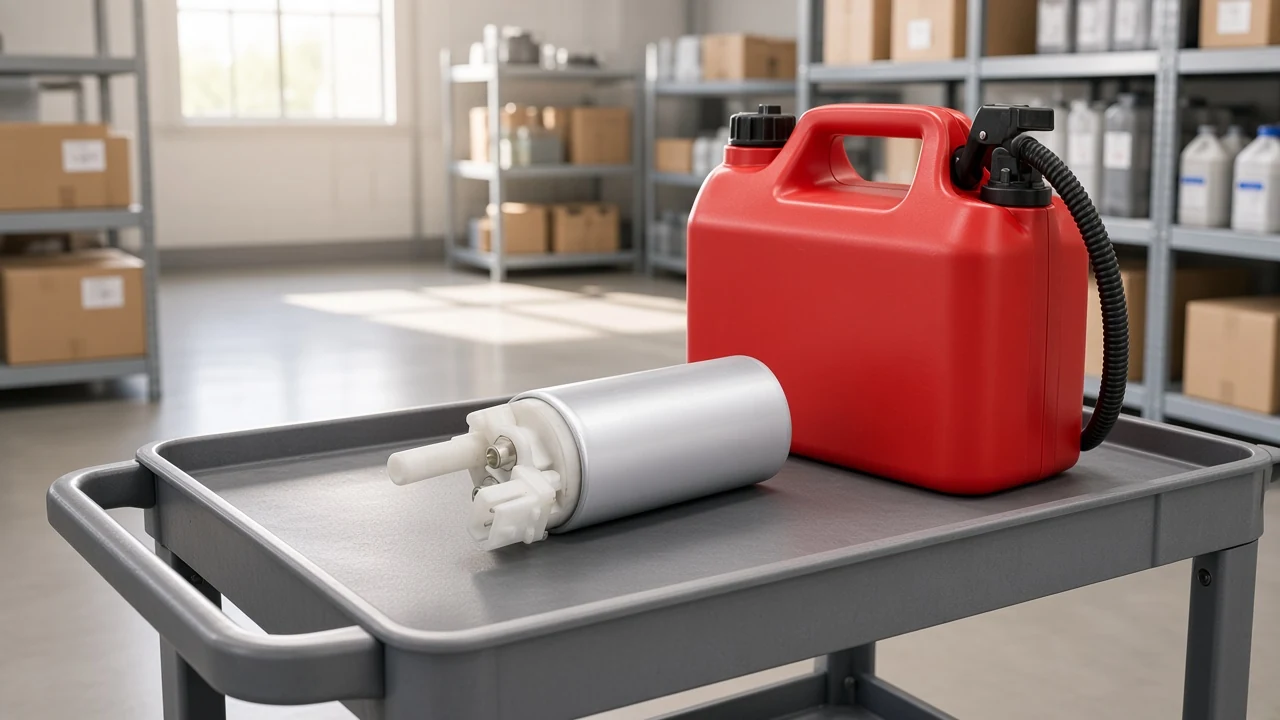
A fuel caddy with pump rolls a tank to the machine, and the pump rides on that tank. Shopping pages already split a cart you push from a tank you drive in a truck bed.
Think of the cart as a large can that stays on the ground. You roll it to a mower, a generator, or a small tractor, then dispense. The job starts with the tank, not with an engine bay.
From the field: On My Tractor Forum, an owner who is tired of filling six 5-gallon cans each summer is looking at a wheeled gasoline caddy with a pump. https://www.mytractorforum.com/threads/30-gallon-fuel-caddy.1392041/
A later reply on that thread says some caddies carry a label against hauling them the way landscapers haul a purpose-built tank. That label stays on the cart. It does not rename the cart as an engine part.
Leave truck-bed tanks on their own line when the sheet says the tank rides in the bed. A push cart and a driven tank can both hold fuel and still be different cartons.
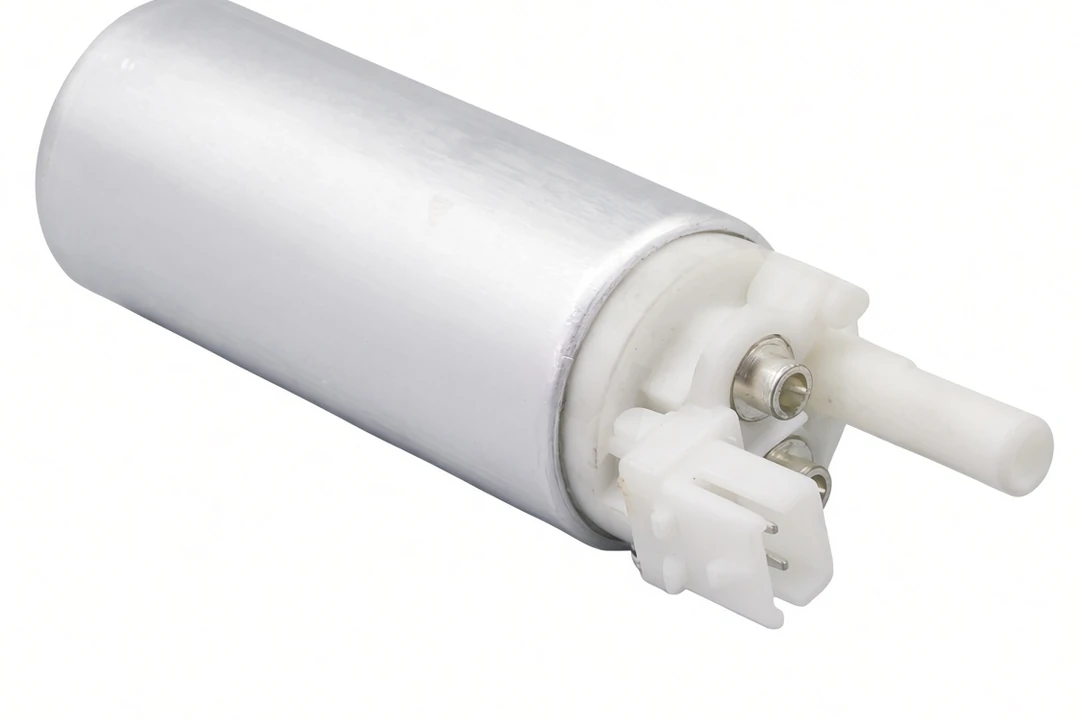
The pump on that cart only empties the cart
The pump on that cart only empties the cart into equipment. It moves fuel from the wheeled tank into the machine you rolled up to.
A hand pump and an electric transfer pump share that job. One uses a handle. The other uses a motor on the cart.
Neither one sits in a vehicle tank feeding injectors.
Write the destination in the same ink as the cart. “Into the mower” and “into the truck’s injectors” are different destinations. The warehouse cannot guess which one you meant.
Hose length, a nozzle, and a drip cap are cart hardware. They do not create an engine fitment, and they do not print a flow rating for this catalog.
A fuel caddy with electric pump stays a transfer pump
A fuel caddy with electric pump stays a transfer pump on the cart. The word electric names the motor on the cart. It does not name a vehicle module.
Retail pages offer a hand pump and an electric pump side by side on the same wheeled tank. That menu matches the cart. It does not replace the sheet, and it does not make the electric unit an in-tank engine pump.
Power for that cart pump is whatever the cart’s own label prints. This page does not copy a retail amp draw or a gallons-per-minute claim onto a Kangsong line.
A portable electric pump used away from a cart is a neighboring page, portable electric fuel pump. A portable diesel transfer setup is a neighboring page again, portable diesel fuel pump.
Open those when the sheet is about a loose portable pump or a diesel transfer job. This page stays on the caddy line.
An engine fuel pump feeds the injector, not the yard
An engine fuel pump feeds the injector or the carburetor, not the yard cart. Wikipedia’s fuel-pump article says the pump transfers fuel from the vehicle tank to the device that mixes it with intake air.
Fuel-injected engines, on that same article, use an electric pump inside the tank or a high-pressure mechanical pump on the engine. The teaching page on how a fuel pump works draws the same split between a cam-driven pump and the electric pump used with injection.
That is the engine carton. It lives with the vehicle. A wheeled fuel tank in the yard is a different object, even when both objects are painted and both move fuel.
| Line the sheet can print | Where the pump sits | What the order still names |
|---|---|---|
| Push caddy | On a wheeled tank in the yard | The cart and the pump that empties it |
| Truck-bed transfer tank | In the bed, driven to the job | The bed tank, not the push cart |
| Engine fuel pump | In the vehicle tank or on the engine | The vehicle window, not the cart |
One purchase line cannot cover both jobs
One purchase line cannot cover both jobs, so the sheet has to pick. “Fuel caddy with pump” and “engine fuel pump” can share the word pump and still send the warehouse to two shelves.
Write yard cart or engine pump in the same ink as the fuel type. Gasoline for mowers and diesel for a tractor are still cart questions when the sheet is a caddy. They become vehicle questions only when the sheet names a vehicle.
A higher printed flow for a named vehicle job is a separate conversation on high-flow fuel pump. How an external vehicle mount differs from an internal one is already covered on external versus internal.
Neither of those pages writes this caddy line. Use them when the sheet is already a vehicle pump.
A 1987-1995 C/K kit is the engine window
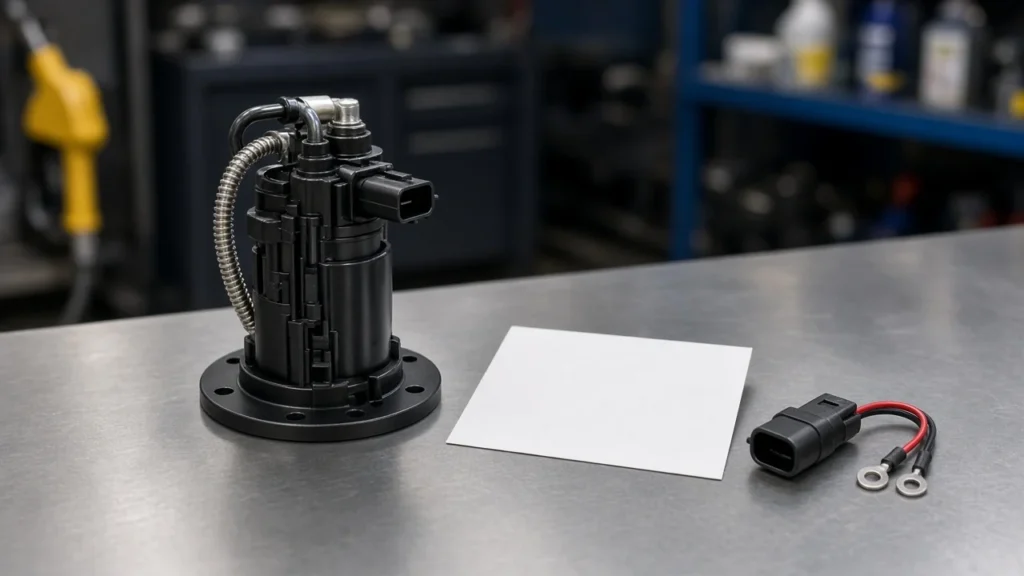
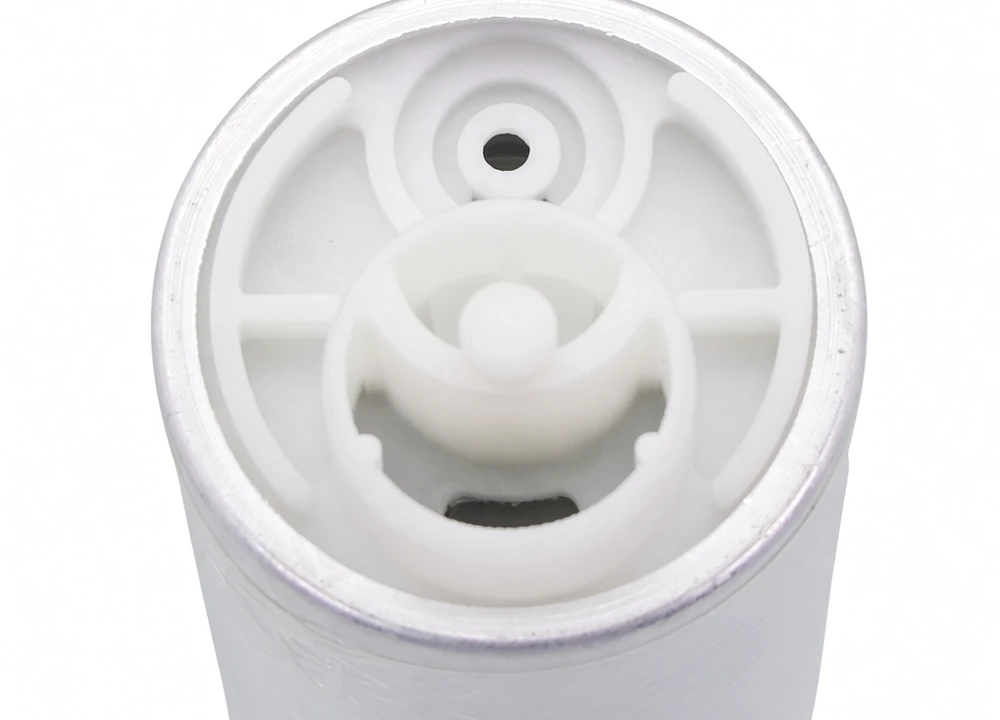
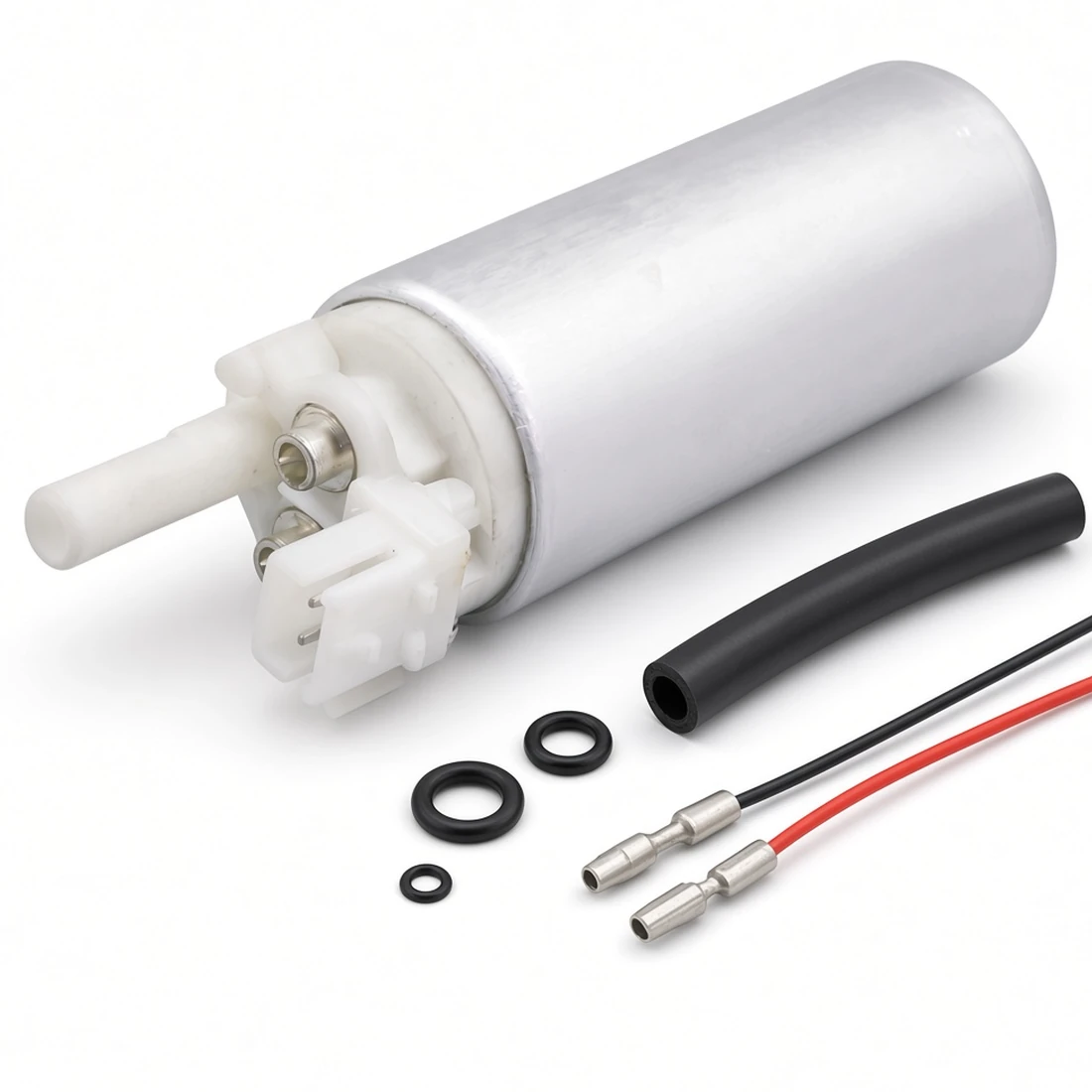
KS-360501 prints a 1987-1995 C/K window, and that window is not a fuel caddy. Product 2551’s title names the 1987-1995 C/K 1500, 2500, and 3500 pickups, and it prints OE 25168719 and E3902.
The same page prints DC 12V, a 2-pin main connector, and 43.3-49.5 Gph. Maximum Air Pressure 12-26 on that label is an air figure, and it is not a caddy rating. Nothing on that page prints a wheeled tank, a nozzle, or a caddy.
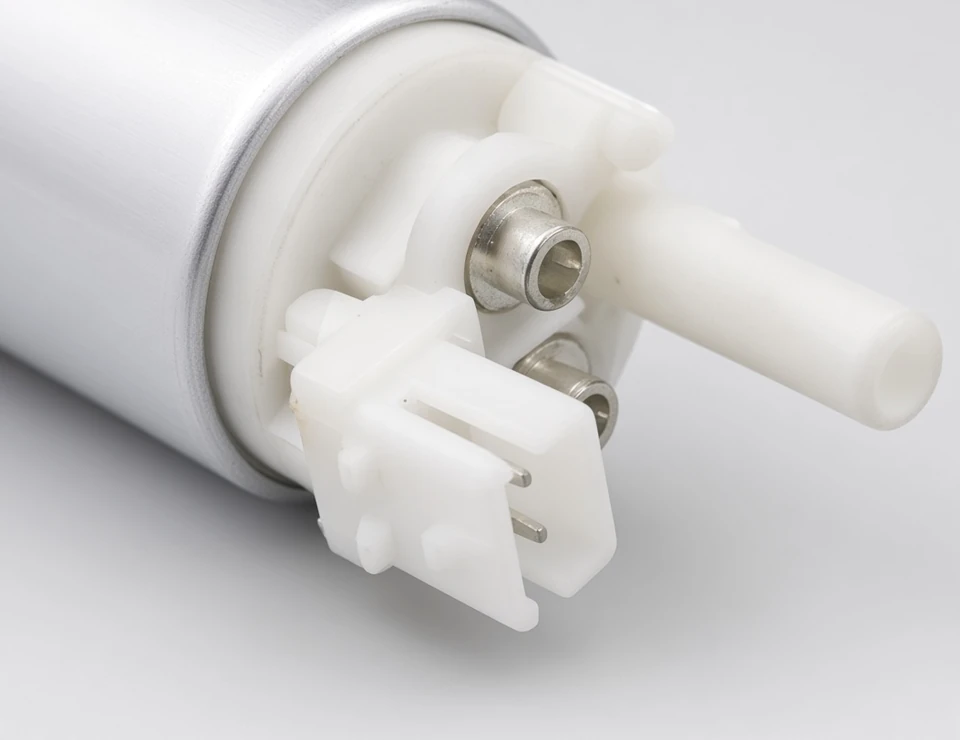
| Printed line | KS-360501 C/K kit | Fuel caddy sheet |
|---|---|---|
| What it is | Electric gasoline pump for a truck window | Wheeled tank plus the pump that empties it |
| Vehicle window | 1987-1995 C/K 1500, 2500, and 3500 | No vehicle window unless the sheet adds one |
| Connector | 2-pin main plug | The plug the cart label prints, if it prints one |
| Flow label | 43.3-49.5 Gph on this kit | Not copied from this kit |
| Air label | Maximum Air Pressure 12-26 | Not a caddy rating |
| Catalog role | Carton for that truck window | A job this catalog does not print as a caddy SKU |
A fuel caddy with pump can share the words “electric” and “canister” with that kit and still be the wrong line. The window in the title is the test. If the sheet does not say 1987-1995 C/K, the kit stays on its own shelf.
Which catalog line fits a printed engine window
The catalog line that fits is the printed C/K kit, and a fuel caddy is not that line. Use the 1987-1995 C/K electric gasoline pump only when the purchase line really names that truck. When the sheet is a fuel caddy, this catalog has no caddy SKU to offer.
A store search for caddy on 18 October 2026 returned no product. Other jobs, including a fuel caddy this catalog does not print, stay on the product category. The factory overview is not used here as fitment, because a factory page does not name this cart.
Ship the C/K kit only with the C/K title in the purchase line. Ship nothing labeled as a caddy from this catalog until a printed SKU exists. Until then the useful sentence on the order is the cart: wheeled tank, pump that empties it, and the machine the fuel is going into.
FAQ
Does a fuel caddy with pump feed the engine on the truck?
No. The caddy pump empties the wheeled tank into equipment. The engine pump moves fuel from the vehicle tank to the carburetor or the injector.
What does a fuel caddy with electric pump still have to name?
It has to name the cart and the transfer pump on that cart. Electric names the motor. It does not name a vehicle module.
Why do owners bring up 5-gallon cans?
They are tired of filling and lifting those cans. The caddy is the cart that replaces the trips, which is a sheet line, not a bigger adjective on an engine pump.
Is a truck-bed transfer tank the same carton as a push caddy?
No. A push caddy rolls to the machine. A truck-bed tank is driven to the job.
Shopping pages already split those two.
Can KS-360501 be the caddy pump?
No. KS-360501 is the 1987-1995 C/K window with OE 25168719 and E3902. A caddy sheet that does not say that truck is a different job.
What should the purchase order say when no caddy part number is printed?
Name the wheeled tank and the pump that empties it, and leave the caddy carton off this catalog. The category is where that unprinted job goes.
Does a haul label turn the caddy into an engine pump?
No. The label is a warning on the cart about hauling it as a work tank. It does not move the pump into an engine bay.