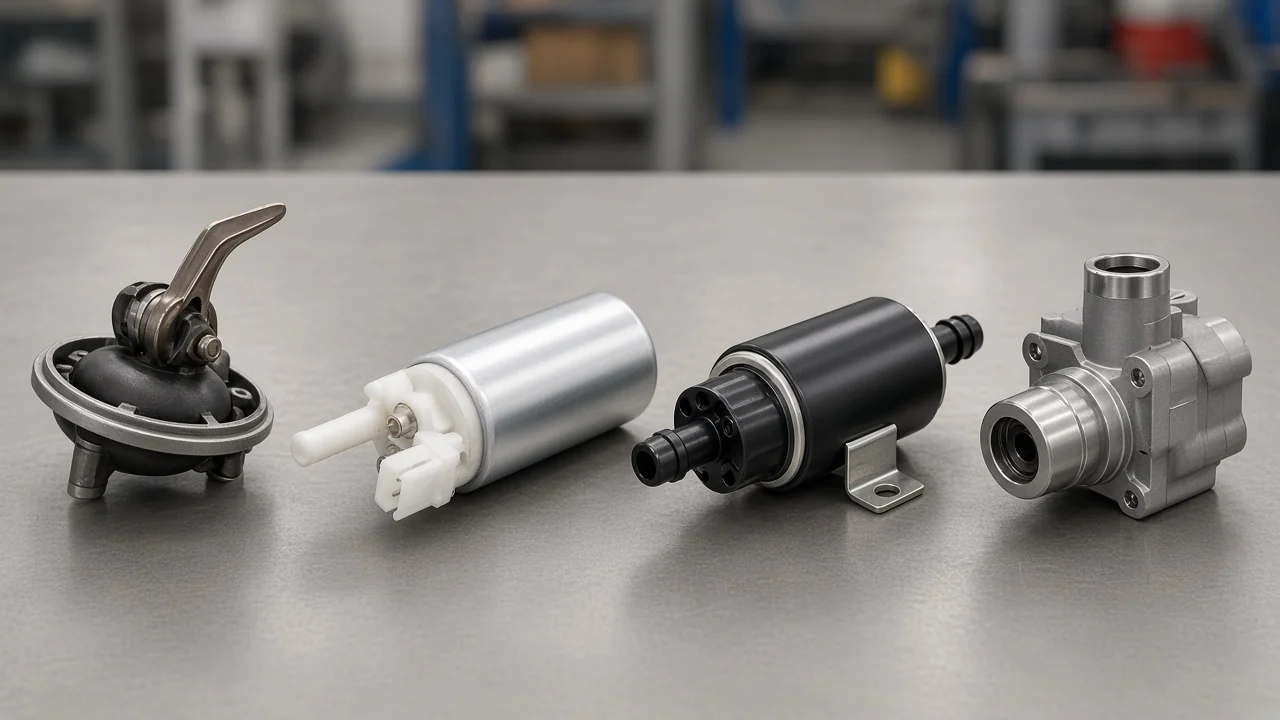
A petrol engine uses one of four pump classes, and the types of fuel pump in petrol engine service work split apart by two questions: what turns the pump, and how much pressure the fuel-metering device downstream actually needs. A parts request that only says petrol car fuel pump is really asking which of those classes sits on the spark-ignition vehicle in front of you.
Answer both sorting questions and you land on a cam-driven mechanical diaphragm pump, an in-tank electric pump, an inline electric pump mounted outside the tank, or the cam-driven high-pressure pump that direct injection adds on top of the tank pump. Below: each class with its drive and pressure band, a comparison table, a three-step identification routine, what changes when the part has to be ordered, and where first-party petrol pump hardware fits.
How Petrol Fuel Pump Types Are Grouped by Drive Source and Pressure Class
Two questions sort every petrol pump: what turns it, and how much pressure the fuel-metering device needs.
Drive source comes first because it is visible. A pump turned by the engine can only run while the engine turns, and it is bolted where a cam lobe can reach it. A pump turned by the vehicle’s twelve-volt supply can sit anywhere in the fuel path and starts the moment the ignition comes on.
Pressure class comes second, and it is set by whatever receives the fuel:
- A carburetor wants a gentle push into a float bowl.
- A port-injection rail wants tens of psi.
- A direct-injection rail wants hundreds of bar, far beyond anything a tank pump can produce.
Reference material for spark-ignition engines lines the population up the same way — a mechanically driven pump, an electric feed pump, and a high-pressure pump — so the four types of petrol fuel pumps you meet in practice are those three plus the choice of mounting the electric pump inside or outside the tank. Diesel engines sort into their own families by stage and element count, covered separately in types of fuel pump in a diesel engine.
Cam-Driven Mechanical Diaphragm Pumps on Carbureted Petrol Engines
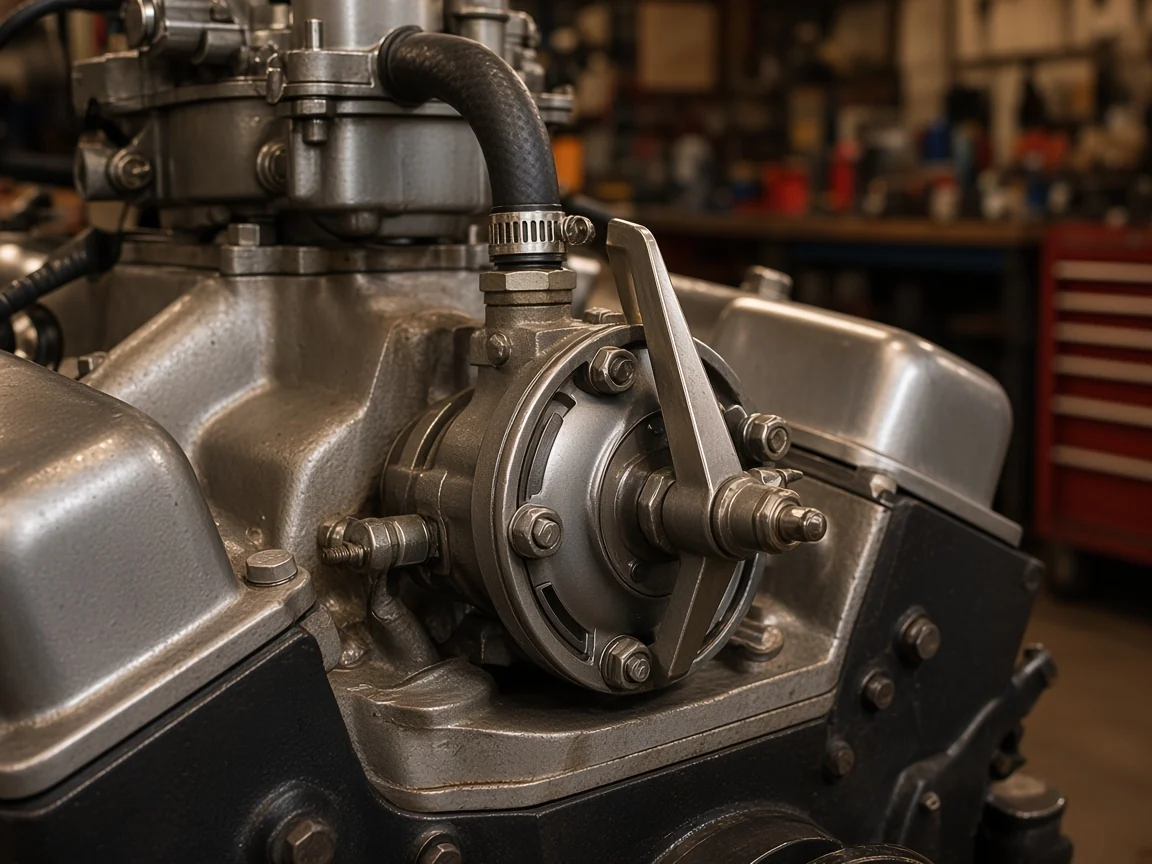
The oldest class is turned by the engine itself through a cam lobe, and it stays in a low-pressure band on purpose.
A lever on the pump body rides the long end of a teardrop-shaped lobe on the camshaft. The lever flexes a diaphragm inside the housing, inlet and outlet check valves keep the flow one-way, and every revolution of the engine gives the pump another stroke. Diaphragm and plunger are the two mechanical constructions in common use, and the diaphragm version is the one that ends up on carbureted petrol engines.
The pressure numbers published for this class disagree, and the disagreement is about measurement scope rather than hardware. Encyclopedic reference puts carburetor-fed mechanical pumps at 10–15 psi (0.7–1.0 bar), while a classic-vehicle specialist writes that most mechanical pumps work at 5–10 psi as catalogued for carburetor service. Read whichever band your own pump documentation quotes and keep the carburetor’s tolerance in front of you.
Low output here is a feature. Push harder and fuel can force past the needle and seat, flood the float bowl and spill onto a hot engine, which is why the carbureted side of the market has its own most common fuel pump used in carbureted applications discussion. The class also fades out with the carburetor: once injection replaced carburetors, the engine-driven diaphragm pump had nothing left to feed.
In-Tank Electric Pumps on Port-Injected Petrol Engines
Port injection moved the pump into the tank, where it both lifts the fuel and pressurises it.
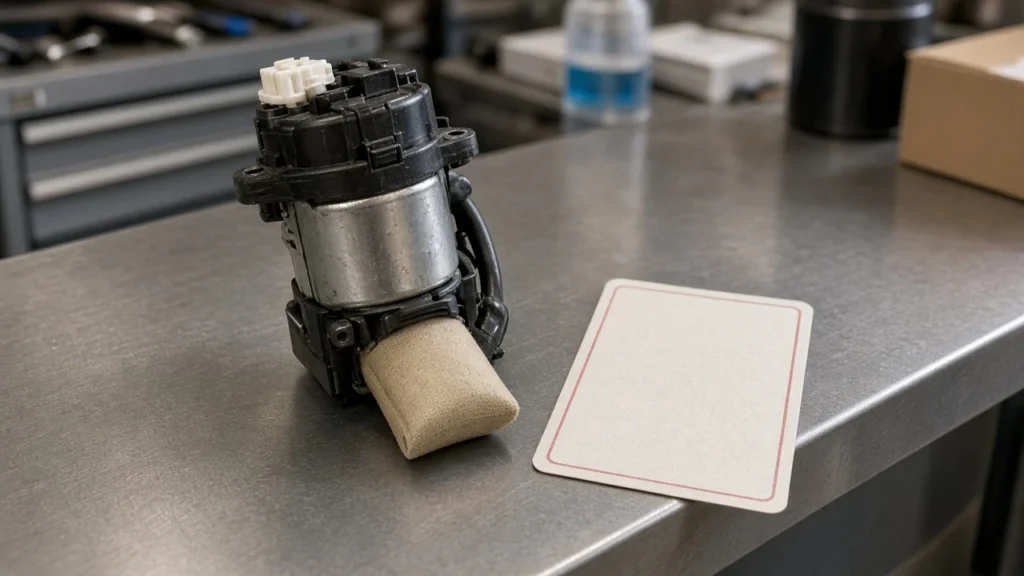
One electric motor now does two jobs that used to be split between a mechanical pump and gravity. On older port injection and throttle-body systems the in-tank pump pressurises the fuel to typically 40–60 psi (3–4 bar), enough for an injector to atomise fuel into the intake port. The same pump primes the rail the instant the ignition is switched on, before the starter turns.
Sitting in the fuel has two consequences buyers feel. The fuel cools the motor and damps its noise, so an in-tank pump runs quieter and cooler than an external one. Habitually driving on a near-empty tank removes that cooling bath and cooks the pump, which is the single most avoidable cause of a short pump life.
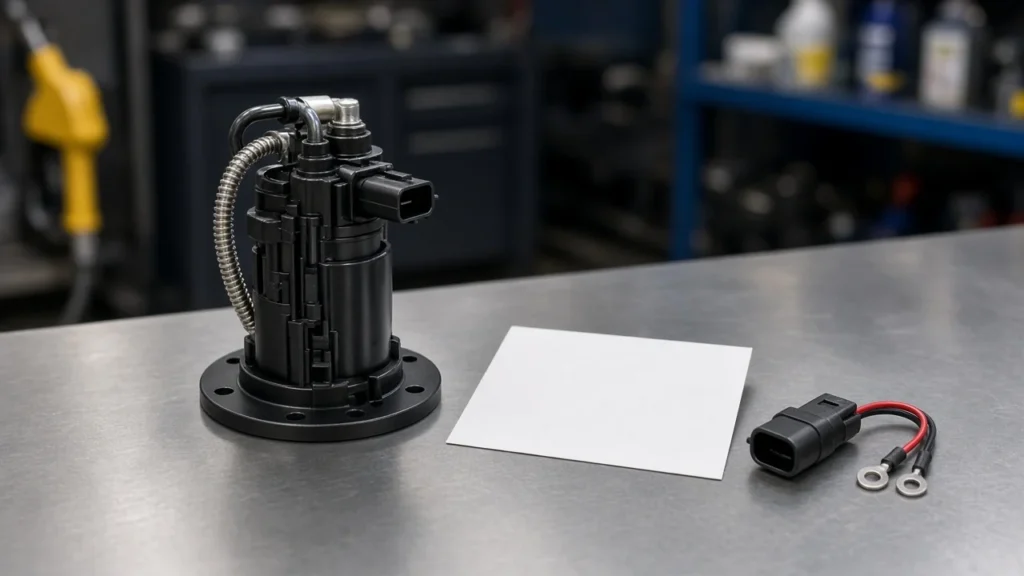
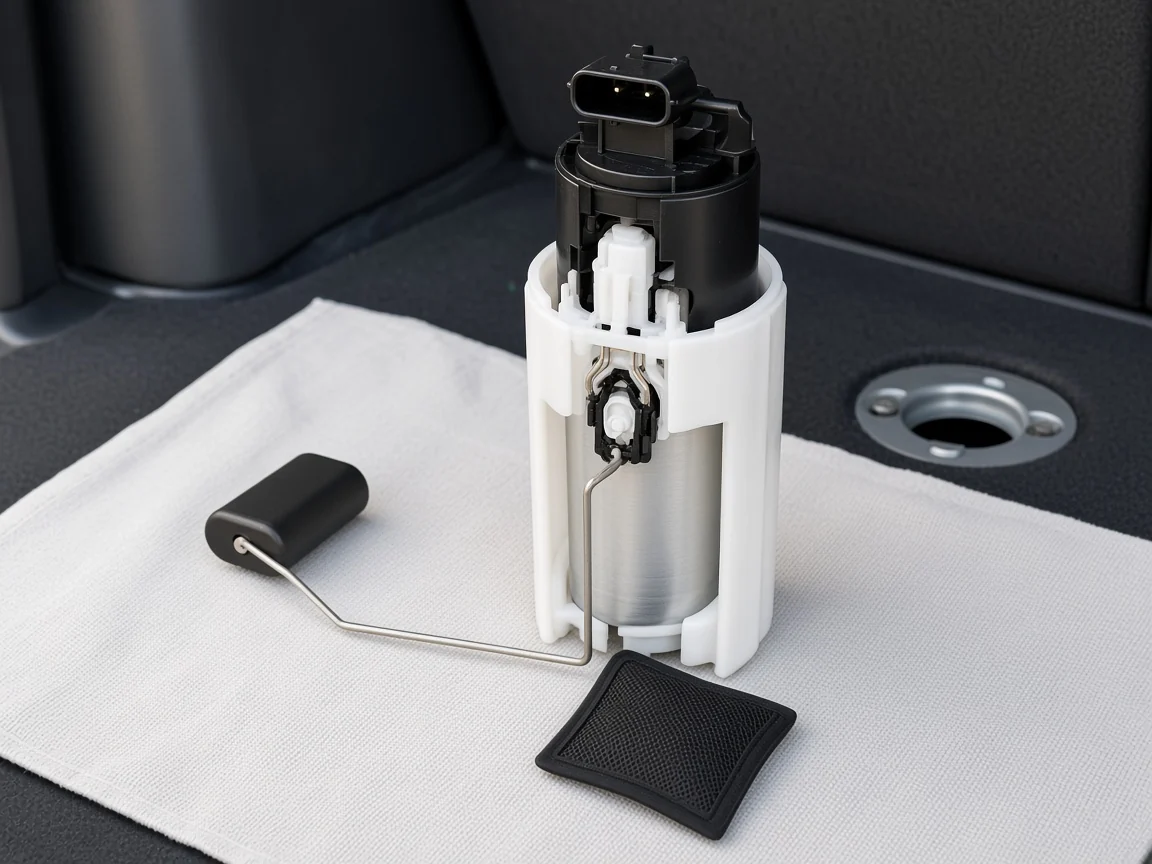
The part is rarely a bare pump. An in-tank unit normally arrives on a carrier with the strainer and the fuel-level sensor, which is why the catalogue line reads as a module or assembly — the anatomy is unpacked in what is a fuel pump assembly.
Inline External Electric Pumps and When Petrol Engines Use Them
An inline electric fuel pump is the same electric technology mounted outside the tank, usually low down and close to it.
“Inline” describes position rather than a different motor. Classic restorations, hot rods and carburetor-to-injection conversions use one because a frame-rail pump is reachable with hand tools, and some injected vehicles run an external pump alongside the in-tank unit when the fuel line is long. What is an inline fuel pump covers the definition in more depth.
Mounting position decides whether the installation works. Builders put the pump near the tank so that most of the line downstream is pressurised, because a pump pushes liquid far more happily than it pulls it.
From the field: One member of a long-running builder forum wrote that “the reason electric fuel pumps were mounted close to the gas tank was to pressurize as much of the fuel line as possible” and that “vapor lock occurs in the unpressurized part of the fuel system” (H.A.M.B. electric fuel pump thread). Another member in the same thread described an engine-bay mounted pump that quit once his car sat in stopped traffic and the heat got to it.
On a carbureted engine the pump choice drags a pressure-control job behind it. Builders match delivered pressure to the carburetor with a regulator, and they wire the pump through an oil-pressure or inertia switch so it stops feeding fuel when the engine stops. The advantages argument for going electric in the first place lives on advantages of an electric fuel pump.
Cam-Driven High-Pressure Pumps on Direct-Injection Petrol Engines
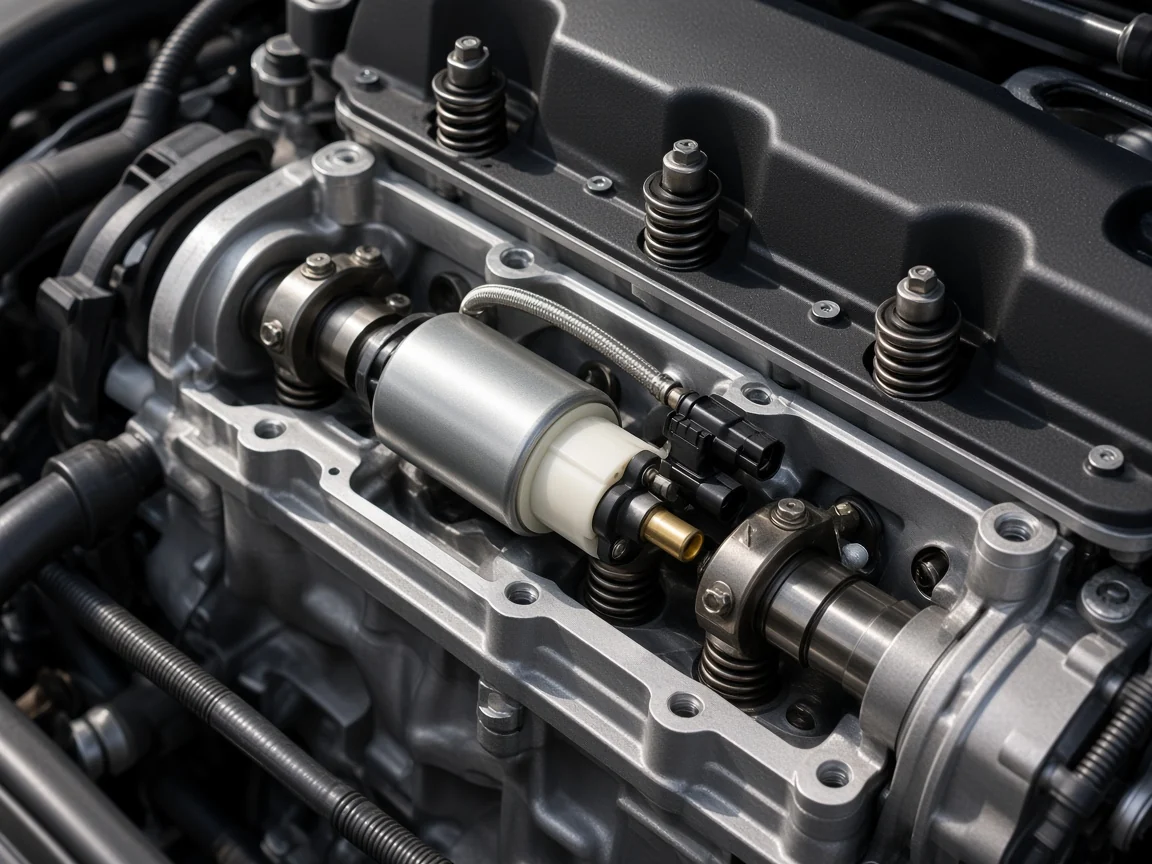
Gasoline direct injection keeps the in-tank pump and adds a cam-driven high-pressure pump on the cylinder head.
Injecting into the cylinder means fighting the compressed charge already in there, and no tank-mounted electric motor can reach those pressures. So the architecture stacks two pumps: the in-tank pump moves fuel forward at feed pressure, and a single-element mechanical pump driven off the camshaft raises it to rail pressure. Supplier documentation for direct-injection petrol pumps describes fuel arriving from the tank pump at roughly 6 bar and leaving the high-pressure pump at about 200 bar, with current pump versions rated up to 250 bar and up to 350 bar.
Where it sits makes it easy to recognise. The petrol high-pressure pump bolts on top of the cylinder head or the valve cover, driven by a lobe on the camshaft, and it is reachable once the rail has been depressurised. It is also not timed to the firing order the way a diesel in-line injection pump is; it simply makes pressure, and the electronics decide what to do with it.
Pressure delivery is regulated rather than fixed. A rail-pressure sensor feeds the engine control module, which trims how much fuel the pump inlet admits, so rail pressure tracks load instead of engine speed alone.
Pressure, Drive and Application Compared Across Petrol Engine Fuel Pump Types
Read the four classes across drive, mounting, pressure band and the fuel-metering system each one serves.
The table keeps each pressure figure attached to the situation it was measured in, because the published bands for the mechanical class come from different reference points and averaging them would invent a number nobody measured.
| Pump class | What drives it | Where it mounts | Pressure band as published | Metering system it feeds |
|---|---|---|---|---|
| Mechanical diaphragm pump | Engine camshaft lobe through a lever | On or beside the engine block | 10–15 psi (0.7–1.0 bar) for carburetor-fed pumps in encyclopedic reference; 5–10 psi in classic-vehicle catalogue practice | Carburetor float bowl |
| In-tank electric pump | 12-volt supply, commanded by the engine module | Submerged in the fuel tank on a carrier | Typically 40–60 psi (3–4 bar) on older port and throttle-body injection | Port fuel injection rail |
| Inline external electric pump | 12-volt supply | Frame rail or underbody, near the tank | Regulated down for carburetors; higher-pressure versions exist for injection | Carburetor or injection rail, depending on the build |
| Cam-driven high-pressure pump | Camshaft lobe on the cylinder head | On top of the head or valve cover | About 6 bar in from the tank pump, about 200 bar out, with versions rated up to 250 bar and up to 350 bar | Direct-injection rail and in-cylinder injectors |
Tip: When two sources quote different pressures for the same pump class, treat them as two measurements rather than a contradiction, and match your pump to what the carburetor or rail in front of you is rated for.
Two patterns fall out of the table. Drive source tracks era and mounting position, while pressure class tracks the metering device, and camshaft drive shows up at both ends of the range — on the oldest carburetor pumps and again on the newest direct-injection pumps.
That is also why petrol engine fuel pump types cannot be ranked from worst to best: each one answers a different fuel-metering problem. A diesel injection pump belongs to a different family again, sorted by stage and element count rather than by these four classes. What a pump is there to do in the first place is covered in what is a fuel pump used for.
How to Identify Which Fuel Pump Type a Petrol Engine Has
Three checks place almost any petrol vehicle without dropping the tank.
Start with the key-on prime. Turn the key to the on position without cranking and listen at the rear seat or the filler neck: a short buzz means an electric pump has primed the system, and silence on a vehicle that still runs points at a mechanical pump instead.
Then look at the engine. A round or oval pump body bolted low on the block with a lever into the timing cover is the mechanical class; a compact aluminium pump sitting on top of the cylinder head with a hard line to the rail is the direct-injection high-pressure pump. If the engine bay is clean of pumps altogether, the pump is in the tank or on the frame rail.
| Observation | Rules in | Rules out |
|---|---|---|
| Two-second buzz at key-on, nothing on the engine | In-tank or inline electric pump | Mechanical diaphragm pump |
| Pump on the block with a cam lever, carburetor above | Mechanical diaphragm pump | Electric and high-pressure classes |
| Buzz at key-on plus a pump on the cylinder head | In-tank pump feeding a cam-driven high-pressure pump | Single-pump port-injection layout |
| Cylindrical pump on the frame rail, hoses at both ends | Inline external electric pump | In-tank-only layout |
| Catalogue lists a module with sender and strainer | In-tank assembly | Bare-pump replacement |
The catalogue line is the third check and often the fastest. Whether the part number resolves to a bare pump, a tank module with sender and strainer, or a head-mounted high-pressure unit tells you which class the vehicle was built with, and a vehicle that lists both an electric pump and a high-pressure pump is a direct-injection engine. Cutaway drawings and port callouts that teach how to read a schematic are a different literacy job from this type list — that diagram reading belongs with petrol fuel pump diagram material when it is published, not as a substitute for naming the class.
What Each Petrol Engine Fuel Pump Type Means at Replacement Time
Each class changes what you actually buy and how long the job takes. Across the types of fuel pumps in petrol engine service, the part number you end up ordering is rarely just “a fuel pump”.
A mechanical pump is a bolt-on part with a gasket and a cam lever, and pressure output is whatever its spring gives. An in-tank pump usually comes as a module, so the strainer and level sensor are replaced with it and the tank or access panel has to be opened. An inline pump is the quickest to reach but the most heat-exposed, and a head-mounted high-pressure pump needs the rail depressurised and often a new cam follower.
Important: An electric pump keeps running while the ignition stays on, even after the engine has stopped, so builders and installers put an oil-pressure or inertia cut-off in the circuit. Builders on the H.A.M.B. electric versus mechanical pump thread treat wiring the pump “through an oil pressure switch so it shuts off when there is no oil pressure” as standard practice rather than an upgrade.
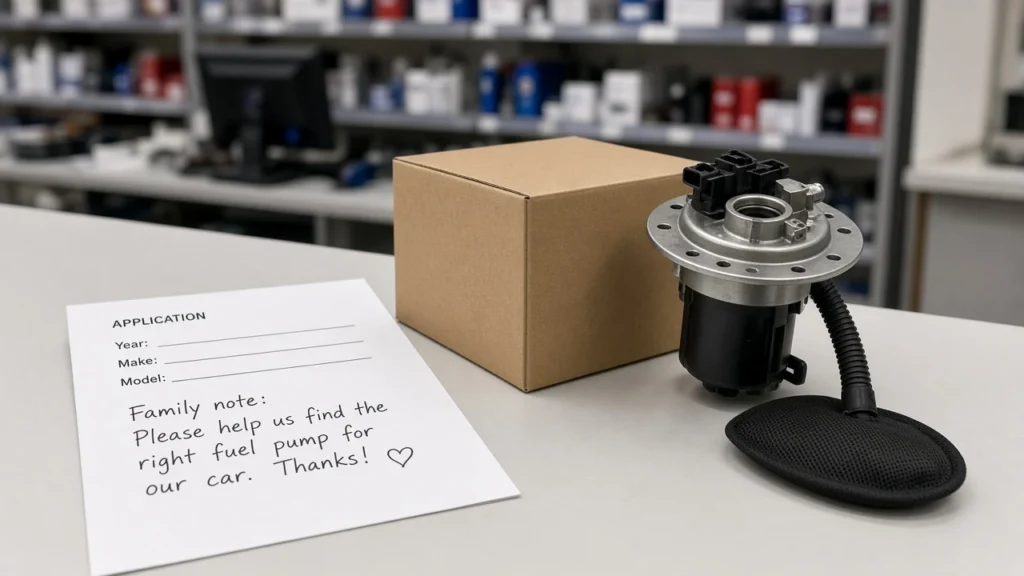
Ordering discipline follows the class. For the electric classes, work from the vehicle range printed on the listing rather than from the words “petrol fuel pump”, because pumps are catalogued per application. For direct injection, treat the tank pump and the high-pressure pump as two separate lines that both have to be quoted.
Choose a Kangsong Petrol Pump Part for the Type You Identified
Work from the vehicle list printed on the pump listing rather than from the class name alone.
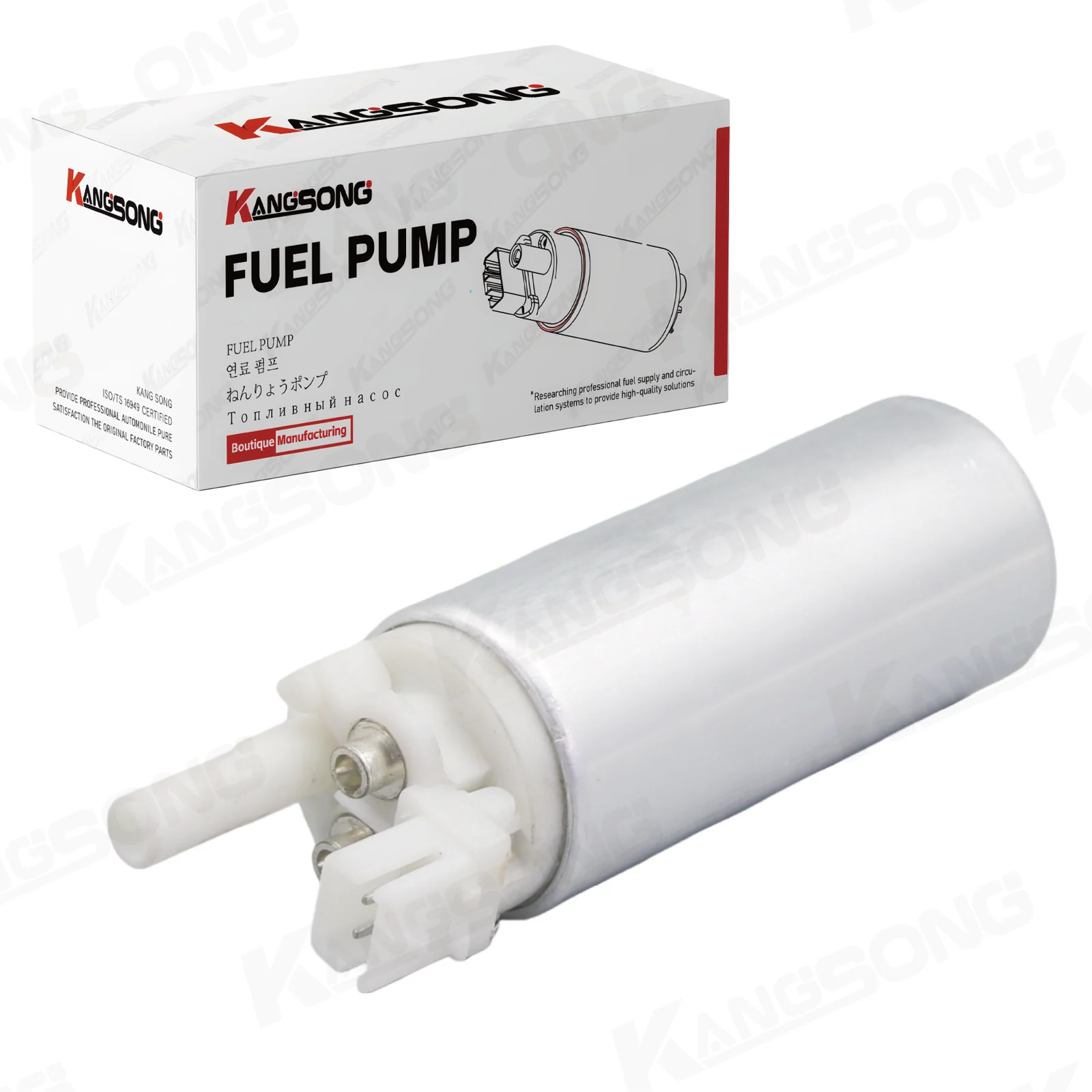
If your identification landed on an electric pump, the electric gasoline fuel pump with installation kit covers the 1987-1995 C/K 1500, 2500 and 3500 pickup range on its own page, and a second listing covers Hyundai Accent and Kia Sephia applications. Those vehicle lists are the fitment statement; nothing outside them is implied.
If it landed on a direct-injection engine, the catalogue keeps high-pressure pumps in a separate line, such as the high-pressure fuel pump for Audi and VW applications. Buying advice for choosing between gasoline electric fuel pump options as a purchase decision sits with that dedicated page, not here.
For anything outside both vehicle lists, browse the fuel pump product catalogue and match the OE number on the part you removed.
FAQ
How many types of fuel pump does a petrol engine use?
Three drive-source groups cover the whole population: engine-driven mechanical pumps, electric pumps, and the engine-driven high-pressure pump used by direct injection. In practice buyers meet four parts, because the electric group splits into an in-tank version and an external inline version.
Is a petrol engine fuel pump mechanical or electric?
It depends on the fuel-metering system rather than the badge on the car. A carburetor is fed by an engine-driven mechanical pump, port injection by an electric pump in the tank, and direct injection by an electric tank pump plus a cam-driven high-pressure pump.
Why does a direct-injection petrol engine have two fuel pumps?
Injecting into the cylinder needs pressure that an in-tank electric motor cannot make. So the tank pump handles transport and feed pressure while a camshaft-driven pump on the cylinder head raises the fuel to rail pressure for the injectors.
What fuel pressure should a petrol engine pump deliver?
Whatever the metering device it feeds is rated for, and the published bands differ by class: 10–15 psi (0.7–1.0 bar) for carburetor-fed mechanical pumps in encyclopedic reference and 5–10 psi in classic-vehicle catalogue practice, typically 40–60 psi (3–4 bar) for in-tank pumps on older port and throttle-body injection, and hundreds of bar on the direct-injection side. Always work to the figure quoted for your own carburetor, rail or pump.
How can I tell whether my petrol car has an in-tank or an inline pump?
Listen at key-on: an in-tank pump hums from under the rear seat or near the filler, while an inline pump hums from under the floor or the frame rail. A quick look along the underbody for a cylindrical pump with a hose at each end settles it, and the catalogue line will show a tank module with a sender if the pump is internal.
Can I fit an electric fuel pump to a carbureted petrol engine?
Yes, and builders do it for priming and for hot-weather reliability. It becomes a pressure-control job as well: regulate the output down to what the carburetor is rated for, mount the pump low and close to the tank, and wire it through a cut-off that kills the pump when oil pressure drops.
Does a mechanical fuel pump keep working if the engine stalls?
No. A cam-driven pump only pumps while the camshaft turns, so it stops with the engine, which is the safety difference builders bring up when comparing it with an electric pump that keeps delivering fuel as long as the ignition is live.
Is an in-tank pump quieter and longer-lived than an external pump?
Cooling and noise favour the in-tank layout, because the fuel around the motor absorbs both heat and sound. Access favours the external pump, which can be changed without opening the tank. Neither wins outright, and an in-tank pump run on a habitually low tank loses its cooling advantage.
What is a petrol car fuel pump?
A petrol car fuel pump is not one universal part. It is whichever class the spark-ignition fuel system was built with: a cam-driven mechanical pump feeding a carburetor, an in-tank or inline electric pump feeding port injection, or an in-tank electric pump plus a cam-driven high-pressure pump on direct injection. If the order is really a purchase decision among electric listings, use the gasoline electric fuel pump page; if you need cutaway and port literacy rather than class names, that belongs with petrol fuel pump diagram material rather than this type guide.