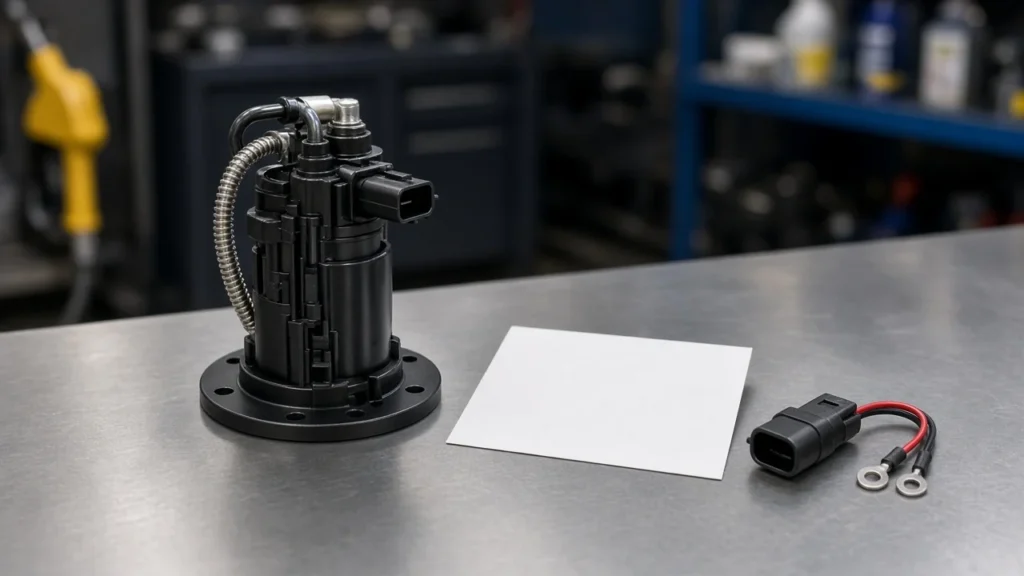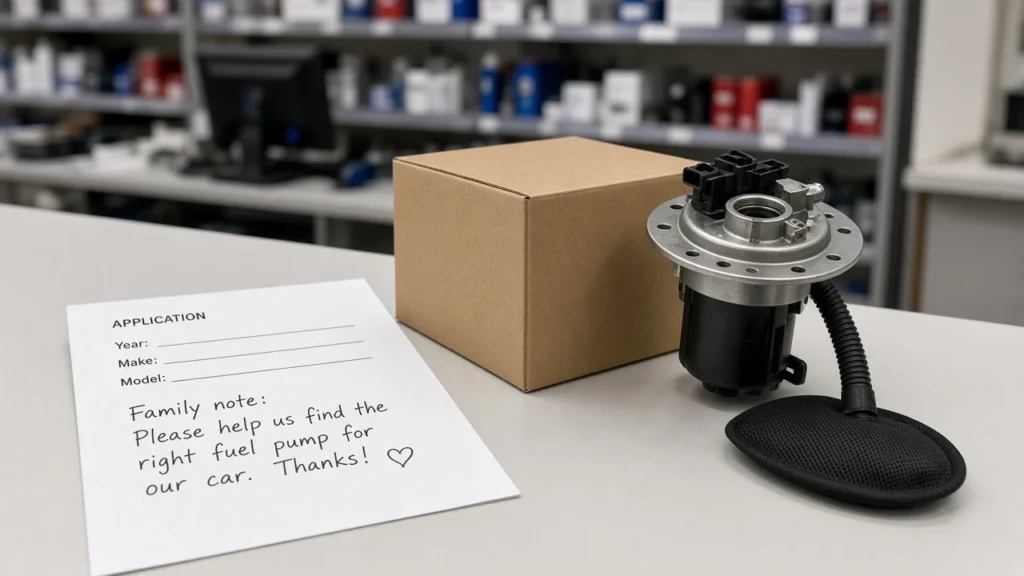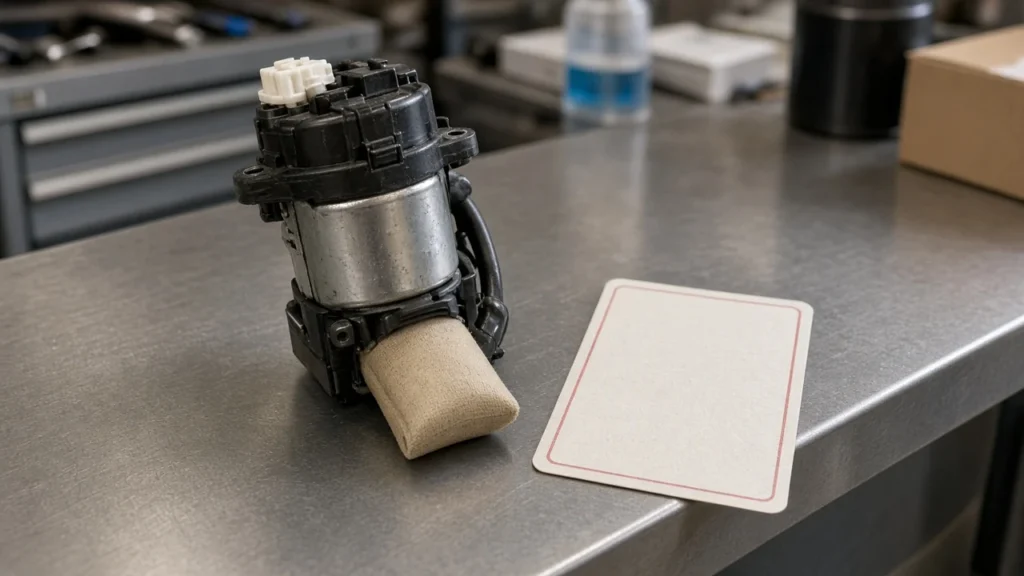

The direct answer to what is a fuel pump used for is that the pump moves fuel from the tank to the carburetor or injectors at the pressure that system needs. In plain terms, it is the delivery device that keeps liquid fuel available so the engine can mix and burn it. This article maps that job along the tank-to-injector path, separates it from the fuel filter, fuel rail, and injector roles, and shows how an electric fuel pump listing fits the same purpose.
What a Fuel Pump Is Used For
It moves fuel from the tank to the engine’s mixing or injection hardware at usable pressure.
Without that transfer, gasoline or diesel stays in the fuel tank and never reaches the point where air and fuel meet. On older carbureted engines the destination is the carburetor. On modern fuel-injected engines the destination is the fuel injector set, usually fed through a fuel rail.
Pressure matters as much as flow. Injection systems need a steadier, higher pressure than many carburetor feed arrangements, so the pump’s “used for” job includes holding the band the hardware was designed around.
What is a fuel pump used for in a car, then, is not decoration and not filtration. It is active delivery: tank inventory becomes engine supply.
Where the Fuel Pump Sits in the Fuel Path
It sits between the tank and the filtered, pressurized line that feeds the fuel rail and injectors.
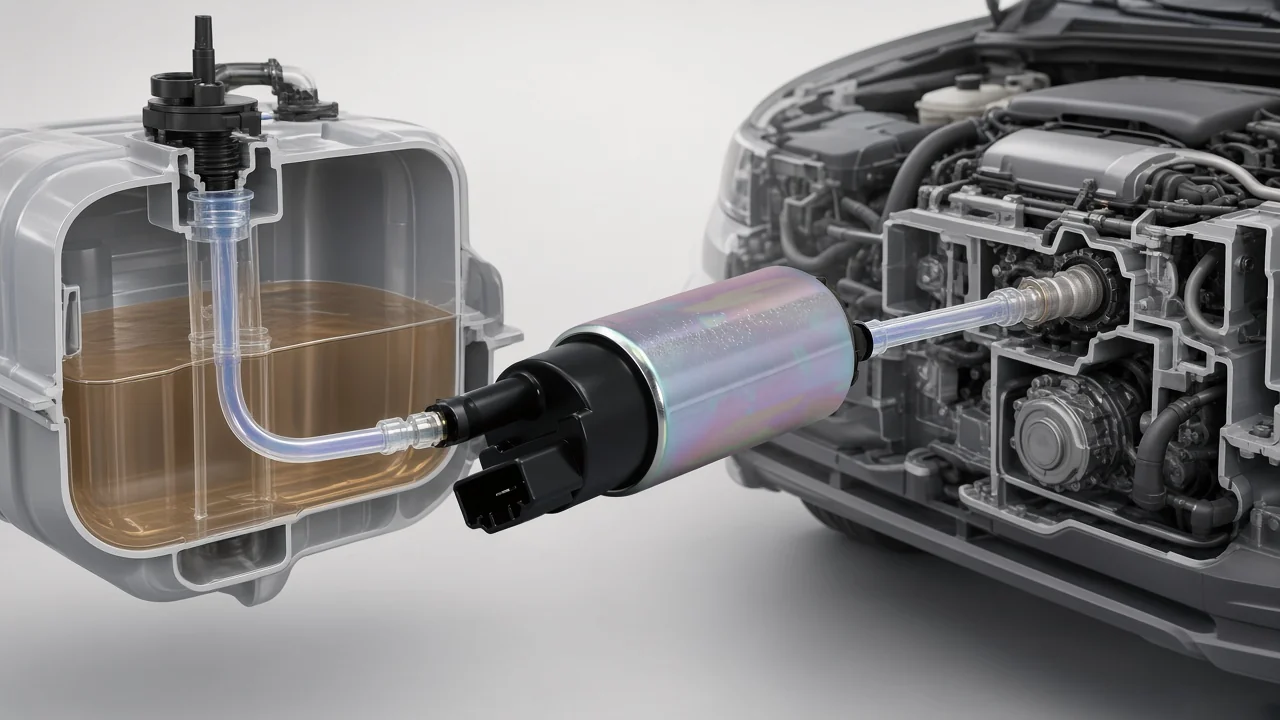
A useful mental model is a single chain. Fuel leaves the tank, enters the pump (often through a strainer sock), continues through a fuel filter and fuel line, fills the fuel rail, and finally leaves through each fuel injector as a timed spray.
That order clarifies responsibility. If the rail is dry, the pump or its power path may be involved. If the rail is pressurized but one cylinder is lean, the injector or its control path is the more likely neighbor to inspect next.
The pump does not replace the filter, and it does not meter the final spray. It creates the movement and pressure that those later parts depend on.
Why Fuel Pump Location Matters
Modern electric pumps usually live in the tank to stay cool, primed, and ready at key-on.
Most late-model cars place an electric fuel pump inside the fuel tank. Surrounding liquid fuel helps cool the motor, keeps the inlet wet so the pump stays primed, and reduces fire risk compared with running the same motor in a vapor-rich dry pocket.
Older carbureted layouts often mount a mechanical fuel pump on the engine instead. The camshaft or a related drive moves a diaphragm, so the pump only works while the engine turns.
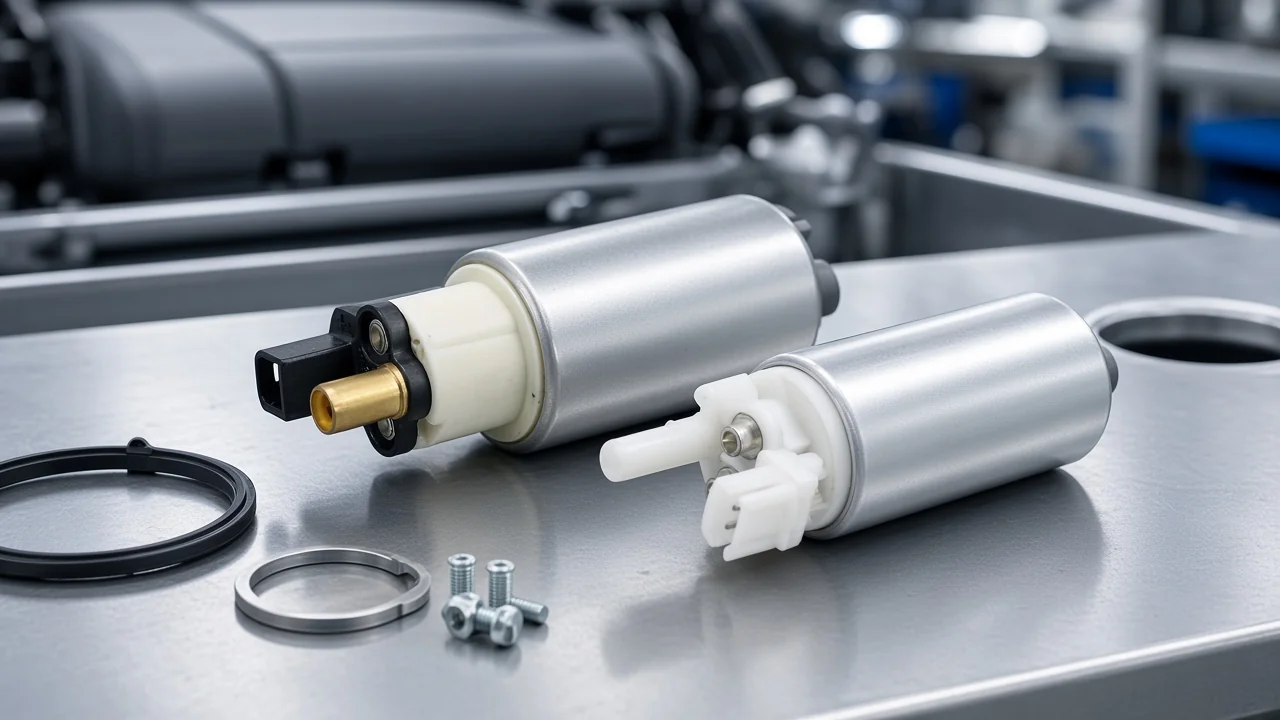
Tip: A brief hum from the tank area at key-on is often the pump priming, not an automatic failure sign — source: https://apextechnation.com/articles/fuel-system-overview.
On many EFI vehicles the control module powers the pump for a short prime—commonly about 2-3 seconds—when you turn the key on. A filter that is restricted can still mimic a weak pump under load even when idle pressure looks fine.
Fuel Pump vs Filter vs Fuel Rail vs Injector
The pump moves and pressurizes; the filter cleans; the rail distributes; the injector meters spray.
Readers often collapse these names into one “fuel system part.” Procurement and service decisions get cleaner when each job stays separate.
| Part | Main job | What it is not |
|---|---|---|
| Fuel pump | Moves fuel and builds system pressure | Not a particle filter |
| Fuel strainer / sock | Catches large debris at the pump inlet | Not the sole service filter on every platform |
| Fuel filter | Removes finer debris downstream | Does not create rail pressure |
| Fuel rail | Shares pressurized fuel across injectors | Does not pump from the tank |
| Fuel injector | Opens in timed pulses to spray fuel | Does not store tank volume |
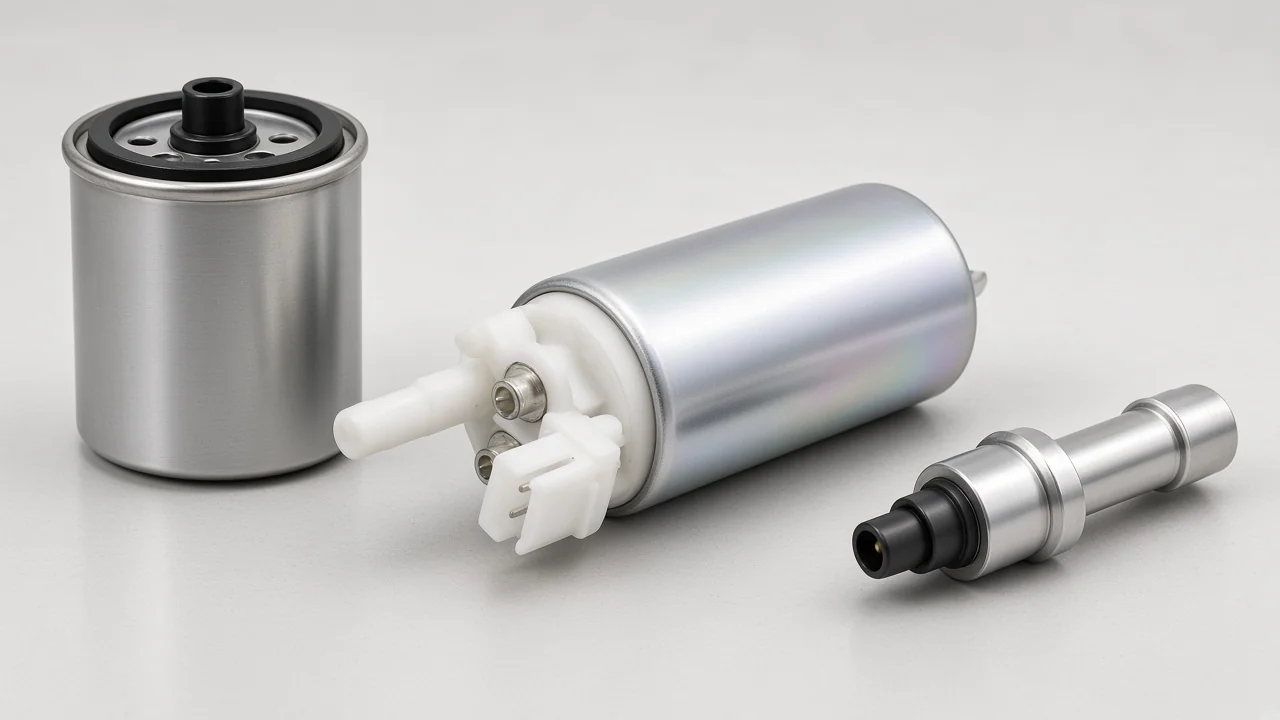
When a listing says “fuel pump,” confirm whether you are buying the rotating pump alone, a module with sender and strainer, or only a filter. The words sit close together in catalogs, but the used-for jobs differ.
Electric vs Mechanical Fuel Pumps for the Same Job
Both move fuel, but electric in-tank units serve injection pressure needs that mechanical carb pumps do not.
The shared purpose is delivery. The hardware that fulfills that purpose changed with fuel system design.
| Attribute | Mechanical pump | Electric fuel pump |
|---|---|---|
| Typical placement | Engine-mounted | Usually in-tank; sometimes inline |
| Drive method | Cam / mechanical linkage | Vehicle electrical system |
| Typical pressure band | Often around 10-15 psi on carbureted feed | Commonly around 40-60 psi for many port-injection in-tank units; many port rails sit roughly in a 35-65 psi reference band |
| Best-fit system | Older carburetor layouts | Modern EFI; DI often adds a separate high-pressure stage |
Direct-injection gasoline and many diesel layouts still use a low-pressure electric pump in or near the tank. A second high-pressure fuel pump then raises pressure for the rail. That high-pressure stage is a different used-for job than the in-tank lift role.
What “Used For” Means When You Buy a Replacement
Match the delivery role—electric pump, kit, or module—and the vehicle application, not a brand nickname.
If the vehicle needs an electric in-tank feed pump, ordering a carburetor-style mechanical pump will not satisfy the same used-for requirement. If the vehicle needs a complete module with sender, a bare pump motor may leave the assembly incomplete.
Application notes on the product page matter more than informal brand shorthand. This site does not treat third-party performance-brand names as equivalents for factory-style electric pumps or kits.
Also decide whether you are solving delivery (pump), contamination (filter), distribution (rail), or metering (injector). Buying the wrong neighbor wastes a service bay cycle even when the catalog title includes “fuel.”
For related reading on module packaging versus the bare pump role, see the sister explanation of what a fuel pump assembly is. For a broader type map after this purpose article, see electric, mechanical, and module types explained.
Recommended Electric Fuel Pump with Installation Kit
A listed electric gasoline fuel pump with install kit shows the hardware behind the “move fuel” job.
When the reader’s next step is sourcing an electric fuel pump rather than studying theory, a concrete listing helps. Kangsong publishes an electric gasoline fuel pump with installation kit (product 2551) aimed at specific C/K truck applications noted on the product page.
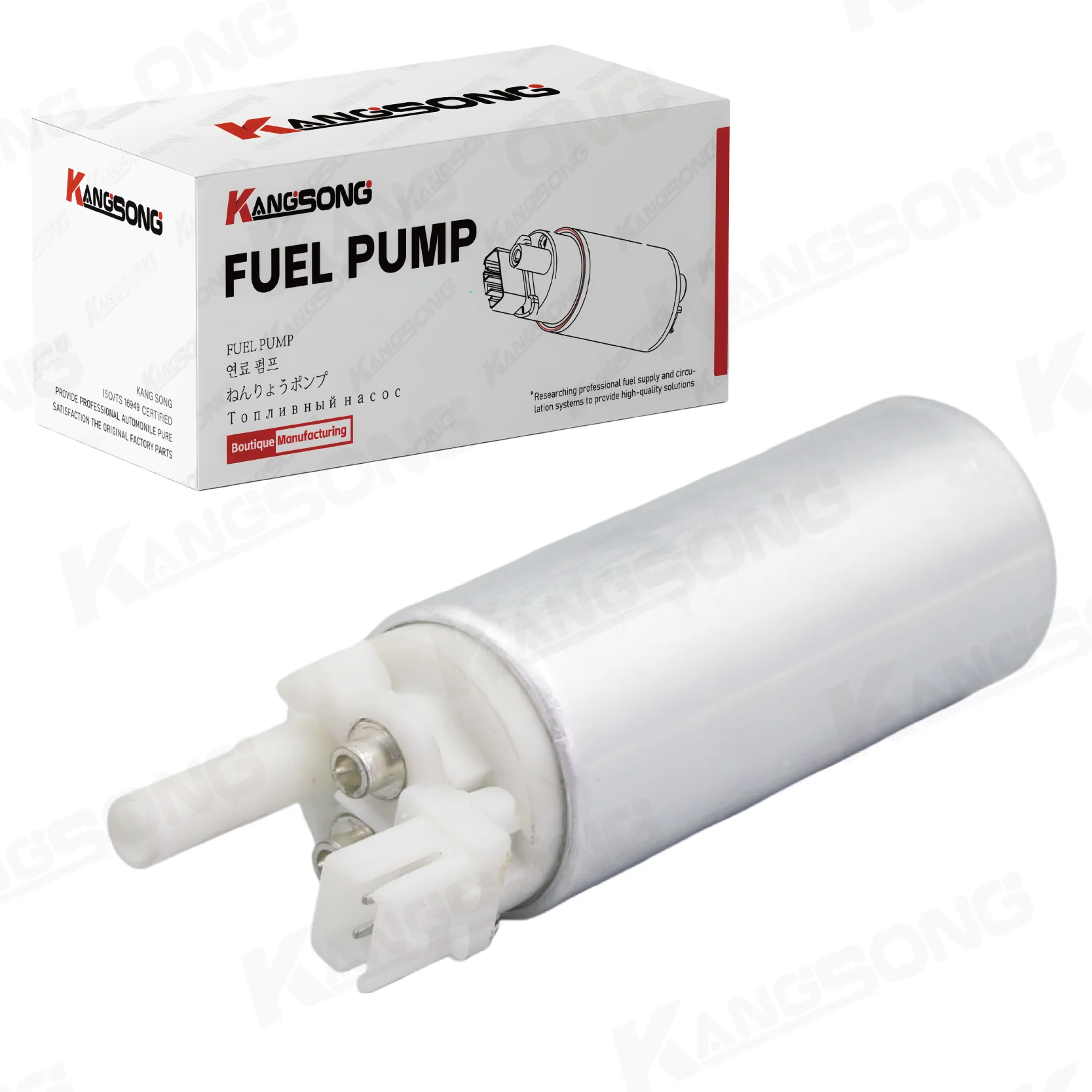
Use that page to confirm connectors, kit contents, and application text before ordering. It is an example of electric delivery hardware, not a universal fitment claim for every fuel rail or injector layout. Browse the wider products catalog when you need a different pump form, such as a full module assembly or a high-pressure stage unit.
FAQ
What is a fuel pump used for in a car?
It moves fuel from the fuel tank to the carburetor or injectors and helps hold the pressure that system needs so combustion can continue.
Where is a fuel pump usually located?
On most modern cars the electric fuel pump sits inside the tank. Older mechanical pumps usually mount on the engine; some layouts use an inline pump on the frame.
How does a fuel pump work in a car?
An electric pump uses a motor and pumping element to push fuel through the line. A mechanical pump uses engine motion to flex a diaphragm and create the same directional flow at lower carburetor pressures.
Is the brief humming sound when I turn the key normal?
Often yes. Many controllers run a short prime cycle so the rail is pressurized before cranking. A long, loud whine under load is a different concern and needs diagnosis.
What is the difference between a fuel pump and a fuel filter?
The pump creates movement and pressure. The filter removes debris. A clogged filter can starve the engine even when the pump motor still spins.
Does every car use only one fuel pump?
No. Direct-injection and many diesel systems use a low-pressure supply pump plus a separate high-pressure fuel pump for the rail.
Is a fuel pump the same as a fuel pump assembly?
Not always. An assembly or module may bundle the pump with a strainer and fuel-level sender. Confirm the package scope on the listing.
Can a clogged fuel filter look like a bad fuel pump?
Yes. Idle may look acceptable while high demand reveals a volume shortage. Check filter and flow evidence before condemning the pump alone.