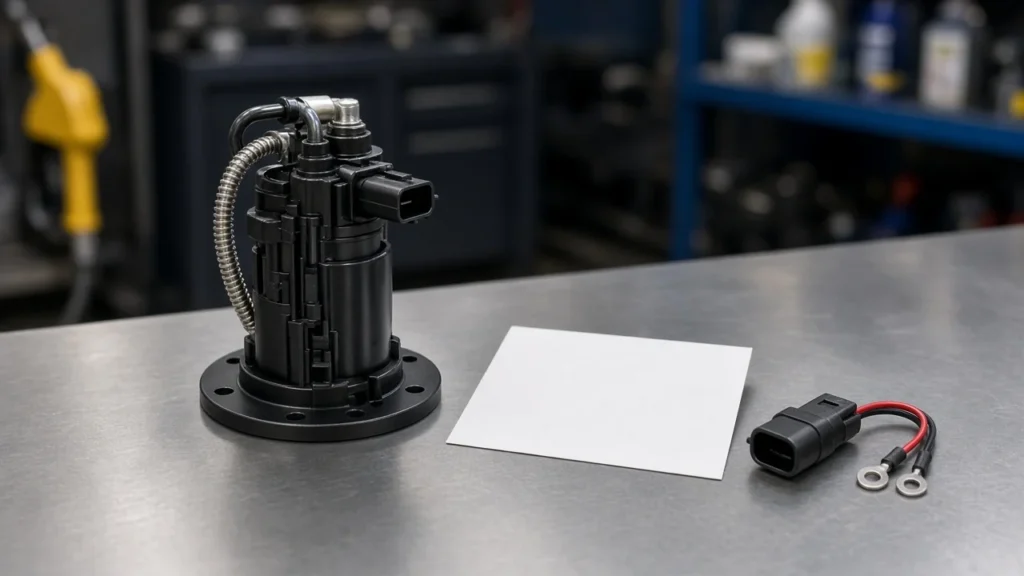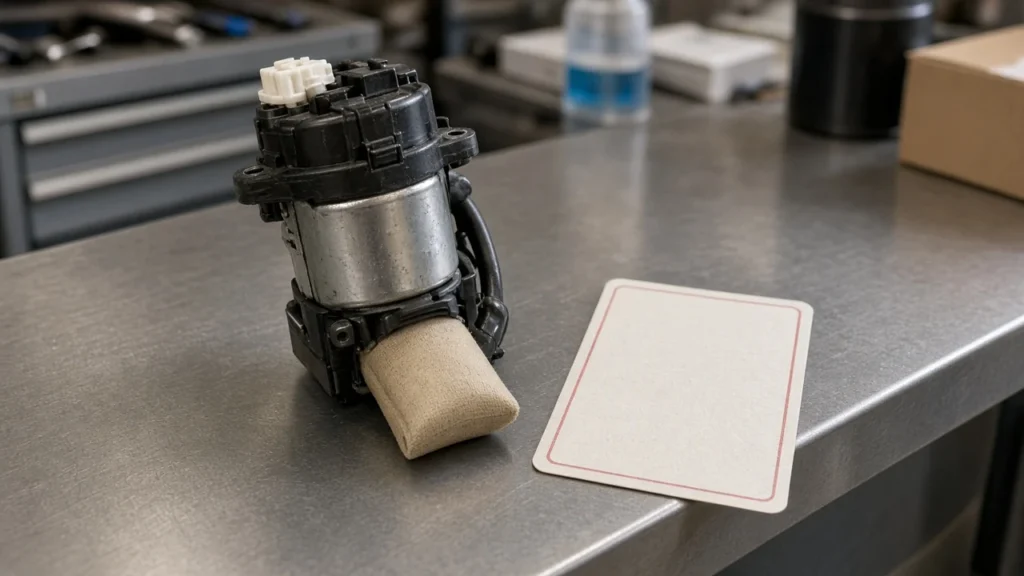

how does a high pressure diesel fuel pump work is answered in one clear job description: it takes filtered, low-pressure diesel, compresses that fuel with cam-driven plungers under metering control, and keeps a shared common rail charged so electronically timed injectors—not the pump cam—decide when fuel sprays. Below you get a tank-to-injector map (high pressure diesel fuel pump diagram style), the plunger cycle (how does a high pressure fuel pump work inside), metering logic, and a short buying note for OE-scoped high-pressure pump pages.
What a High Pressure Diesel Fuel Pump Does
A high pressure diesel fuel pump exists to charge the common rail with diesel at injection-class pressure.
On modern common-rail engines the rail is a shared reservoir. Injectors sit on that rail and open only when the ECU commands them. The high-pressure pump’s contribution is continuous pressure supply, not a mechanically timed “shot” for each cylinder the way older pump-line-nozzle hardware did.
If you only remember one sentence for the counter: the pump builds pressure; the injectors time the spray.
That framing keeps parts conversations honest. A healthy in-tank or frame-rail feed pump cannot replace a worn high-pressure stage, and a high-pressure unit cannot fix a starved feed circuit by itself.
High Pressure Diesel Fuel Pump Diagram: Tank to Injector
A useful high pressure diesel fuel pump diagram is less about art and more about five stations.
| Diagram station | What happens | Reader check |
|---|---|---|
| Tank | Diesel leaves storage at very low pressure | Cap venting and pickup health matter upstream |
| Feed / filter / transfer | Fuel is cleaned and delivered into the high-pressure pump at transfer pressure | Plugged filters starve the HP stage first |
| High-pressure pump | Cam-driven plungers compress metered fuel | OE pump class, seals, and drive method must match |
| Common rail | Pressurized diesel is stored and shared across injectors | Rail sensor feedback closes the control loop |
| Injectors | ECU opens solenoid/piezo valves to spray | Spray quality still depends on rail pressure being present |
Example numbers from technical explainers help set scale without pretending every engine shares one OE specification.
Journey-style writeups often place tank pressure around roughly 1–2 bar and filter-entry pressure around roughly 4–5 bar before the high-pressure stage.
Some common-rail designs regulate transfer pressure near about 6 bar. Trade articles describing Duramax/Cummins-style feed paths sometimes cite lift around roughly 10 psi. None of those low-side figures are the rail.
The high-pressure side is a different world.
Encyclopedia summaries for common-rail direct injection often place typical working pressures above roughly 2,000 bar.
Independent diesel explainers cite rail delivery bands from about 1,400 bar to more than 2,500 bar depending on design and load.
Trade troubleshooting pieces commonly talk about working pressures around roughly 1,600–1,800 bar (about 23,000–26,000 psi).
Community readers sometimes quote injection figures near 36,000 psi when they are trying to convey how extreme the rail feels compared with everyday shop air.
How Does a High Pressure Fuel Pump Work Inside: Cam and Plunger
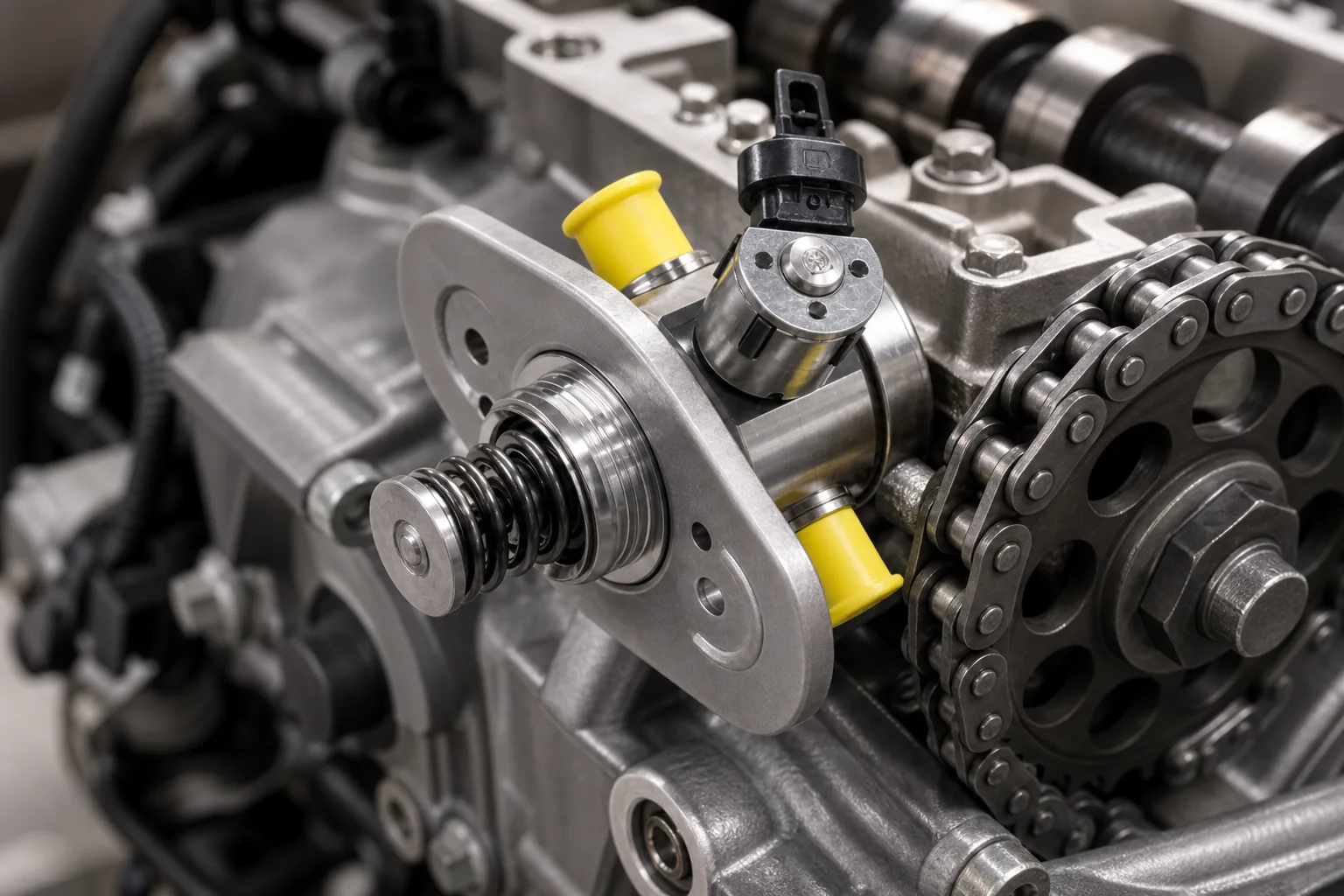
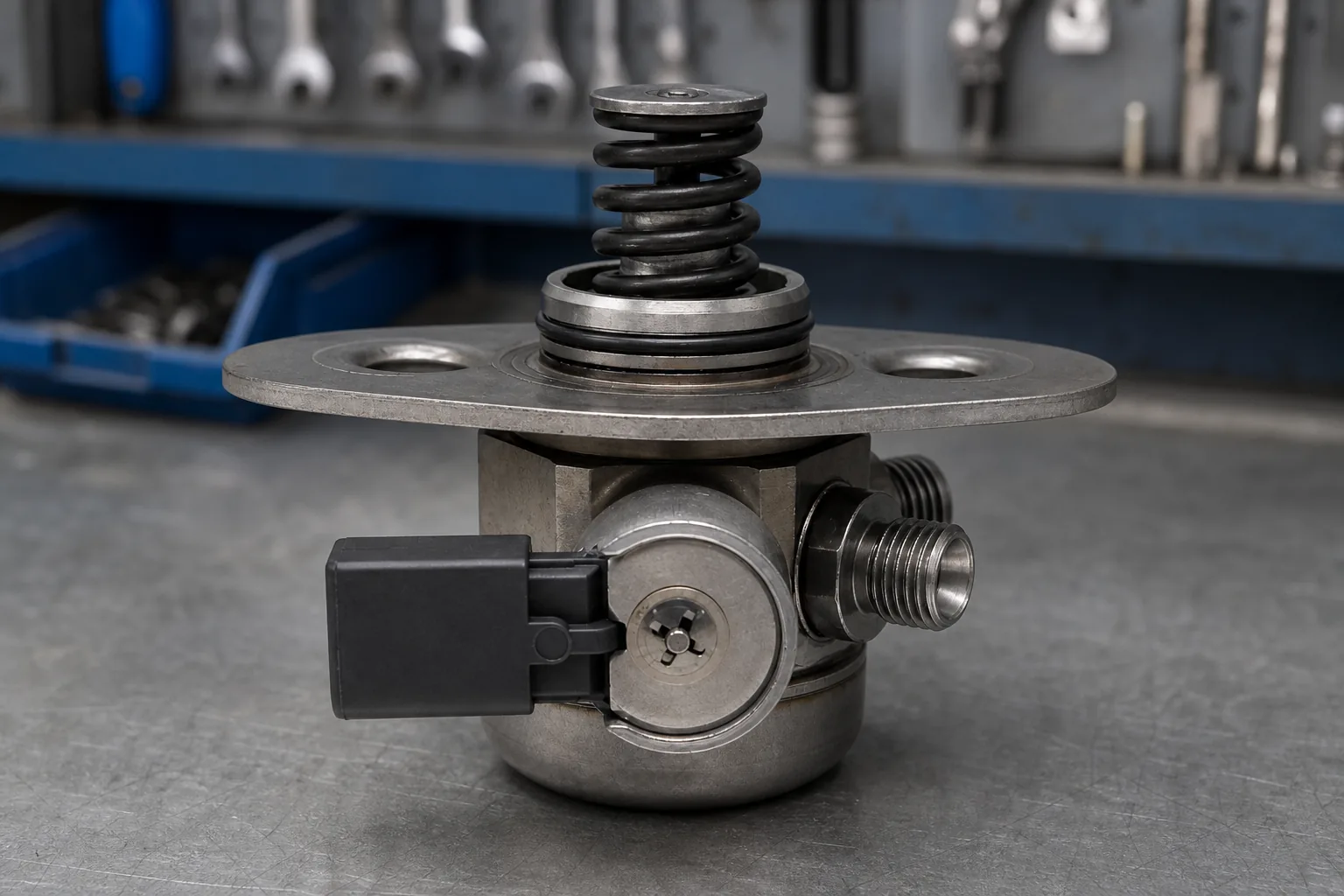
How does a high pressure fuel pump work once fuel reaches the pumping elements? Think suction, then compression, then a one-way handoff into the rail.
The pump is mechanically driven by the engine—belt, chain, or gear train depending on the family—so it turns whenever the engine turns. Inside, a cam / eccentric strokes one or more plungers in tight bores.
On the suction half of the stroke, the plunger retreats and the chamber volume grows. Low-pressure diesel from the feed/transfer circuit can enter through an inlet path. On the compression half, the cam pushes the plunger forward, chamber volume shrinks, and pressure climbs rapidly.
When chamber pressure rises above transfer pressure, the inlet path seals. When chamber pressure then exceeds rail pressure, a delivery / outlet valve opens and a slug of diesel enters the common rail. After the plunger reverses, the delivery valve closes so rail pressure cannot dump backward into the pumping chamber.
That repeating cycle is why the high-pressure stage can keep the rail topped up even while injectors fire in short, electronically timed pulses.
| Stroke | Plunger motion | Chamber | Valve tendency | Fuel move |
|---|---|---|---|---|
| Suction | Retreats | Volume grows / pressure falls | Inlet path can admit feed fuel | Feed → chamber |
| Compression | Advances | Volume shrinks / pressure rises | Inlet seals; delivery opens above rail pressure | Chamber → rail |
Multiple plungers, staggered on a shaft, smooth the flow. Exact plunger count and drive geometry vary by pump family; the reader job is the same: recognize suction, compression, and one-way delivery.
Inlet Metering and Volume Control
Rail pressure is not controlled by hoping the pump always compresses a full chamber.
Most common-rail designs add an inlet metering valve / IMV / FCA / volume regulator—names differ by supplier literature, but the job is similar. The ECU commands how much fuel is allowed into the high-pressure elements so the rail pressure sensor reading tracks the demanded pressure for the current speed and load.
At high demand the metering path admits more fuel into the plungers, so more diesel is compressed into the rail. At light load the metering path restricts that inlet volume. The pump still turns with the engine, but it is not forced to compress and then dump a full-load quantity on every revolution.
From the field: Shop threads keep rediscovering the same control idea—codes and symptoms often point at the fuel metering unit / fill solenoid that regulates how much fuel reaches the high-pressure elements. When that control path is wrong, rail pressure can deviate even if the plungers still move, which is why metering belongs in the principle model alongside the cam and delivery valve.
That is also why a metering fault can look like a “weak pump” on a scan tool even when the plungers still move. Principle first: confirm whether the control valve is actually metering, then judge the mechanical pumping elements.
Why Rail Pressure Is Independent of Injection Timing
On older PLN / unit-injector legacy and pump-line-nozzle systems, the injection pump often owned both metering and timing. Pressure generation and the moment of injection were tightly coupled to pump cam geometry and engine speed.
Common rail breaks that coupling.
The high-pressure pump’s main assignment is to maintain rail pressure. Injection timing, quantity, and multi-pulse strategies (pilot, main, post) live with the ECU / PCM and the injector (solenoid/piezo) hardware.
Trade comparisons often summarize the shift as moving from roughly ~15,000 psi class mechanically timed systems toward electronic common-rail working bands around roughly 23,000–26,000 psi with multiple injection events per cycle—exact numbers still depend on the platform, but the architecture change is the point.
For parts buyers, the practical translation is simple. Replacing or stocking a high-pressure pump is a pressure-stage decision.
It is not the same conversation as programming injection timing or choosing injector nozzles.
Soft-link Diesel Fuel Pump Vs Gas Fuel Pump when the counter question is fuel-type architecture, and keep noise complaints on High Pressure Fuel Pump Noise When Accelerating rather than turning this page into a troubleshooting pillar.
This page also stays away from vacuum/pulse pump principle—that mechanism lives on How Does a Vacuum Fuel Pump Work and uses engine pressure pulses on a diaphragm, not a diesel common-rail plunger stage.
Low-Pressure Feed Stage vs High-Pressure Stage
Confusing the feed stage with the high-pressure stage is one of the fastest ways to order the wrong SKU class.
| Stage | Typical pressure class (sourced bands) | Main job | What fails look like in conversation |
|---|---|---|---|
| Low-pressure feed / lift / transfer pump | Roughly 1–6 bar or ~10 psi class examples | Move and filter diesel into the HP pump | Starvation, aeration, filter restriction |
| High-pressure pump + rail | Often >~2,000 bar class; trade cites ~1,600–1,800 bar working bands | Compress and store injection-ready pressure | Cannot sustain commanded rail pressure |
The feed stage cares about volume delivery, filtration, and avoiding air. The high-pressure stage cares about plunger sealing, metering response, and rail integrity.
Diesel itself also acts as the lubricant for many high-pressure pumping elements, which is why diesel fuel lubricity / ULSD quality matters.
Highway diesel programs phased sulfur down to ultra-low sulfur diesel at 15 ppm.
The regulatory detail is less important at the counter than the habit of treating fuel cleanliness as part of the high-pressure machine, not as an afterthought.

What This Principle Means for Parts Buyers
Principle knowledge changes how you ask for a part.
First, separate OE stages on the purchase order: feed module/assembly versus high-pressure pump versus injectors versus rail sensors. Second, match OE numbers and vehicle scope on the title rather than shopping by a third-party brand nickname. Third, treat contamination and water as threats to both plungers and injector seats because clearances are tiny and the fluid is the lubricant.
You do not need a failure encyclopedia on this page to stock correctly. You need to know which pressure stage the customer actually lost, and whether the conversation is about a diesel common-rail high-pressure unit or something else entirely.
Recommended High Pressure Fuel Pump Catalog Pages
When the platform uses a high-pressure fuel pump and you need an OE-scoped catalog example, start with published high-pressure pump pages rather than a generic assembly photo.
One concrete Path① example is the high pressure fuel pump applicable to BMW OE strings 13517584461 / 13517640055 / 0261520147 (product ID 1688).
Use that Kangsong HPFP SKU only when those OE references match the application.
Related high-pressure pump gallery sources used for this article’s product photography also include OE-scoped SKUs 2290, 1517, and 2291.
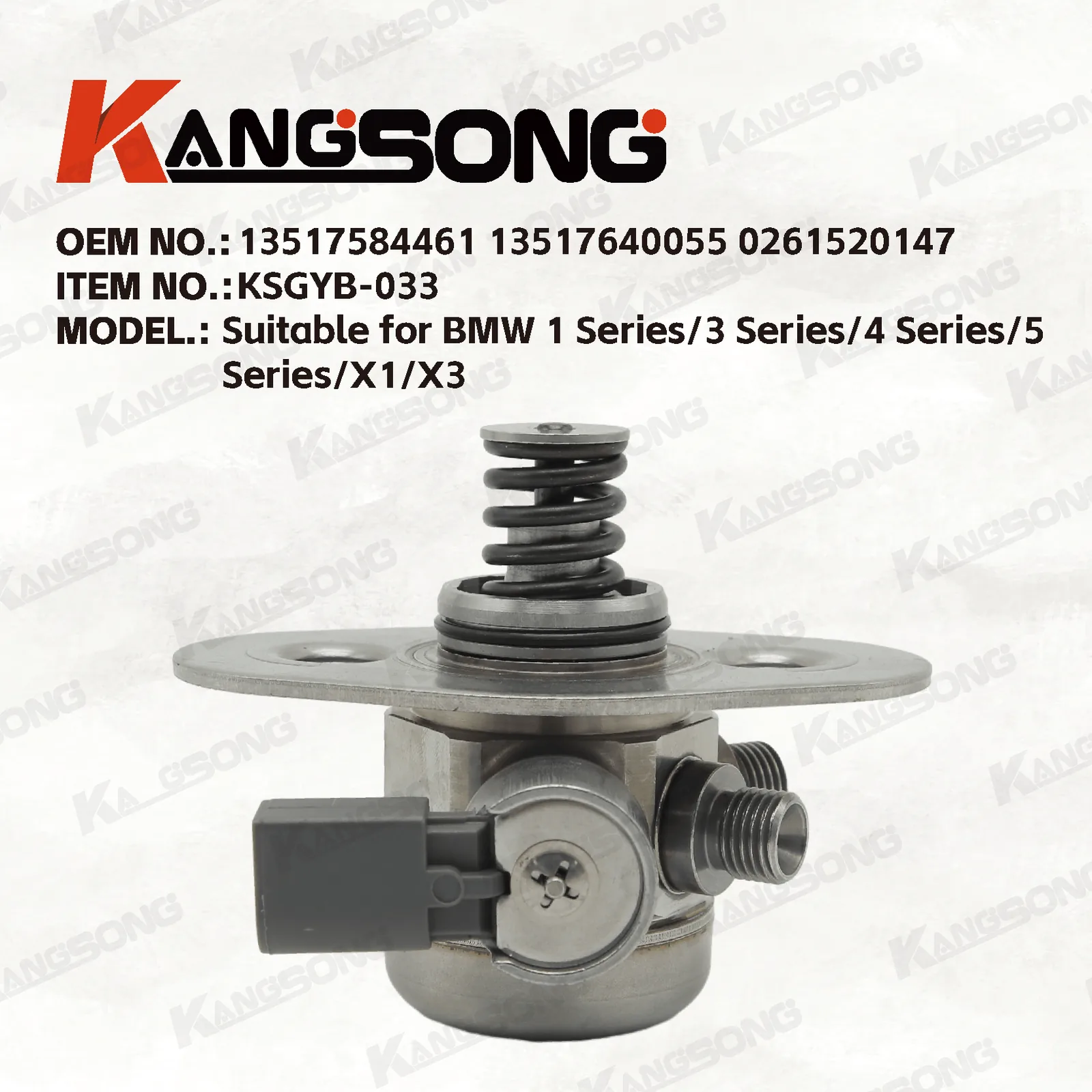
For broader browsing across fuel-system SKUs, open the products-root catalog. These pages illustrate real high-pressure pump hardware and OE title scope. They are not claims of equivalence to any third-party brand pump family, and they are not a substitute for confirming diesel versus gasoline direct-injection application details on the order.
FAQ
How does a high pressure fuel pump work in one sentence?
Cam-driven plungers compress metered diesel and push it through a delivery valve into the common rail so injectors can spray on ECU command.
What does a high pressure diesel fuel pump diagram show?
It should show tank → feed/filter/transfer → high-pressure pump → common rail → injectors, plus the idea that metering limits how much fuel enters the plungers.
How much pressure does a diesel high-pressure pump make?
It depends on the engine family and load. Common-rail systems are often described above roughly 2,000 bar, with published explainers citing bands from about 1,400 bar to more than 2,500 bar and trade working figures around roughly 1,600–1,800 bar. Treat any single psi number as a class illustration, not a universal OE specification.
What is the difference between a lift/feed pump and a high-pressure pump?
The feed/lift/transfer stage moves and filters diesel at low pressure into the high-pressure pump. The high-pressure pump compresses that fuel into rail-class pressure measured in thousands of bar.
Why does the pump need a metering or volume-control valve?
So the ECU can match compressed volume to demanded rail pressure. Compressing a full chamber on every stroke and dumping the excess wastes energy as heat in the return path.
Does the high-pressure pump time the injection event?
No. On common rail the pump mainly builds and maintains rail pressure. Injection timing and quantity are handled by the ECU / PCM and the injectors.
Is a gasoline GDI HPFP the same as a diesel common-rail pump?
They share the high-level idea of a second-stage mechanical pump feeding a rail, but fuel, pressure targets, lubrication behavior, and OE scope differ. Use diesel-versus-gas comparison pages when that is the real question, and match OE titles for the specific pump.
Where can buyers browse OE-scoped high-pressure pumps?
Start with the products-root catalog and OE-titled Kangsong HPFP SKU pages such as product 1688 when the printed OE numbers match the vehicle or engine program.
References
- Common rail — Wikipedia
- Pressure Fluctuation Characteristics of High-Pressure Common Rail Fuel Injection System — IntechOpen
- Common rail high pressure fuel injection system — Grease Monkey / katuhito
- Diesel Fuel Standards and Rulemakings — U.S. EPA
- Fuel system issues on NH T4.75 — TractorByNet
- Kubota Codes — TractorByNet