


What Is a Fuel Pump Used For?
A fuel pump moves fuel from the tank to the injectors or carburetor at usable pressure. See where it sits versus the filter, fuel rail, and nozzles.
A fuel pump moves fuel from the tank to the injectors or carburetor at usable pressure. See where it sits versus the filter, fuel rail, and nozzles.

An inline fuel pump is an external electric pump in the fuel line. See how it works, why gravity feed matters, and how it differs from in-tank pumps.

A fuel pump prime connector is a diagnostic test tap for running the pump with a fused jumper—how it differs from the main connector, relay, and primer bulb.

A fuel pump diode is a one-way suppressor that clamps inductive kickback on pump relays or motors so switches, ECUs, and drivers are not hit by turn-off spikes.

A fuel pump assembly is the in-tank module that combines pump, flange, sender/float, strainer, and seals. See what it includes and how buyers use the term.

Learn how a high pressure diesel fuel pump works via feed stage, cam plunger, inlet metering, and common-rail delivery—for fleet and parts buyers.

Contaminated fuel and dry-run heat top evidence-backed fuel pump failure causes. Voltage drop, clogged strainers, and noise clues explained for buyers.

Learn how a vacuum fuel pump works via crankcase pulse, diaphragm strokes, and check valves—plus how pulsed delivery differs from electric EFI pumps.
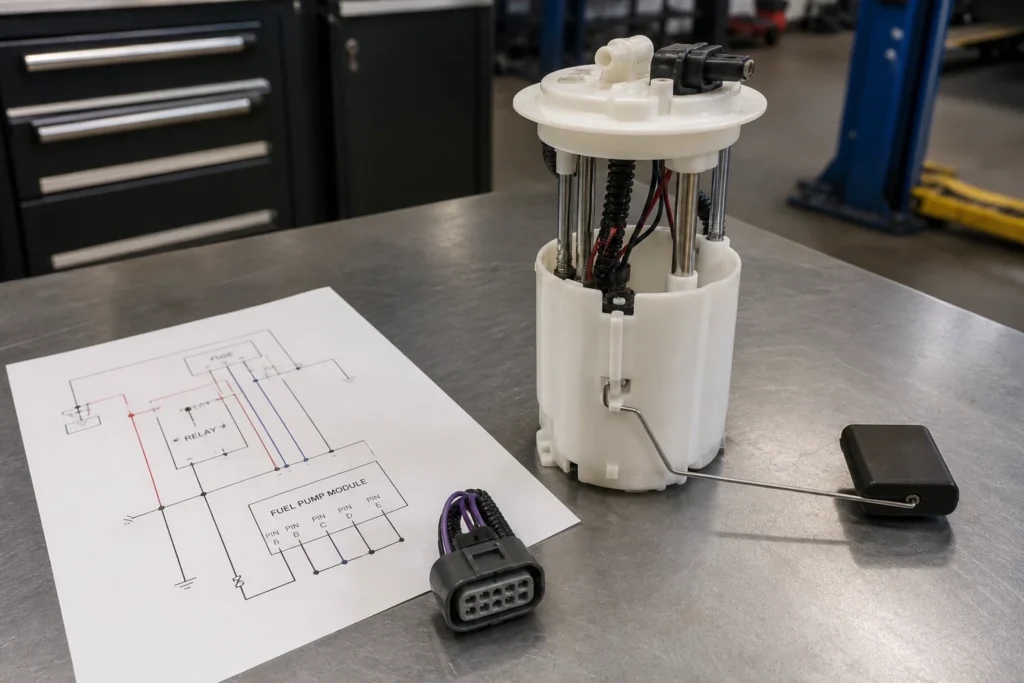
Read an in-tank fuel pump wiring diagram by separating pump power, ground, and sender pins, then tracing fuse, relay, and inertia paths to the module connector.