

A fuel pump moves fuel from its supply point toward the engine system. Electric, mechanical, and module descriptions identify different architectures or assembly scopes, so the platform record still controls selection.
- FAQs
Part 1. What does a fuel pump do?
A fuel pump creates the movement needed to transfer fuel through the vehicle’s fuel system toward the engine-side delivery point. The exact pressure, control strategy, and location vary by documented system design.
Part 2. What are the main pump types?
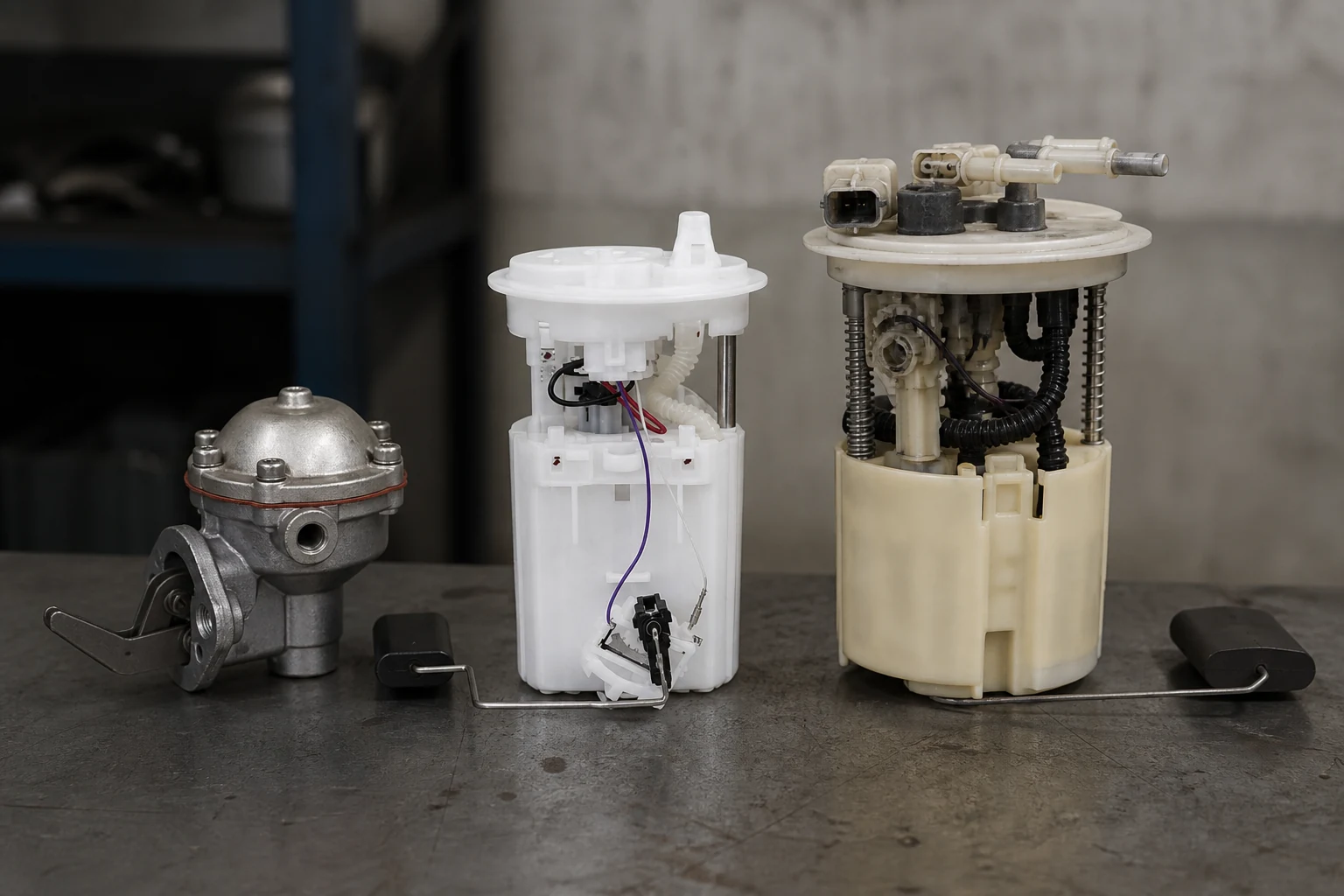
Electric pumps use an electrical drive and may be installed in a tank or along a fuel line. Mechanical pumps use an engine-driven mechanism. The automotive fuel-pump types guide adds a buyer-oriented overview without treating any type as universal.
| Type label | What it describes | Selection boundary |
|---|---|---|
| Electric | electrically driven pump unit | confirm voltage, control, and interfaces |
| Mechanical | mechanically driven pump route | confirm drive and mounting evidence |
| High-pressure | a system role or operating class | require documented operating point |
Part 3. What is a fuel-pump module?
A module can package the pump with items such as a housing, sender, filter or connector interfaces. “Module” therefore describes an assembly scope, not simply the motor inside it.
Part 4. Which interfaces make a pump application-specific?
Mounting geometry, tank or line position, connector layout, polarity, control signal, sealing, and service access can change the required assembly. Confirm each interface from platform documentation or the buyer’s drawing.
Important: Treat this definition as orientation only; safe fuel-system work still requires the applicable platform record and regulatory documentation. (Fuel-system integrity reference).
Part 5. How should buyers distinguish pump roles?
First identify where the component sits and what job it performs, then separate the pump unit from the larger assembly. This prevents a module request from being treated as a motor-only request.
| Buyer description | Clarify before selection | Why it matters |
|---|---|---|
| “Fuel pump” | location and system role | narrows architecture |
| “Fuel pump assembly” | included components and interfaces | defines package scope |
| “Replacement motor” | housing, connector, and seal reuse | avoids incomplete substitution |
Part 6. What belongs in a fuel-pump RFQ?
An importer or distributor should send the platform reference, requested role, assembly scope, interfaces, quantity, and documentation needs. If those fields are absent, the request is educational or exploratory rather than quote-ready.
| Buyer should provide | Why it matters | Send with RFQ |
|---|---|---|
| Platform, model, and reference images | identifies application context | Yes |
| Pump role and assembly scope | separates unit from module | Yes |
| Connector, line, and mounting evidence | screens interface mismatch | Yes |
| Quantity and target documents | defines procurement work | Yes |
Part 7. How can Kangsong support a documented review?
Use Kangsong fuel pump products to identify the relevant family, then send the platform and interface evidence through Contact Kangsong. The review can remain at family level until the required records are complete.

FAQs
Does every car use an electric pump?
No universal statement is safe; vehicle systems can use different architectures and the platform record controls.
Is a module just the motor?
No. A module may include housing, sender, filter, connector, or other assembly interfaces.
Can a pump be selected by name alone?
No. A name such as fuel pump does not provide enough evidence for fitment or assembly scope.
What should an importer record?
Record platform reference, pump role, assembly scope, interfaces, quantity, and required documents.
Why do connectors matter?
Connector and control details can change electrical compatibility and the required assembly boundary.
When is a request incomplete?
It is incomplete when the application, role, interfaces, or required assembly evidence is missing.


